
 United States
 United Kingdom
 Canada
 Australia
 New Zealand
 Ireland
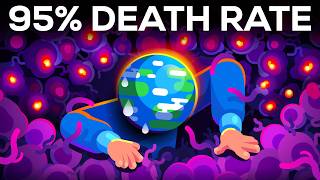
Kurzgesagt asks when, exactly, a person dies
Its animated explainer follows the body after the heartbeat stops, from failing neurons to immune cells still fighting near the ten-minute mark.
 Kurzgesagt – In a Nutshell
Story of
No. 18 on the daily chartNo. 1 on the Science chart
Why this story? 1,584,588 views so far, and here is what is inside it.
 What Actually Happens When You Die?
Things we can learn from the video
Press to jump
- 0:12The heart stops and blood stops circulating; death is described as a process, not a single moment.
- 1:10Death comes down to a lack of oxygen: cells cannot make ATP, and the brain usually dies first.
- 3:49Neurons, with almost no stored sugar, fail as calcium floods in and depolarization sweeps the brain.
- 6:55The liver and kidneys briefly run on emergency metabolism before lactic acid and enzymes overwhelm them.
- 8:26Rigor mortis sets in because muscles need ATP to relax, then gut bacteria spread as the necrobiome.
- 9:53Immune cells fight final battles while stem cells and gene activity continue; the death paradox follows.
"What Actually Happens When You Die?" takes on a question most people prefer to avoid and answers it entirely from inside the body. Narrator Steve Taylor sets out the premise early in the 14-minute Kurzgesagt explainer: "Death is not a switch, not a single moment, no sudden transition." The description puts it more starkly: the process can last for weeks.
The thread running through the video is energy. Cells run on ATP, and making it takes oxygen. Once the heart stops and blood no longer circulates, that supply runs out. Death can begin in the heart, the lungs or the brain, but the brain is usually the first part to die. Neurons, which Taylor calls "biological electrical wires with almost no sugar storage," lose their electrical balance as calcium floods in, and a wave of depolarization spreads across the brain.
Other organs hold on a little longer. The liver and kidneys switch to emergency metabolism without oxygen until lactic acid and their own digestive enzymes overwhelm them. Muscles stiffen into rigor mortis for a counterintuitive reason: releasing a contraction also needs ATP, so without it, "paradoxically, they can't relax anymore." Then the gut barrier gives way and its bacteria spread through the blood and lymph vessels. "Your microbiome turns into your necrobiome," Taylor says.
The part viewers keep returning to comes near the ten-minute mark. Immune cells fight small, isolated battles before they expire, while some stem cells and genes stay active far longer. In the comments, many describe those cells as loyal to the end. Others point to the jolt of a video about dying that opens and closes with the studio's new sleepwear collection. The video also carries a sponsored segment for the career nonprofit 80,000 Hours.
It ends on what it calls the death paradox: if the parts stop at different times, when does the person die? Taylor's answer is that life is more than the sum of its parts, so that moment "remains a mystery." The video follows founder Philipp Dettmer's account of surviving cancer and an explainer on ketamine, and its final screen carries the studio's reminder that it was made by humans, not AI.
Published on Trari
Where next?

What viewers say
Leaving us with a terrifying existential dread and immediately trying to sell us pajamas is peak Kurzgesagt.
@FannyValezSee it on YouTubeThe bacteria in our gut are basically mercenaries.
And we all know what happens when mercenaries are not getting paid anymore.@herrhartmann3036See it on YouTubeI want my T cells to stop fighting for me after I die. It's okay little buddy, you can rest now too
@robespierreisdeadSee it on YouTube
4 more comments
If you ever feel down...
Remember that your immune system will always be loyal to you even after you are gone@ddds9134See it on YouTubeImmune cells fighting till their last breath sounds weirdly cathartic
@xitzySee it on YouTubeThe Immune system casually being the most based cells ever
@ThatsBreadcrumbsSee it on YouTubeI was just thinking, “Man I’m kinda bored.”
Excellent timing.@KingofHearts057See it on YouTube
Public comments from the video's page on YouTube
 Is this your channel?For the channel's owners and team: a ready picture and text for your audience
Share the story with your audience. Everything is ready:
For an Instagram story or a WhatsApp status
For a community post or your channel's description
- Channel
- Kurzgesagt – In a Nutshell
- Subscribers
- 25,800,000
- Channel views, last 7 days
- 10,202,454
- Channel views, pace per day
- 1,202,195 (on a normal day: 1,854,221)
- Video published
- November 10, 2026
- Video views so far
- 1,584,588 (less than a day online)
- Video views, pace per day
- 2,174,131
The numbers
The numbers show a typical start for a new Kurzgesagt explainer, with a busy comment section in its first hours.
