
 United States
 United Kingdom
 Canada
 Australia
 New Zealand
 Ireland
Arab parties' election gains test Israel's coalition red lines
Moav Vardi's report examines competing arguments about Jewish statehood, national service and condemnation of Hamas as barriers to governing together.
 Israel
Why this story? One of כאן | חדשות - תאגיד השידור הישראלי's most watched videos since yesterday, with 91,173 views.
כאן | חדשות - תאגיד השידור הישראלי: The news division of Kan, Israel's public broadcaster. 808K subscribers and 1.9B views.
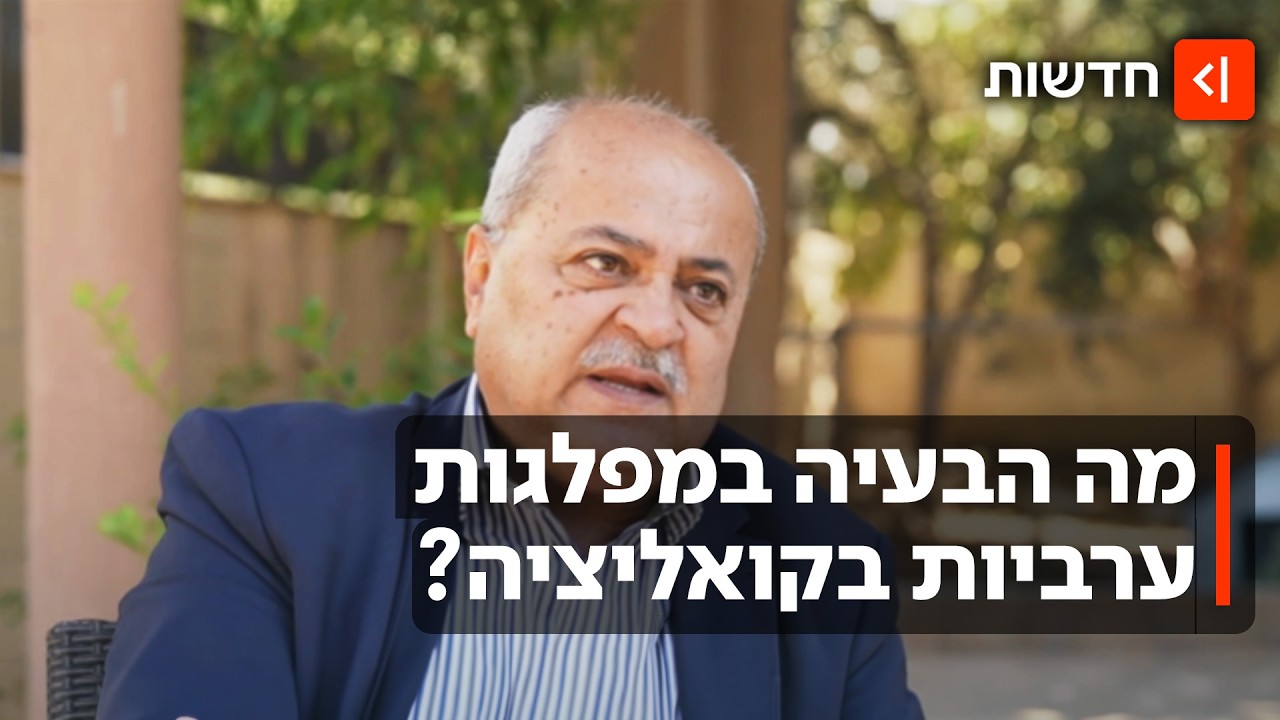 פסולים: מהי הסיבה לסירוב לשבת עם המפלגות הערביות בממשלה?
Next story: Netanyahu-Eisenkot security meeting planned amid dispute over wartime powers
51 more stories on Israeli post-election coalition talks ›
Things we can learn from the video
Press to jump
- 0:00Arab party leaders seek to turn election gains into influence, while the report introduces opposition to coalition participation.
- 2:48Ahmad Tibi calls high Arab turnout a civic statement and challenges sweeping allegations against Arab voters.
- 4:41Yaron London explains his Ra'am vote; Amichai Atali later grounds his opposition in the parties' ideology and identity.
- 8:29Vardi questions Tibi about Osama Saadi dedicating the victory to Gaza and the West Bank.
- 10:00Netanyahu's earlier advocacy of Arab inclusion is juxtaposed with campaign messages opposing government with Abbas.
- 10:51Jacky Levy rejects blanket judgments about Arabs but demands explicit condemnation of Hamas as a terrorist organization.
Arab parties won 19 parliamentary seats in Israel's election, but their gains have not opened a clear route into government, according to Kan News, the news division of Israel's public broadcaster, the Israeli Public Broadcasting Corporation. Moav Vardi's report asks what lies behind the refusal to include them: prejudice and fear, substantive ideological differences, or some combination of these.
The Friday news feature, titled "פסולים: מהי הסיבה לסירוב לשבת עם המפלגות הערביות בממשלה?" ("Disqualified: Why the refusal to sit in government with Arab parties?"), moves beyond coalition arithmetic to examine what different speakers consider acceptable grounds for partnership.
Interviewed in Kafr Qasim, Arab lawmaker Ahmad Tibi describes the high Arab turnout as an important expression of civic and political participation. Vardi also questions him about Likud allegations concerning electoral fraud and Qatari influence. Tibi objects to what he describes as a sweeping accusation that Arab voters stole the election.
Broadcaster Yaron London acknowledges Jewish suspicion rooted in the national conflict, but explains why he voted for Ra'am, led by Mansour Abbas. He cites Abbas's recognition of Israel as the nation-state of the Jewish people and willingness to support national service as reasons for inclusion. London contrasts those positions with the ultra-Orthodox community's relationship to service.
Yedioth Ahronoth journalist Amichai Atali offers a different argument: his objection concerns the ideology and national identity positions of the Arab parties in their present composition, including Ra'am. Writer and radio presenter Jacky Levy rejects treating all Arabs as identical, while demanding an explicit, unequivocal denunciation of Hamas as a terrorist organization from Abbas and Arab representatives.
Vardi puts another difficult statement to Tibi: Osama Saadi's dedication of the election victory to Gaza and the West Bank, and the obstacle such language presents to acceptance among Jewish voters.
The report also juxtaposes archival footage of Benjamin Netanyahu advocating Arab participation and proposing an Arab minister with campaign messages opposing a government dependent on Abbas. That contrast gives the discussion a concrete political example, rather than leaving it entirely at the level of identity and principle.
London closes by arguing that Jews and Arabs must recognize their shared reality and work pragmatically to change their attitudes toward one another.
Palestinian-Israeli politician who leads the Ta'al party and has served in Israel's parliament since 1999.
More on Wikipedia ›Arab-Israeli politician who leads Ra'am and represents the party in Israel's parliament.
More on Wikipedia ›Published on Trari
More on Israeli post-election coalition talks


Where next?


What do you think?
Want to know when somebody answers you?
- Channel
- כאן | חדשות - תאגיד השידור הישראלי
- Subscribers
- 807,000 ▲ 1,000 this week
- Channel views, last 7 days
- 7,282,166
- Channel views, pace per day
- 334,644 (on a normal day: 1,115,989)
- Video published
- October 30, 2026
- Video views so far
- 116,734 (2 days online)
- Video views, pace per day
- 91,225 (on a normal day: 50,320)
The numbers
The report drew about 91,000 views since yesterday, placing it first among the new videos on Israel's leading news channels.

💡 Test your knowledge
Which party does Mansour Abbas lead?
Abbas leads Ra'am, the Arab party whose potential participation in government is a central subject of the report.