
 United States
 United Kingdom
 Canada
 Australia
 New Zealand
 Ireland
Trump has his own stake in defending Huang, professor argues
A South Korean studio discussion links the president's support for Nvidia's co-founder to questions over chip exports to China.
 South KoreaStory of
Why this story? One of YTN's most watched videos since yesterday, with 614,387 views.
YTN: South Korea's first 24-hour news channel, on air since 1995. 5.4M subscribers and 23B views.
 "단순 中 미인계 아니라면..." 트럼프가 젠슨 황 감싸는 이유? [Y녹취록] / YTN
Next story: Nvidia's Southeast Asian chip routes scrutinized in Al Mashhad report
17 more stories on Jensen Huang espionage investigation ›
Things we can learn from the video
Press to jump
- 0:15Nam recounts Trump's account that Huang said he did not know a contact was a spy.
- 0:50Nam argues that treating Huang's conduct as an unwitting mistake could also limit Trump's political exposure.
- 1:05The anchor and Nam compare espionage penalties, with Nam describing US punishments as substantially harsher.
- 2:08The discussion turns to eased chip-export restrictions and reports of Huang lobbying Trump for access to China's market.
- 3:00Nam contrasts the profits from Chinese chip sales with US national-security export controls.
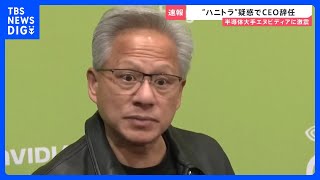
What Jensen Huang knew is central to understanding Donald Trump's defense of him, according to Nam Sung-wook, a chair professor at Sookmyung Women's University. Nam argues that the controversy could expose the president to political scrutiny over his administration's decisions on advanced chip exports to China.
Speaking on South Korea's YTN news channel, Nam recounts Trump's account of a telephone conversation in which Huang said he had not known that a person he was meeting was a spy. That characterization remains an allegation in the discussion, not an established finding.
Nam draws a conditional distinction: if Huang knowingly maintained those contacts and transferred restricted semiconductor technology, he argues, the matter could become an espionage case rather than a question of being deceived. He says presenting Huang's conduct as an unwitting mistake would therefore also help limit the political consequences for Trump.
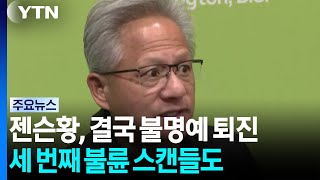
The segment's title is "\"단순 中 미인계 아니라면...\" 트럼프가 젠슨 황 감싸는 이유? [Y녹취록] / YTN", meaning "If it's not simply a Chinese honey trap..." Why is Trump defending Jensen Huang?
The anchors then turn to export policy. Nam discusses reports that Huang repeatedly pressed Trump to loosen restrictions on selling Nvidia's AI chips to China. He frames the underlying tension as commercial revenue on one side and US national-security controls on the other. Nvidia makes processors widely used to develop and run artificial-intelligence systems, giving those sales significance beyond the company's balance sheet.
The discussion also compares espionage penalties in the United States and South Korea, with Nam portraying American punishments as substantially harsher. These are his legal characterizations; the segment does not establish that Huang committed espionage.
Recorded before Huang's resignation, the discussion focuses on why Trump was defending him while he still led Nvidia. Its central argument is about the president's own exposure: Nam expects pressure from both Republicans and Democrats over the export decisions.
Taiwanese-American engineer and businessman who co-founded Nvidia. He led the company as president and CEO from 1993 until his resignation in November 2026.
More on Wikipedia ›US technology company that develops graphics processors and other computing hardware and software for uses including artificial intelligence, gaming and data science.
More on Wikipedia ›Published on Trari
More on Jensen Huang espionage investigation


Where next?


What do you think?
- Channel
- YTN
- Subscribers
- 5,430,000
- Channel views, last 7 days
- 115,543,691
- Channel views, pace per day
- 7,181,895 (on a normal day: 17,087,105)
- Video published
- November 11, 2026
- Video views so far
- 673,271 (2 days online)
- Video views, pace per day
- 614,290
The numbers
The discussion drew about 614,000 views since yesterday, placing it among South Korea's most-watched new news videos.
