
 United States
 United Kingdom
 Canada
 Australia
 New Zealand
 Ireland
Something in Venus's clouds is soaking up ultraviolet light
Astrum's look at Venus passed a million views, with a detour beneath the surface near Nyx Mons.
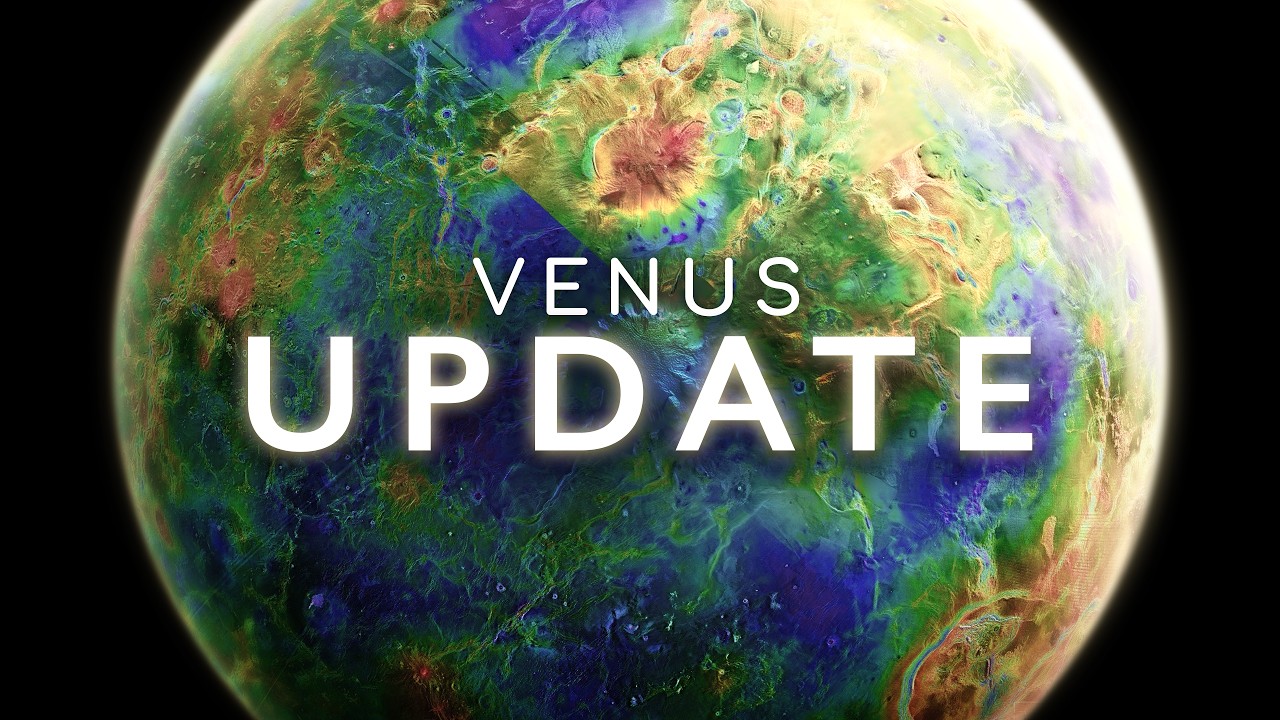 Scientists Just Announced There Could Be Life on Venus
Up nextTrari.com home page ›


 Astrum
Story of
No. 98 on the daily chartNo. 6 on the Science chart
Why this story? The channel's weekly summary: what went up this week, what is drawing views now, and where the channel stands among similar channels.
Alex McColgan gets to a puzzle Astrum can't solve from Earth: what's soaking up ultraviolet light in the clouds of Venus? The episode considers organic compounds as one possibility, but the absorption isn't proof of life. "We simply can't figure it out remotely," McColgan says, before turning to missions including DAVINCI and EnVision.
"Scientists Just Announced There Could Be Life on Venus" was the most watched of Astrum's three uploads this week and is drawing views fastest across the channel. The sponsored documentary also goes underground, revisiting Magellan radar data that point to an opening into a lava tube near Nyx Mons. The idea that Earth microbes could have made it to Venus sent some commenters straight to Project Hail Mary, with nods to Astrophage and the Petrova Line.
Light gave away a different secret in the sponsored supercut "We Finally Saw a Supernova Exploding... And It Solved a Huge Mystery". McColgan explains how Yi Yang's team used polarised light to infer the elongated shape of SN 2024ggi's early explosion. The week's smaller upload, "This Image Reveals What Happens After Stars Die", was a DWARFLAB-sponsored outing that set a backyard telescope image of the Helix Nebula beside James Webb's close-up of hot gas meeting cooler shells.
Astrum added 10,000 subscribers over the week, and its daily views are running a little above usual. Among similarly sized science channels, CrunchLabs had a busy week for views, while PBS Eons was quieter. Beyond the new uploads, "What Voyager 1 Found Beyond the Edge of Our Solar System" and "Uranus: The Weirdest Planet in the Solar System" are Astrum's most active titles after the Venus episode.
Published on Trari.com
Go back to Trari.com home page
Where next?
Things we can learn from the video
Press to jump
- 1:16Concentric rings in telescope observations suggest atmospheric gravity waves may help drive Venus's fast winds.
- 8:06Research suggests Venus's rift valleys may still be geologically active.
- 12:08Magellan radar data point to an opening into a lava tube near Nyx Mons.
- 18:55The Venus Life Equation explores whether asteroid impacts could have sent Earth microbes to Venus's clouds.
- 22:22Organic compounds are one possible explanation for the clouds' unexplained absorption of ultraviolet light.
- 26:55The episode looks at four missions designed to investigate Venus: DAVINCI, VERITAS, EnVision and Venus Life Finder.
A professional in this field? Want to write about Science & learning on Trari? Tell us ›
What viewers say
i wonder how many worlds in our solar system might actually have life but we havent discovered any of it yet
@Tonkus0See it on YouTubeImagine they discover the Petrova Line 😂💀
@jakesmith7236See it on YouTubeThe idea that life could have traveled from Earth to Venus is fascinating. But here's an even stranger possibility: what if Venus once had its own independent biosphere before its climate spiraled out of control? Perhaps the biggest mystery isn't whether life can survive there today, but whether we're looking at the remains of a world that was once much more Earth-like. What do you think?
@BigCrunchytbSee it on YouTube
4 more comments
Even if they came from earth, if they survived long enough I'd imagine they'd have evolved according to their environment, slowly making them different from earth life
@CinaGDSee it on YouTubeI always like to add in these conversations "Life as we know it..."
@TheBeardedHamSee it on YouTubeCrazy to think that we might actually discover life in our lifetime
@Crispy_KerbalSee it on YouTubeoh no it's the Astrophage
@alpacamale2909See it on YouTube
Public comments from the video's page on YouTube
Want to know when somebody answers you?
 For the channel's owners and team
Share the story with your audience
A ready picture for an Instagram story or a WhatsApp status.
Ready text for a community post
The videos drawing views on Astrum right now
 We Finally Saw a Supernova Exploding... And It Solved a Huge Mystery842,476 views · 2026-11-24
 This Image Reveals What Happens After Stars Die25,491 views · 2026-11-25
 What Voyager 1 Found Beyond the Edge of Our Solar System2,909,581 views
 Uranus: The Weirdest Planet in the Solar System4,056,950 views
- Channel
- Astrum
- Subscribers
- 2,920,000 ▲ 10,000 this week
- Channel views, last 7 days
- 4,640,893
- Videos published this week
- 3
- Video published
- November 26, 2026
- Video views so far
- 1,029,001
- Views on its first day
- 806,969
The numbers
Here are Astrum's weekly subscriber and view gains, along with the uploads drawing views fastest.

💡 Test your knowledge
Who wrote Project Hail Mary, the novel Astrum's viewers brought up in the comments?
Andy Weir wrote Project Hail Mary, the novel that features Astrophage and the Petrova Line.