
 United States
 United Kingdom
 Canada
 Australia
 New Zealand
 Ireland
Cool Worlds asks what Claude actually found in TESS data
David Kipping explains why a dip that repeats nine times can be worth investigating without being proof of a planet.
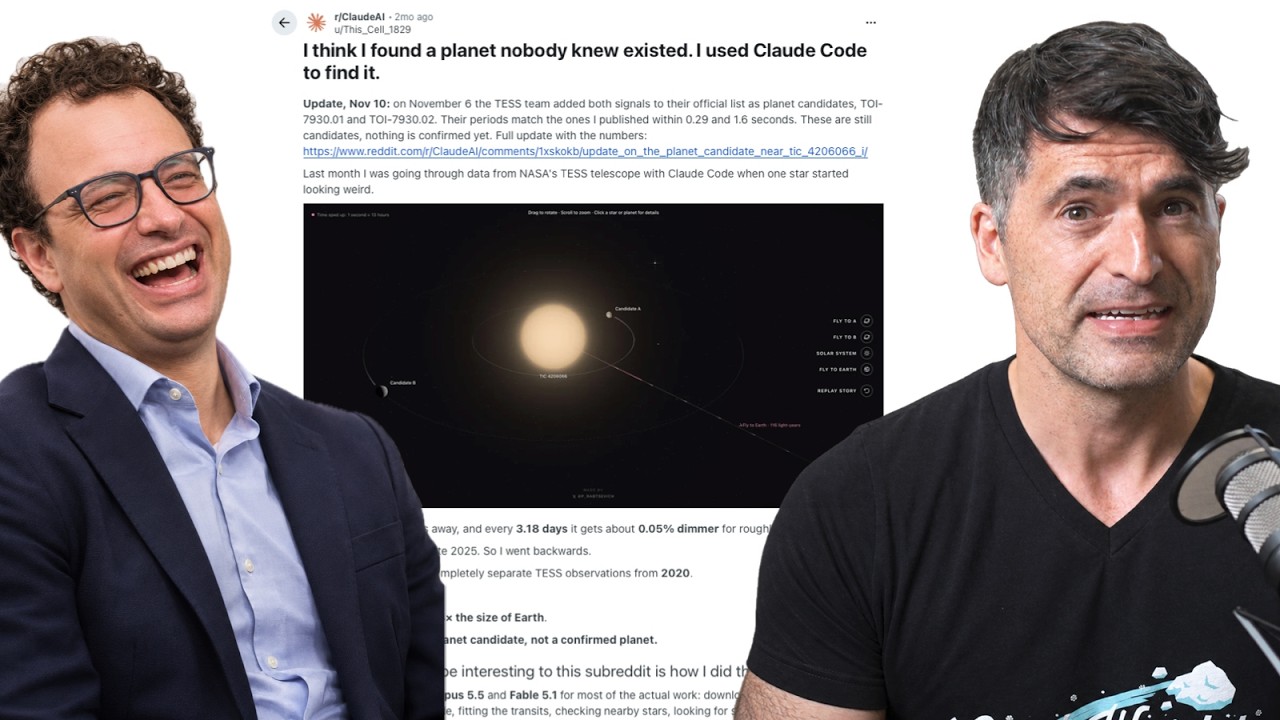 Claude is Detecting Exoplanets?!
Up nextTrari.com home page ›


 Cool Worlds
Story of
Why this story? The channel's weekly summary: what went up this week, what is drawing views now, and where the channel stands among similar channels.
A candidate isn't a discovery. That's the distinction Columbia astronomer David Kipping makes in "Claude is Detecting Exoplanets?!", the only new upload from Cool Worlds this week. The video, which includes a sponsored segment for Incogni, drew about 57,000 views in 11 hours and is drawing views faster than anything else on the channel.
Kipping digs into Pavel Rabtsevich's Reddit post about using Claude Code to find a possible planet in observations from NASA's TESS mission. A dip in starlight that comes back on schedule is a good reason to look closer. What it can't tell you on its own is whether you're seeing a planet, a brown dwarf or the blended light of other stars. That's where Kipping thinks the effort spent checking the timing could have been better directed. He also puts the chatbot in perspective: citizen scientists found candidates long before large language models, and researchers including Chris Shallue and Andrew Vanderburg were already using machine learning to find planets in Kepler data.
The comments ran from jokes about putting Iron Man's Jarvis on planet duty to a more practical question: how much might be hiding in old telescope archives? Meanwhile, subscribers held steady for the week, and channel-wide daily views were a little above usual. Among similarly sized science channels, PBS Terra had the largest weekly view gain, while Tech Ingredients had a quieter week.
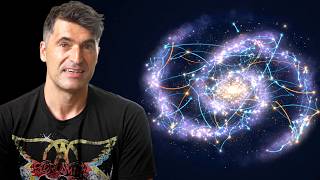
The older Cool Worlds essays drawing the most daily views after the Claude upload pose questions of their own. "Our Solar System is Mixing with Others" uses visitors such as 'Oumuamua to show that star systems don't keep all their material to themselves. And "Why Finding Aliens Could Doom Humanity" asks whether finding life elsewhere would make it more plausible that the hardest step for a civilization is one we haven't reached yet.
Published on Trari.com
Go back to Trari.com home page
Where next?
Things we can learn from the video
Press to jump
- 2:30Pavel Rabtsevich reports using Claude Code to find a possible planet in public TESS observations.
- 6:20Checking that dips recur doesn't rule out alternatives such as blended starlight or a brown dwarf.
- 10:46A signal that clears the detection threshold is only the first step, before candidacy, validation or confirmation.
- 14:28Astronomers were using specialized machine-learning models to find exoplanets well before chatbots entered the picture.
- 15:20An AI-assisted planet-candidate paper by Jaden Tripp was withdrawn from arXiv.
- 22:20Kipping sees greater promise in pairing AI with an astrophysicist's expertise.
A professional in this field? Want to write about Science & learning on Trari? Tell us ›
What viewers say
Jarvis, find me an exoplanet. Make no mistakes.
@omma911See it on YouTube9:08 as a frequent user of Claude Code for development, I can say completely unnecessary redundant verifications/tests sound exactly like Claude behavior.
@woshiyizhimaoSee it on YouTubewell, I know what I'm doing this evening, finding me some new exoplanets
@1adamukSee it on YouTube
3 more comments
Pulling a real transit out of public telescope data is brutal when an Earth sized planet only dims a Sun like star by 84 parts per million, roughly a tenth of the wobble from an ordinary starspot. If AI can chew through millions of noisy light curves without losing patience, what is sitting in the old archives right now that human eyes just scrolled past?
@YouVsUniverseSee it on YouTubeProgrammers have spaghetti code now Mathematicians and Physicists have spaghetti proofs
@ai-induced-psychosisSee it on YouTube5:01 Jev mentioned on Cool Worlds!? Never thought it could happen but here we are 😎😂
@willv04See it on YouTube
Public comments from the video's page on YouTube
Want to know when somebody answers you?
 For the channel's owners and team
Share the story with your audience
A ready picture for an Instagram story or a WhatsApp status.
Ready text for a community post
The videos drawing views on Cool Worlds right now

- Channel
- Cool Worlds
- Subscribers
- 1,090,000
- Channel views, last 7 days
- 64,248
- Videos published this week
- 1
- Video published
- November 27, 2026
- Video views so far
- 56,590
The numbers
Here's how views and subscribers moved for Cool Worlds this week.

💡 Test your knowledge
Which interstellar visitor came first in the official discovery sequence?
The designation 1I/'Oumuamua marks it as the first object officially identified as interstellar.