
 United States
 United Kingdom
 Canada
 Australia
 New Zealand
 Ireland
Voyager 1 is a light-day away and still talking
Astrum marks the milestone by retracing what NASA's probe found beyond the solar wind and how engineers kept it in touch.
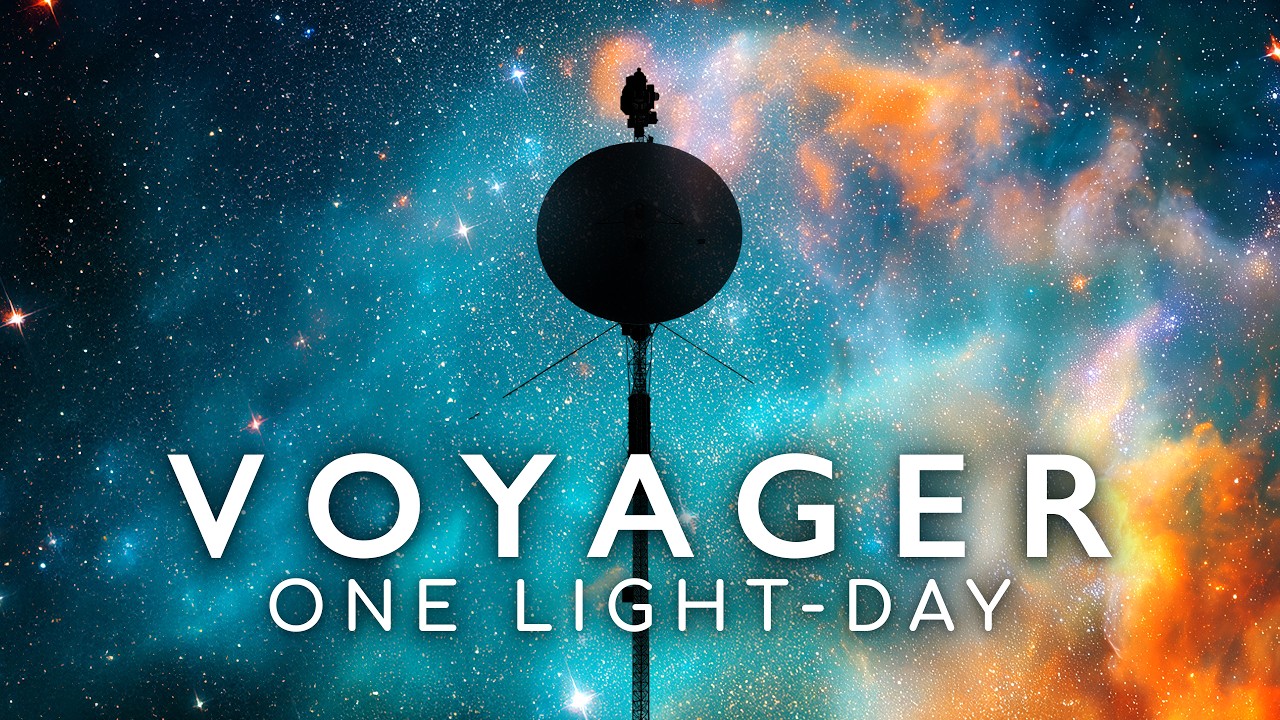 What Voyager 1 Found Beyond the Edge of Our Solar System
Up next


 Astrum
Story of
No. 69 on the daily chartNo. 2 on the Science chart
Why this story? One of the most watched videos since yesterday, with 369,152 views.
Things we can learn from the video
Press to jump
- 0:00Voyager 1 reaches one light-day from Earth, so a radio signal takes a day to reach it.
- 1:37NASA revives long-dormant backup thrusters after the set Voyager has been using starts to clog.
- 7:24The Jupiter flyby reveals active volcanoes on Io, the first seen erupting beyond Earth.
- 19:47At the heliopause, solar ions drop sharply and galactic cosmic rays increase, marking Voyager's entry into interstellar space.
- 21:37Voyager's plasma instrument picks up waves in the material between stars.
- 28:16The Golden Record carries sounds and images from Earth that can outlast the probe's working instruments.
Send Voyager 1 a message from Earth and it takes a day just to get there. A reply takes another day. That's the milestone Alex McColgan opens with in Astrum's "What Voyager 1 Found Beyond the Edge of Our Solar System": a spacecraft launched in 1977 is still sending word from farther away than any other.
McColgan starts with a repair. When the thrusters that help keep Voyager's antenna pointed towards Earth started clogging, NASA engineers brought a long-dormant backup set back to life. It's the sort of detail viewers picked up on in the comments: some marvelled at how long the hardware has lasted, while one imagined what a postcard from a light-day away might say. The documentary includes a sponsored telescope segment.
The journey itself goes from erupting volcanoes on Jupiter's moon Io to a boundary you can't see. Astrum explains that when Voyager crossed the heliopause in 2012, the particles told the story: ions from the Sun dropped sharply, and cosmic rays from beyond the Sun's bubble increased. Interstellar space wasn't empty, either. Voyager's instruments could pick up waves moving through the plasma around it.
Astrum ends with something that doesn't need any power at all: the Golden Record, which will travel with Voyager long after its last transmission. In archival footage, mission scientist Edward Stone recalls why having a probe out there mattered in the first place: "We discovered things we didn't know were there to be discovered, time after time."
Published on Trari
Where next?
A professional in this field? Want to write about Science & learning on Trari? Tell us ›
What do you think?
Want to know when somebody answers you?
 For the channel's owners and team
Share the story with your audience
A ready picture for an Instagram story or a WhatsApp status.
Ready text for a community post
- Channel
- Astrum
- Subscribers
- 2,910,000
- Channel views, last 7 days
- 3,060,024
- Channel views, pace per day
- 164,759 (on a normal day: 494,729)
- Video published
- November 18, 2026
- Video views so far
- 369,152 (less than a day online)
- Video views, pace per day
- 561,180
The numbers
Astrum's Voyager documentary drew about 369,000 views in its first 11 hours.

💡 Test your knowledge
On which of Jupiter's moons did Voyager 1 spot an erupting volcano?
Voyager 1's images of Io revealed the first active volcanism observed beyond Earth.