
 United States
 United Kingdom
 Canada
 Australia
 New Zealand
 Ireland
Astrum explains why a supernova looked like a rugby ball
Alex McColgan follows astronomers who caught SN 2024ggi just as light broke through the dying star's surface.
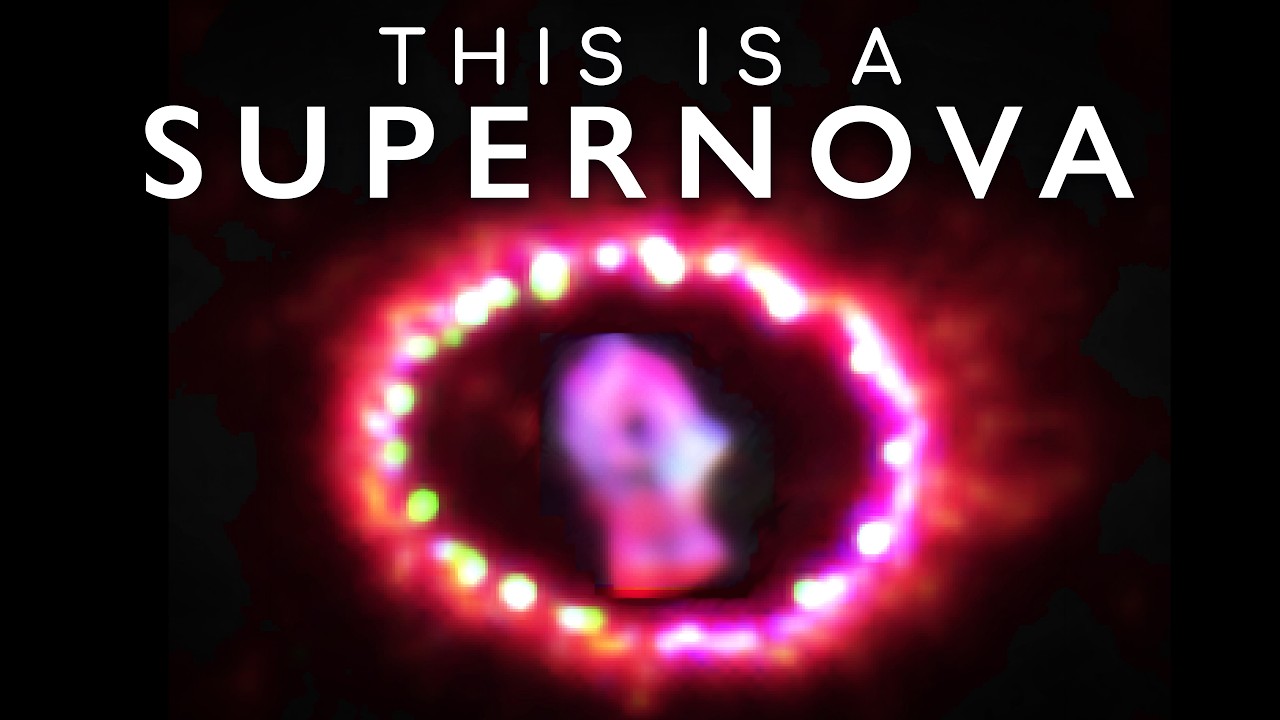 We Finally Saw a Supernova Exploding... And It Solved a Huge Mystery
Up nextTrari.com home page ›



 Astrum
Story of
Why this story? One of the most watched videos since yesterday, with 362,228 views.
The first clue to the shape of the exploding star wasn't a picture. It was the way its light was polarised. In Astrum's "We Finally Saw a Supernova Exploding... And It Solved a Huge Mystery", Alex McColgan explains how that clue gave astronomers a view of SN 2024ggi at a moment they rarely get to see.
When the ATLAS survey spotted the supernova in 2024, Yi Yang of Tsinghua University and his colleagues secured emergency time on the European Southern Observatory's Very Large Telescope in Chile. They caught the shock breakout, when the shock wave reaches the star's surface and radiation bursts out. The polarisation measurements pointed to an explosion stretched along one axis, more like a rugby ball than a sphere. McColgan explains why that shape lends support to the idea that jets can help drive a star's explosion. That's the mystery in the title: what powers the blast after the core collapses.
The documentary, which drew about 362,000 views since yesterday, remasters earlier Astrum material, adds research updates and includes a sponsored segment. One update follows the James Webb Space Telescope's observations of the debris, where carbon monoxide dropped sharply as radiation penetrated the expanding material. McColgan also brings the subject back to Earth, looking at traces of radioactive iron left by ancient explosions.
In the comments, that early glimpse prompted a different kind of clock-watching. Viewers dwelt on how long the light had been travelling before anyone could see it, and some wondered whether Betelgeuse might already have exploded without the news having reached us.
Published on Trari.com
Go back to Trari.com home page
Where next?
Things we can learn from the video
Press to jump
- 7:44A Type Ia supernova involves a white dwarf, while a Type II begins when a massive star's core collapses.
- 13:20The ATLAS survey picks up SN 2024ggi, giving astronomers a chance to observe the explosion in its earliest phase.
- 20:14The Very Large Telescope's FORS2 instrument measures polarisation, which can distinguish a spherical blast from an elongated one.
- 25:35The explosion's elongated shape supports a model in which jets help drive the blast.
- 30:00Webb observations show carbon monoxide in the debris dropping sharply as radiation penetrates it.
- 36:08Ancient supernovae helped carve out the Local Bubble, and radioactive iron on Earth preserves evidence of past explosions.
A professional in this field? Want to write about Science & learning on Trari? Tell us ›
What do you think?
Want to know when somebody answers you?
 For the channel's owners and team
Share the story with your audience
A ready picture for an Instagram story or a WhatsApp status.
Ready text for a community post
- Channel
- Astrum
- Subscribers
- 2,920,000 ▲ 10,000 this week
- Channel views, last 7 days
- 5,365,042
- Channel views, pace per day
- 809,286 (on a normal day: 579,200)
- Video published
- November 24, 2026
- Video views so far
- 646,160 (2 days online)
- Video views, pace per day
- 362,093 (on a normal day: 431,467)
The numbers
The 362,228 views since yesterday are part of the documentary's first two days online.

💡 Test your knowledge
Which constellation is home to Betelgeuse?
Betelgeuse marks one of the hunter's shoulders in Orion.