
 United States
 United Kingdom
 Canada
 Australia
 New Zealand
 Ireland
An aurora you need a radio telescope to see
Astrophysicist Emma Chapman explains how astronomers traced the signal to Beta Pictoris b rather than its star.
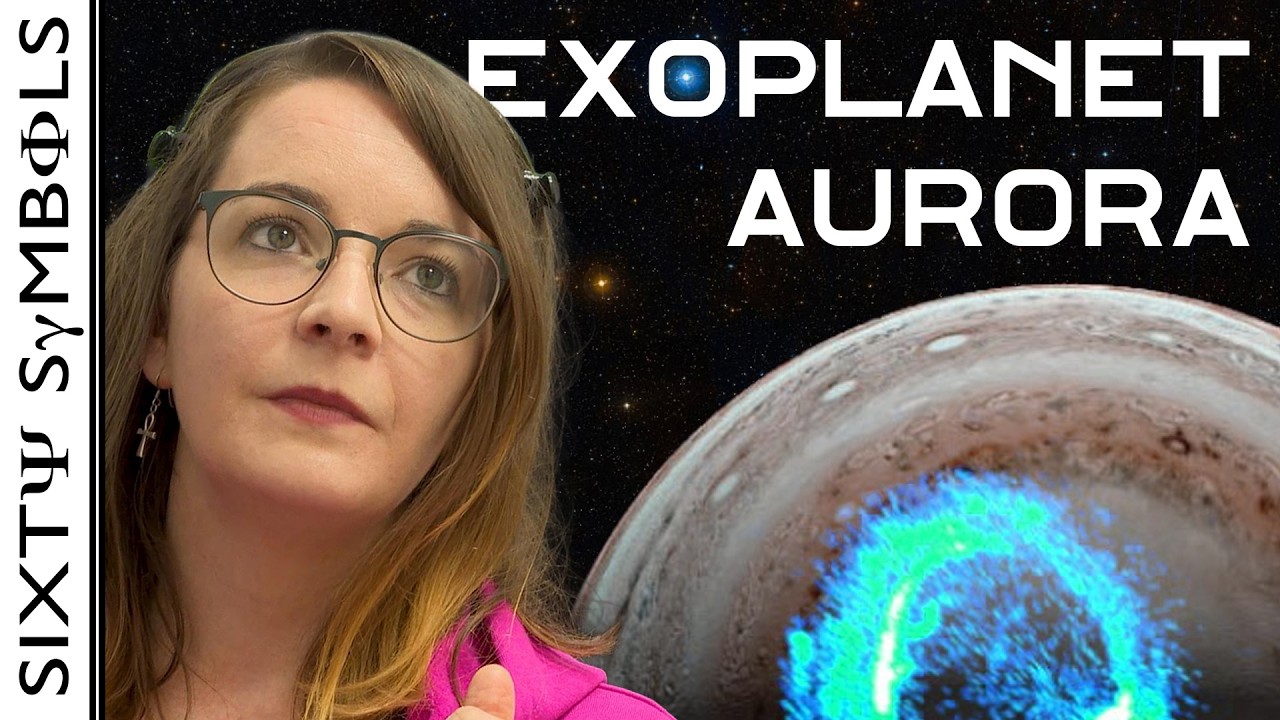 Aurora on an Exoplanet - Sixty Symbols
Up nextTrari.com home page ›


 Sixty Symbols
Story of
Why this story? The channel's weekly summary: what went up this week, what is drawing views now, and where the channel stands among similar channels.
If you could stand under the aurora Emma Chapman describes, you wouldn't see a thing. In "Aurora on an Exoplanet - Sixty Symbols", the astrophysicist starts with the familiar glow of Earth's northern lights before explaining what astronomers picked up from Beta Pictoris b: radio waves, not visible light.
The detective work is in telling the planet apart from its star. Chapman explains how astronomers used South Africa's MeerKAT radio telescope and checked their observations against the Gaia survey to pin down where the bursts came from. The signal points to a remarkably strong magnetic field. When it comes to what else you can say about the planet, Chapman draws a line at free electrons. One viewer singled out that restraint; others took the word 'aurora' as a cue to bring up Isaac Asimov's fictional planet of the same name.
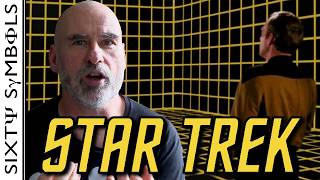
The interview was the only new Sixty Symbols upload and drew about 20,000 views in 15 hours. It's comfortably the channel's busiest video right now, with physicist Phil Moriarty's trip into Star Trek holodecks next, followed by Chapman's earlier look at whether the mysterious 'little red dots' in telescope images might be black holes.
Sixty Symbols added subscribers over the week, though its broader daily viewing pace is below usual. It had the quietest week for views among the similarly sized science and experiment channels in its group. Up and Atom was fairly quiet too, while Reactions drew a much larger weekly audience.
Published on Trari.com
Go back to Trari.com home page
Where next?
Things we can learn from the video
Press to jump
- 0:25Earth's visible auroras form when particles from the solar wind interact with gases such as oxygen in the atmosphere.
- 1:05An aurora can emit radio waves instead of visible light, so you'd need a radio telescope to detect it.
- 2:18MeerKAT observations and Gaia reference sources helped trace the radio bursts to Beta Pictoris b rather than its star.
- 4:32The signal points to free electrons around the planet and a magnetic field of at least 1,250 gauss.
- 5:35The pattern and circular polarisation of the bursts offer clues to the orientation of the planet's magnetic field.
A professional in this field? Want to write about Science & learning on Trari? Tell us ›
What viewers say
Loved seeing real observational discipline here. Cross-matching MeerKAT against Gaia quasars to verify those radio bursts actually came from Beta Pictoris b (and not its star) gives real weight to that 1,250+ gauss magnetic field limit. Even better was 04:45, refusing to overclaim on atmospheres or habitability: "There are free electrons. That's as far as I will go."
@MundaneMattersSee it on YouTubeAurora Borealis?
At this position in the orbit of Beta Pictoris?
At this rotation?
64 light years away?
Located entirely within the atmosphere of an exoplanet?@MoneyChanger02See it on YouTubeAurora being one the first planets to be colonised by humanity in Asimov, it tracks.
@adrien5568See it on YouTube
3 more comments
Aurora and Terry Pratchett, whats not to like. 🐢
@roderick1984See it on YouTubeI was excited when I first read about this discovery.
I made wikipedia articles about radio aurorae on cold brown dwarfs, so I was expecting a discovery like this.@LazyPlanet27See it on YouTube"Name of planet Beta Pictoris b is same name as star plus 'b.' Boring!" - a nearby Eridian
@ariochivSee it on YouTube
Public comments from the video's page on YouTube
Want to know when somebody answers you?
 For the channel's owners and team
Share the story with your audience
A ready picture for an Instagram story or a WhatsApp status.
Ready text for a community post
The videos drawing views on Sixty Symbols right now

- Channel
- Sixty Symbols
- Subscribers
- 889,000 ▲ 1,000 this week
- Channel views, last 7 days
- 19,870
- Videos published this week
- 1
- Video published
- November 24, 2026
- Video views so far
- 20,274
The numbers
Here's how views and subscribers moved for Sixty Symbols this week.

💡 Test your knowledge
Which Star Trek series featured Professor Moriarty as a holodeck character?
Professor Moriarty first appears as a holodeck character in The Next Generation episode "Elementary, Dear Data".