
 United States
 United Kingdom
 Canada
 Australia
 New Zealand
 Ireland
Astrum asks whether life on Venus could have come from Earth
Alex McColgan follows a hypothesis that takes microbes from an asteroid impact on Earth to the cooler clouds of Venus.
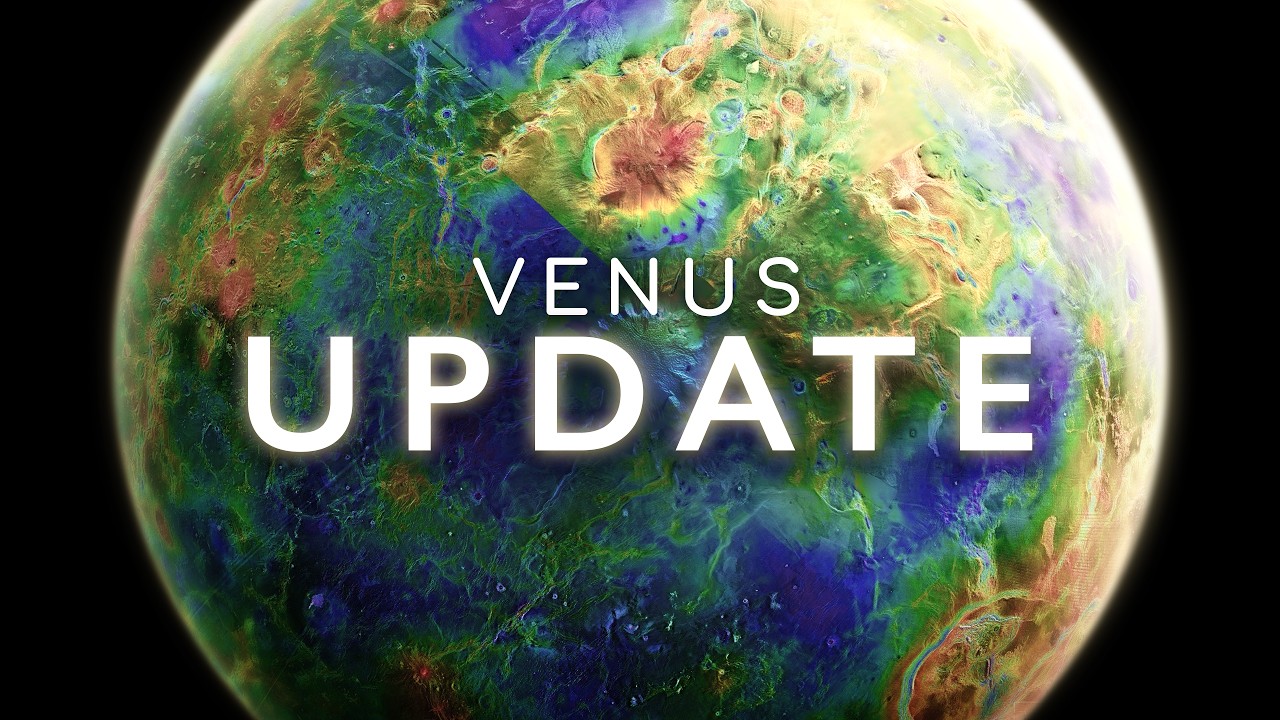 Scientists Just Announced There Could Be Life on Venus
Up nextTrari.com home page ›


 Astrum
Story of
Why this story? One of the most watched videos since yesterday, with 492,518 views.
If there are microbes in the clouds of Venus, they might not be native to Venus at all. That's the twist in Astrum's "Scientists Just Announced There Could Be Life on Venus", which drew nearly half a million views in 11 hours. Alex McColgan isn't reporting that anyone has found life there. He's looking at how it might have got there in the first place.
The idea, laid out in a study he covers, is that asteroid impacts could have flung pieces of Earth into space and that some of that debris could have reached Venus. Getting there is only half the question. Anything alive would have to survive the trip and find somewhere it could live. The place to look, McColgan explains, isn't the blistering surface but a layer of clouds where temperatures are milder.
Some viewers joked that finding Earth microbes would take the shine off discovering alien life. Others wondered whether Venus could have developed life of its own back when it might have had oceans. McColgan takes up that older mystery too, looking at what the amount of deuterium, a heavier form of hydrogen, can tell us about water the planet has lost. He also revisits Magellan radar readings that point to a possible opening into a vast lava tube near Nyx Mons. The video includes a sponsored segment.
The cloud mystery comes down to something that absorbs ultraviolet light. Organic compounds are one possible explanation, but the absorption doesn't tell us whether anything is alive. "We simply can't figure it out remotely," McColgan says, before turning to missions including DAVINCI and EnVision and what a return to Venus could tell us.
Published on Trari.com
Go back to Trari.com home page
Where next?
Things we can learn from the video
Press to jump
- 1:16Concentric rings in telescope observations suggest atmospheric gravity waves may help drive Venus's fast winds.
- 8:06Research on Venusian rift valleys suggests the planet's tectonics may still be active.
- 12:08Magellan radar data point to a possible opening into a large lava tube near Nyx Mons.
- 15:38Deuterium offers clues to how much water Venus lost, but whether it once had oceans remains debated.
- 18:55The Venus Life Equation explores whether asteroid impacts could have sent Earth microbes to Venus's cooler cloud layers.
- 22:22Organic compounds could account for unexplained ultraviolet absorption in the clouds, but the cause is still unknown.
A professional in this field? Want to write about Science & learning on Trari? Tell us ›
What do you think?
Want to know when somebody answers you?
 For the channel's owners and team
Share the story with your audience
A ready picture for an Instagram story or a WhatsApp status.
Ready text for a community post
- Channel
- Astrum
- Subscribers
- 2,920,000 ▲ 10,000 this week
- Channel views, last 7 days
- 6,118,803
- Channel views, pace per day
- 1,074,692 (on a normal day: 602,209)
- Video published
- November 26, 2026
- Video views so far
- 492,518 (less than a day online)
- Video views, pace per day
- 748,458
The numbers
The view count covers the explainer's first 11 hours. Its comment section was already more than twice as busy as a typical full first day for an Astrum video.

💡 Test your knowledge
Which spacecraft collected the radar data Astrum revisits in its search for a Venusian lava tube?
Magellan mapped Venus with radar, which could see through the planet's thick cloud cover.