
 United States
 United Kingdom
 Canada
 Australia
 New Zealand
 Ireland
Nvidia's post-Huang challenge goes beyond choosing a chief executive
A South Korean report examines concentrated decision-making and the financing ties that could spread a leadership shock across the AI industry.
 South KoreaStory of
Why this story? One of YTN's most watched videos since yesterday, with 395,774 views.
YTN: South Korea's first 24-hour news channel, on air since 1995. 5.4M subscribers and 23B views.
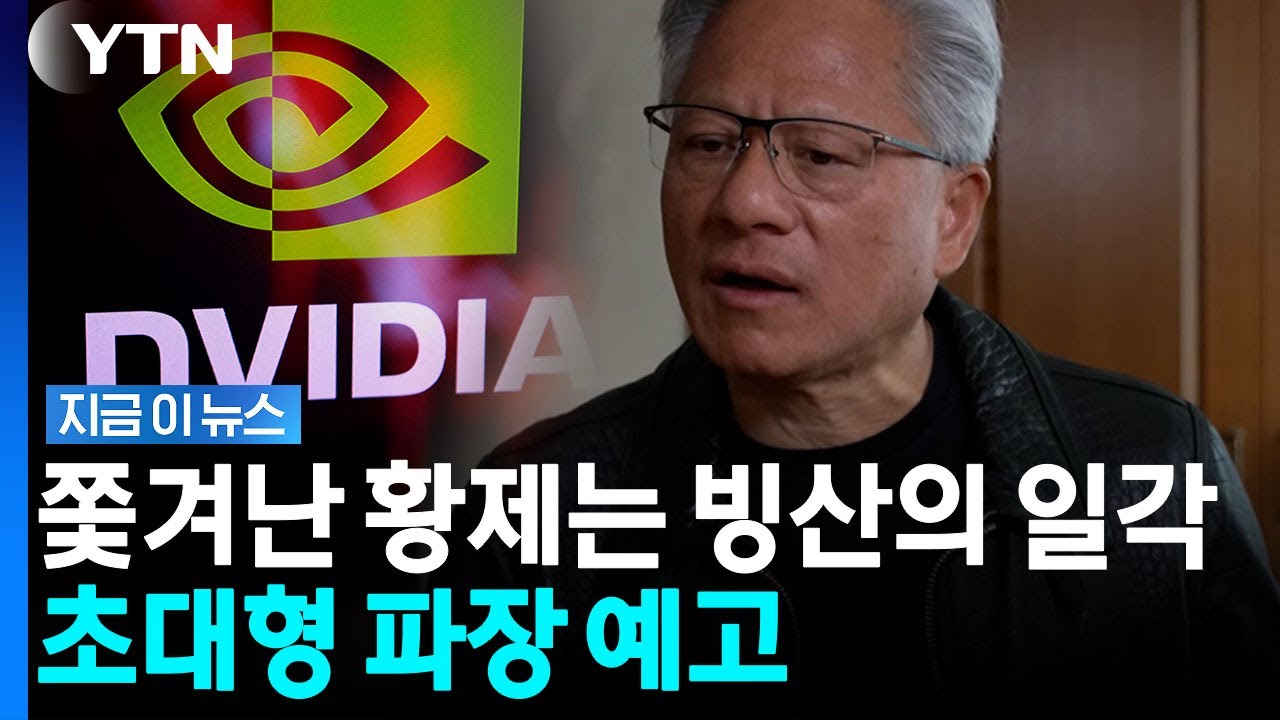 AI 절대적 존재의 몰락…산업계 '대혼돈' 위기 [지금이뉴스] / YTN
Next story: Nvidia shares recover some losses after Huang exit, Korean report says
Things we can learn from the video
Press to jump
- 0:10The report says Nvidia appointed finance chief Colette Kress interim CEO after Huang's resignation.
- 0:43Huang's influence extended from AI accelerators to CPUs, robotics and autonomous-driving platforms.
- 1:18A biographer and an analyst describe Nvidia's identity as closely tied to Huang.
- 1:47Nvidia finances AI businesses that can then spend the money on its chips, the report explains.
- 2:40The analysis warns that stricter financial oversight could constrain those arrangements and wider AI spending.
- 3:03The report describes a share-price drop and possible opportunities for AMD and Google's AI chips.
Jensen Huang's departure leaves Nvidia with more than a vacant leadership role: it raises questions about decisions that had been concentrated in its co-founder's hands, according to South Korea's 24-hour news broadcaster YTN.
The report says the board announced Huang's resignation on November 12 and appointed chief financial officer Colette Kress as interim chief executive. Its central question is whether the company can keep directing the AI industry without the person who led it from its founding in 1993.
The Korean-language video is titled "AI 절대적 존재의 몰락…산업계 '대혼돈' 위기 [지금이뉴스] / YTN", meaning "Fall of AI's dominant figure puts industry at risk of 'total chaos'." That is the report's warning, rather than an outcome it establishes.
It describes a company without a clear second-in-command or designated successor, where roughly 60 executives reported directly to Huang. The account connects that unusually centralized structure to his strategic influence: pushing AI accelerators, then expanding into data-center CPUs, open-source models, autonomous-driving technology and robotics platforms. Biographer Stephen Witt and Bernstein analyst Stacy Rasgon are cited to illustrate how closely Nvidia's identity became bound to its leader.
The potential consequences extend beyond chip production. The report describes Nvidia investing in, or providing financial backing to, AI developers and cloud companies, including OpenAI, Anthropic and CoreWeave. Those businesses can then use the funding to buy Nvidia chips, linking their expansion to the supplier's willingness to keep financing the ecosystem.
The warning is that tighter board oversight under replacement management could make those arrangements more conservative. In the report's analysis, that could reduce spending across the industry, even if Nvidia continues making GPUs.
The closing section reports a sharp share-price fall following Huang's departure and identifies AMD and Google's tensor processing units as possible beneficiaries. These are presented as potential openings, not evidence that customers have already switched. The video's end credits identify its narration as AI-generated.
Taiwanese-American engineer and businessman who co-founded Nvidia in 1993 and led it as president and chief executive until his resignation in November 2026.
More on Wikipedia ›US technology company that develops graphics processing units and other computing technologies for applications including artificial intelligence, gaming and data science. It was founded in 1993.
More on Wikipedia ›American business executive who became Nvidia’s interim chief executive on November 12, 2026, following co-founder Jensen Huang’s resignation.
More on Wikipedia ›San Francisco-based artificial intelligence company that develops generative AI models, including the GPT series of large language models. It is structured as a public benefit corporation.
More on Wikipedia ›San Francisco-based artificial intelligence company structured as a public benefit corporation. It aims to develop artificial general intelligence and systems with capabilities beyond those of humans.
More on Wikipedia ›US cloud-computing company based in Livingston, New Jersey. It operates 51 AI data centers that make extensive use of graphics processing units.
More on Wikipedia ›Published on Trari
Where next?


What do you think?
Want to know when somebody answers you?
- Channel
- YTN
- Subscribers
- 5,430,000
- Channel views, last 7 days
- 122,690,044
- Channel views, pace per day
- 23,275,359 (on a normal day: 16,096,584)
- Video published
- November 12, 2026
- Video views so far
- 553,519 (2 days online)
- Video views, pace per day
- 395,880
The numbers
The report drew about 396,000 views since yesterday, the highest total among the new videos on South Korea's leading news channels.
