
 United States
 United Kingdom
 Canada
 Australia
 New Zealand
 Ireland
Cuba's private businesses import U.S. fuel as the state economy falters, WSJ reports
Roberto Ferdman's Havana report follows a bakery, a fruit dryer and a soup kitchen through reforms that have widened private enterprise during Cuba's worst economic crisis in decades.
 The Wall Street Journal
Story of
Why this story? One of The Wall Street Journal's most watched videos since yesterday, with 197,588 views.
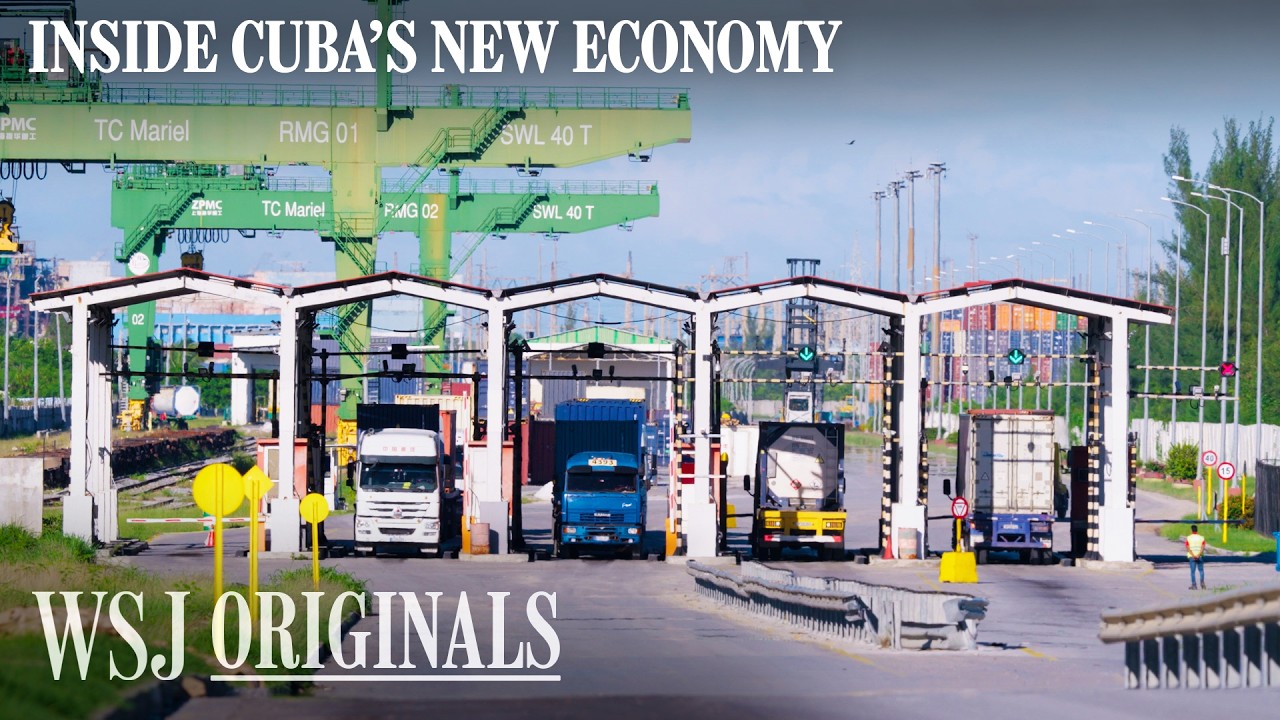 We Went Inside Cuba to See Its Messy Economic Transformation | WSJ
Things we can learn from the video
Press to jump
- 1:00Oscar Fernández runs a solar-powered dehydrated fruit business on leased state land in Havana.
- 2:40New government reforms widen the activities and staff sizes allowed for small and medium private firms.
- 4:09A bakery moves from rationed state supplies to buying its own ingredients and selling at market prices.
- 4:45A consultant explains how private Cuban companies import food and fuel directly from the United States.
- 7:18Marco Rubio says no one will invest in Cuba under its current governance model.
- 9:10A street vendor says he earns in a day what a state job pays him in a month.
On a construction site in Havana, Oscar Fernández is building a dehydrated fruit business on leased state land, powered by solar panels. Asked who runs it, he keeps it short: "It's very simple. I'm the owner."
That answer is the starting point for The Wall Street Journal's latest on-the-ground report. Senior video correspondent Roberto Ferdman obtained a visa to report from Cuba. According to the Journal, the island is in its worst economic crisis in decades, with escalating U.S. sanctions and a fuel blockade causing shortages of food, fuel and other basic goods. Yet as state institutions fail, the report finds the private sector expanding faster than at any time since the revolution. It has drawn nearly 200,000 views since it was posted.
The report traces how the government has formally widened the activities and staff sizes allowed to small and medium private firms, known as mipymes, a category Cuba first legalized in 2021. A Havana bakery that once depended on rationed state supplies now buys its own ingredients and sells bread at market prices.
The most striking turn concerns fuel. Business consultant Oniel Díaz Castellanos explains that private Cuban companies now import goods directly from the United States, including food and fuel. Asked about buying American fuel under the U.S. embargo, Deputy Minister of Foreign Trade Carlos Luis Jorge Méndez agrees that it is ironic. Washington's position appears through Homeland Security seizures and Secretary of State Marco Rubio, who says, "No one is going to invest in Cuba under their current governance model."
The gains are uneven. Ferdman's camera finds long lines at cash-short ATMs and frequent power cuts. Street vendor Fernando Pérez Hernández says he earns in a day what a state job would pay him in a month. At a community soup kitchen, pensioner Blanca López Chávez and administrator Yindira Cerqueda argue over state support and private prices, which López Chávez says have become far too expensive.
Viewers have filled the comments faster than usual for the channel. Many compare Cuba's path with China's and Vietnam's market reforms, and some ask for English voiceovers on the Spanish-language interviews.
Cuba's capital and largest city, Havana is also the country's main port and commercial hub.
More on Wikipedia ›A Republican politician and former senator from Florida, Rubio has served as U.S. secretary of state since 2025. He also serves as national security advisor.
More on Wikipedia ›Published on Trari
Where next?



 Is this your channel?For the channel's owners and team: a ready picture and text for your audience
Share the story with your audience. Everything is ready:
For an Instagram story or a WhatsApp status
For a community post or your channel's description
- Channel
- The Wall Street Journal
- Subscribers
- 6,720,000
- Channel views, last 7 days
- 13,175,006
- Channel views, pace per day
- 2,480,874 (on a normal day: 1,395,062)
- Video published
- October 27, 2026
- Video views so far
- 197,588 (less than a day online)
- Video views, pace per day
- 300,365
The numbers
The Journal's Cuba report is its most watched new video since yesterday, and the comments arrived faster than on the channel's usual first day.

💡 Test your knowledge
In which year did Fidel Castro's revolutionaries take power in Cuba?
Fulgencio Batista fled Cuba on January 1, 1959, and Castro's forces took control of the country.