
 United States
 United Kingdom
 Canada
 Australia
 New Zealand
 Ireland
High school football's endorsement business runs into a state-line divide
The Wall Street Journal follows Chris Coleman and his parents through a Florida NIL system that allows deals Texas still restricts.
 The Wall Street Journal
Story of
Why this story? One of The Wall Street Journal's most watched videos since yesterday, with 46,740 views.
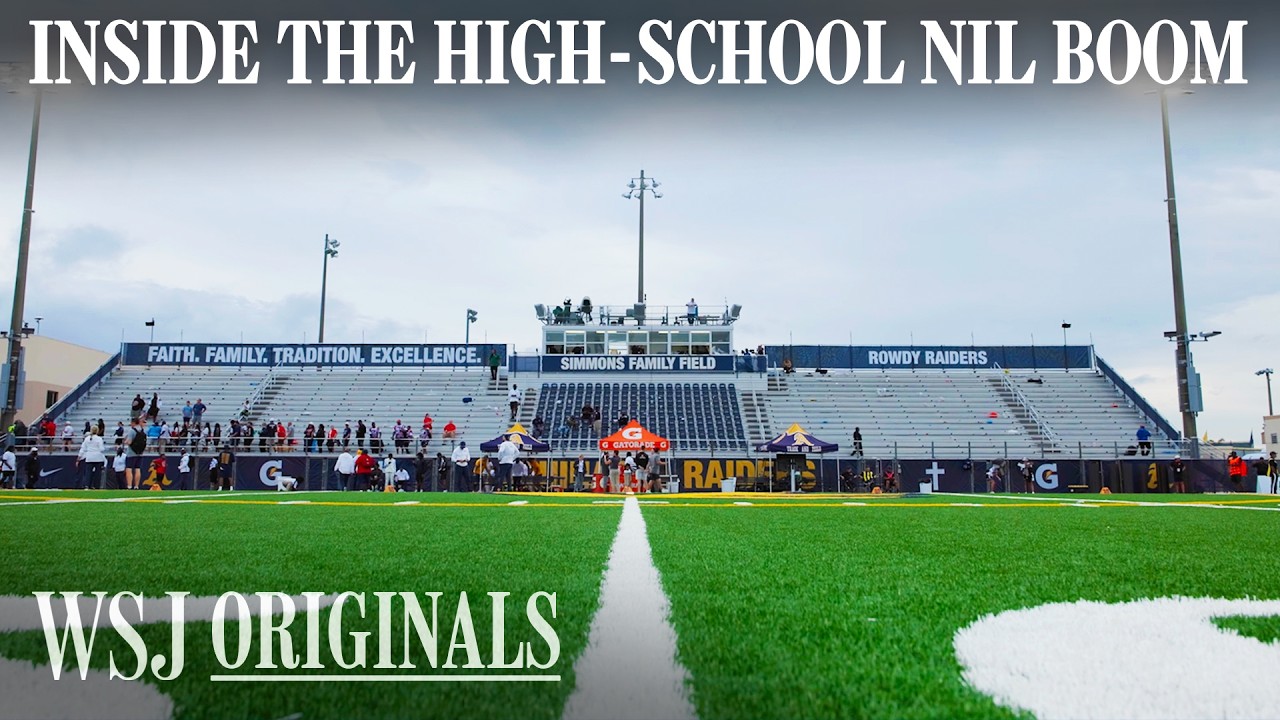 The Business Behind a 15-Year-Old Football Star’s NIL Deals | WSJ
Things we can learn from the video
Press to jump
- 1:18Chris Coleman practices catches with his father as the report introduces his football ambitions.
- 2:22His parents coordinate endorsement partnerships from their home office.
- 3:16The deal breakdown distinguishes cash payments from arrangements providing goods or services.
- 5:46Coleman signs an affidavit separating personal endorsements from high school team activities.
- 6:28DeSoto coach Claude Mathis explains Texas's restrictions, contrasting them with Florida's approach.
An endorsement deal doesn't always mean a paycheck. For Chris Coleman, a 15-year-old wide receiver at Florida's St. Thomas Aquinas High School, it can mean sandwiches. His mother, Dr. Shavonne Ramsey-Coleman, explains the distinction in The Wall Street Journal's report: "And a lot of it is trade, more trade deals than actual cash deals..."
The documentary follows Coleman and his parents through the expanding high school business of NIL, short for name, image and likeness. These arrangements let athletes earn from their personal identities through endorsements, bringing brand negotiations and commercial obligations into school-age sports.
His father, LaMonte Coleman, coordinates partnerships from a home office. Chris practices catches with him and shows college gear from programs that have extended offers. Football development and marketing are happening alongside each other, with his parents handling the business calls.
The Journal frames the wider debate around a competing set of concerns: endorsement opportunities can help families offset the costs of elite youth sports, but they also extend the professionalization of amateur athletics. Its report says six states still restrict NIL activity before college.
That divide becomes concrete when St. Thomas Aquinas meets DeSoto, a Texas school. DeSoto coach Claude Mathis explains the restrictions his players face, while Florida's athletic association has chosen to accommodate endorsements. Its executive director, Craig Damon, describes adapting as necessary to the organization's survival.
Florida's permission still comes with boundaries. Coleman signs a compliance affidavit separating his personal commercial obligations from his high school team's activities. That paperwork is a central detail of the report: the athlete can have a brand, but the school team and the endorsement business must remain distinct.
A private Catholic college-preparatory high school in Fort Lauderdale, Florida, sponsored by the Archdiocese of Miami.
More on Wikipedia ›The Florida High School Athletic Association is a nonprofit designated by the state legislature to regulate interscholastic high school activities in Florida.
More on Wikipedia ›Published on Trari
Where next?



 Is this your channel?For the channel's owners and team: a ready picture and text for your audience
Share the story with your audience. Everything is ready:
For an Instagram story or a WhatsApp status
For a community post or your channel's description
- Channel
- The Wall Street Journal
- Subscribers
- 6,730,000
- Channel views, last 7 days
- 7,677,077
- Channel views, pace per day
- 745,064 (on a normal day: 1,260,350)
- Video published
- November 9, 2026
- Video views so far
- 46,740 (less than a day online)
- Video views, pace per day
- 76,772
The numbers
The report drew roughly 47,000 views since yesterday, the most among The Wall Street Journal's new uploads.

💡 Test your knowledge
What does NIL stand for in athlete endorsement deals?
NIL refers to athletes' ability to monetize their name, image and likeness through arrangements such as endorsements.