
 United States
 United Kingdom
 Canada
 Australia
 New Zealand
 Ireland
The Action Lab puts falling-elevator advice through drop tests
Miniature sensor-equipped dummies test standing against lying flat in the channel's only new upload of the week.
 The Action Lab
Story of
Why this story? The channel's weekly summary: what went up this week, what is drawing views now, and where the channel stands among similar channels.
 This Is What You Should Actually Do In a Falling Elevator
Next story: Starship's catch gets a close-up follow-up from Elon Musk
Things we can learn from the video
Press to jump
- 1:44The host revisits MythBusters' test of jumping just before an elevator hits the ground.
- 2:43An egg demonstration illustrates why spreading impact across more surface area does not eliminate deceleration shock.
- 4:42Miniature dummies fitted with accelerometers compare standing and lying positions inside a mock elevator crate.
- 5:04Crumpling legs reduce measured impact forces compared with lying flat in the miniature tests.
- 8:16The host examines research comparing survival and injury risks across different landing positions.
An egg makes an unexpectedly useful elevator passenger. In The Action Lab's new experiment, it helps explain why spreading an impact across a larger surface does not necessarily protect what's inside from sudden deceleration.
"This Is What You Should Actually Do In a Falling Elevator" questions the familiar recommendation to lie flat. The host builds miniature dummies fitted with accelerometers, drops them inside a mock elevator crate and compares the results. Standing dummies with crumpling legs register lower forces than those lying down, including in further tests using faster sensors and hard foam. "So the legs are basically providing a crumple zone," he explains.
The episode includes a sponsored earbuds segment. Beyond the tabletop tests, it revisits MythBusters' rejection of the last-second jump and examines research comparing landing positions. The interesting distinction is between distributing force across the body and giving that body more distance over which to slow down.
The week's sole upload has reached roughly 660,000 views, with more than half a million arriving in its opening day. Viewers are discussing head protection, parachute-landing techniques and elevator brakes, although the egg demonstration has prompted its own wonderfully specific question about whether an egg can be whisked before it is cracked.
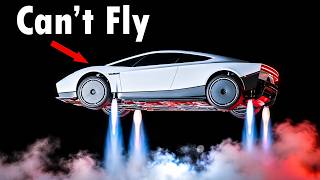
The elevator experiment is also the channel's most active video right now, comfortably above the older "Why the Universe Forbids Perfect Balance" and "The Physics Problem With Tesla's Flying Car." Those two keep balance and propulsion in the mix while this week's experiment concentrates on stopping.
Published on Trari
Where next?


A professional in this field? Want to write about Science & learning on Trari? Tell us ›
What viewers say
You're telling me you can pre-whisk an egg?
@Decs_See it on YouTubeI always bring up this question whenever I'm in an elevator when others are present.
@Mr_Ceiling_FanSee it on YouTubeI'm in an elevator falling down currently, thanks for the advice
@jamaluddin9158See it on YouTube
1 more comment
Never get into a falling elevator.
@9BallrSee it on YouTube
Public comments from the video's page on YouTube
Want to know when somebody answers you?
 Is this your channel?For the channel's owners and team: a ready picture and text for your audience
Share the story with your audience. Everything is ready:
For an Instagram story or a WhatsApp status
For a community post or your channel's description
The videos drawing views on The Action Lab right now

- Channel
- The Action Lab
- Subscribers
- 5,170,000
- Videos published this week
- 1
- Video published
- November 14, 2026
- Video views so far
- 662,074
- Views on its first day
- 507,214
The numbers
Here is how the elevator experiment and The Action Lab's older physics videos are doing.

💡 Test your knowledge
What does The Action Lab use to illustrate deceleration shock before testing miniature dummies?
The egg demonstration shows why spreading an impact over more surface area does not necessarily protect the contents.