
 United States
 United Kingdom
 Canada
 Australia
 New Zealand
 Ireland
A pinball jackpot doubles as a logic lesson on TED-Ed
Lane Gunderman's animated explainer turns AND, OR, and NOT into targets, ramps, and a gate that flips.
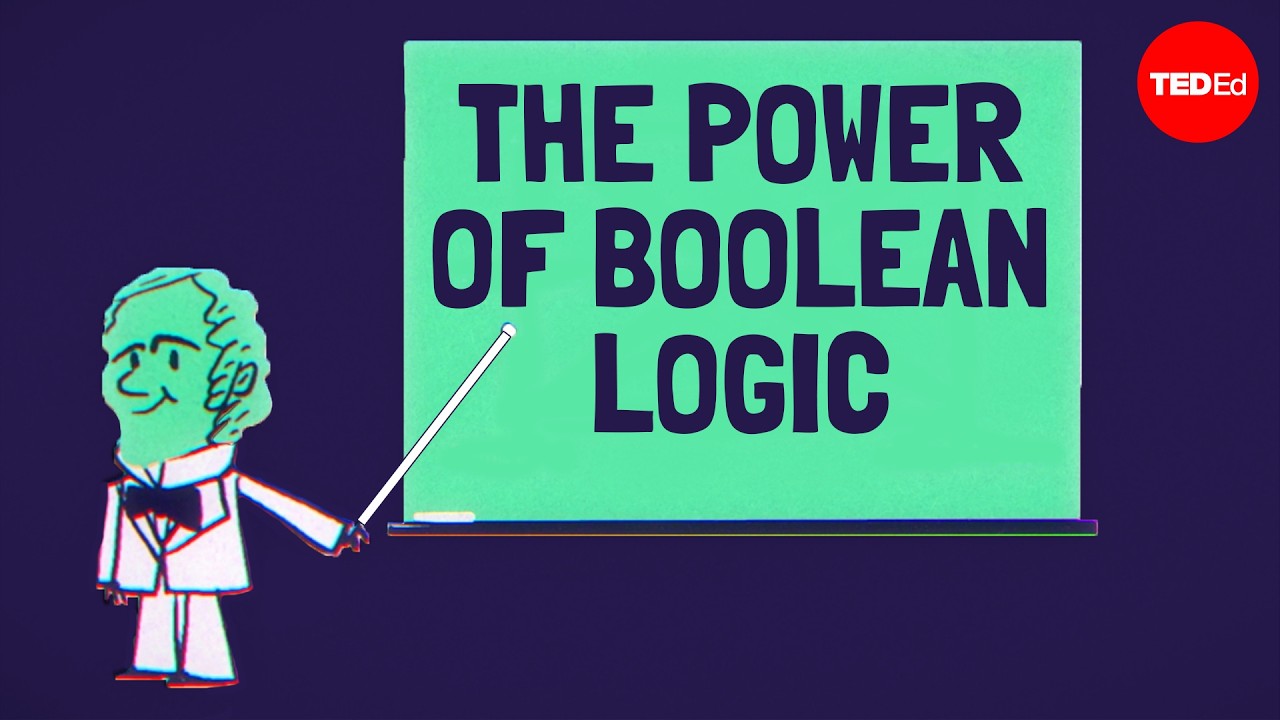 The three words that power every device you own - Lane Gunderman
Up next



 TED-Ed
Story of
Why this story? The channel's weekly summary: what went up this week, what is drawing views now, and where the channel stands among similar channels.
Things we can learn from the video
Press to jump
- 0:36Boolean variables represent true or false, written as 1 or 0.
- 1:10AND, OR, and NOT are the three operations at the heart of the lesson.
- 2:15The jackpot requires every target to be hit, illustrating AND.
- 2:47A track obstacle flips between open and closed to illustrate how NOT reverses an input.
- 3:22Either scoring ramp can trigger a payout, illustrating OR.
- 4:42NOR combines OR with NOT and can be used to build any other logic gate.
Hitting one target won't get you the jackpot in "The three words that power every device you own - Lane Gunderman." You have to hit them all. That's AND, the first of three operations TED-Ed illustrates with a pinball machine. OR gives you a choice of scoring ramps, and NOT flips an input, illustrated by an obstacle that switches between open and closed.
The lesson starts with George Boole's attempt to put Aristotle's logic into mathematical form, then lets the switches do the explaining. Addison Anderson narrates the animation, directed by Igor Ćorić at Artrake Studio. It was made in collaboration with Brilliant and ends with an ad for its courses. In the comments, some viewers singled out the jackpot example, while others wanted a mention of NAND, another gate that can be combined to build any Boolean operation.
The pinball lesson drew about 210,000 views, the most of TED-Ed's two new uploads. The newer "5 times scientists experimented on themselves - Shannon Odell," about researchers who became their own test subjects, is drawing views fastest now. Last week's "Why is pepper such a popular spice? - Carolyn Beans" isn't far off the pinball lesson's current pace, tracing the spice from India's Malabar Coast through early trade routes.
Subscribers held steady and TED-Ed's current daily views are running at about half their usual pace. Even so, its seven-day view total was among the strongest in this group of education channels. TEDx Talks had a bigger week for views and added subscribers, while TED and CrashCourse, like TED-Ed, held steady on subscribers.
Published on Trari
Where next?
A professional in this field? Want to write about Science & learning on Trari? Tell us ›
What viewers say
The pinball table made Boolean logic click — the AND gate needing all three letters lit before the jackpot pays out is such a clear image. What everyday gadget should get the same treatment next?
@NANCYLU-t2tSee it on YouTubeTed Ed Pinball Table when?
@tealcorehedgehog2425See it on YouTubeNAND is also a universal gate
@anujsharma5573See it on YouTube
2 more comments
Boolean algebra is a fascinating intersection of mathematics, logic, and technology. I especially appreciate how its fundamental operations can be applied to programming, data analysis, information filtering, and creative computational projects. It's remarkable that such simple principles have become essential to modern computing!
@RedInsightfulStar221See it on YouTubeThe pinball machine framing made it click for me — three little words, AND, OR and NOT, quietly deciding everything a computer does. And learning that Boole worked this out in the 1840s, a century before computers existed, makes it even wilder.
@MindBlown443See it on YouTube
Public comments from the video's page on YouTube
Want to know when somebody answers you?
 For the channel's owners and team
Share the story with your audience
A ready picture for an Instagram story or a WhatsApp status.
Ready text for a community post
The videos drawing views on TED-Ed right now


- Channel
- TED-Ed
- Subscribers
- 23,000,000
- Channel views, last 7 days
- 7,003,956
- Videos published this week
- 2
- Video published
- November 17, 2026
- Video views so far
- 210,180
- Views on its first day
- 137,729
The numbers
Here's how TED-Ed's uploads, views, and subscriber count moved this week.

💡 Test your knowledge
Which logic gate outputs true only when both of its inputs are false?
NOR reverses OR, so its output is true only when neither input is true.