
 United States
 United Kingdom
 Canada
 Australia
 New Zealand
 Ireland
SciShow explores why a beating heart resists cancer
Hank Green explains research linking mechanical movement to cell division, among five new science explainers.
 SciShow
Story of
Why this story? The channel's weekly summary: what went up this week, what is drawing views now, and where the channel stands among similar channels.
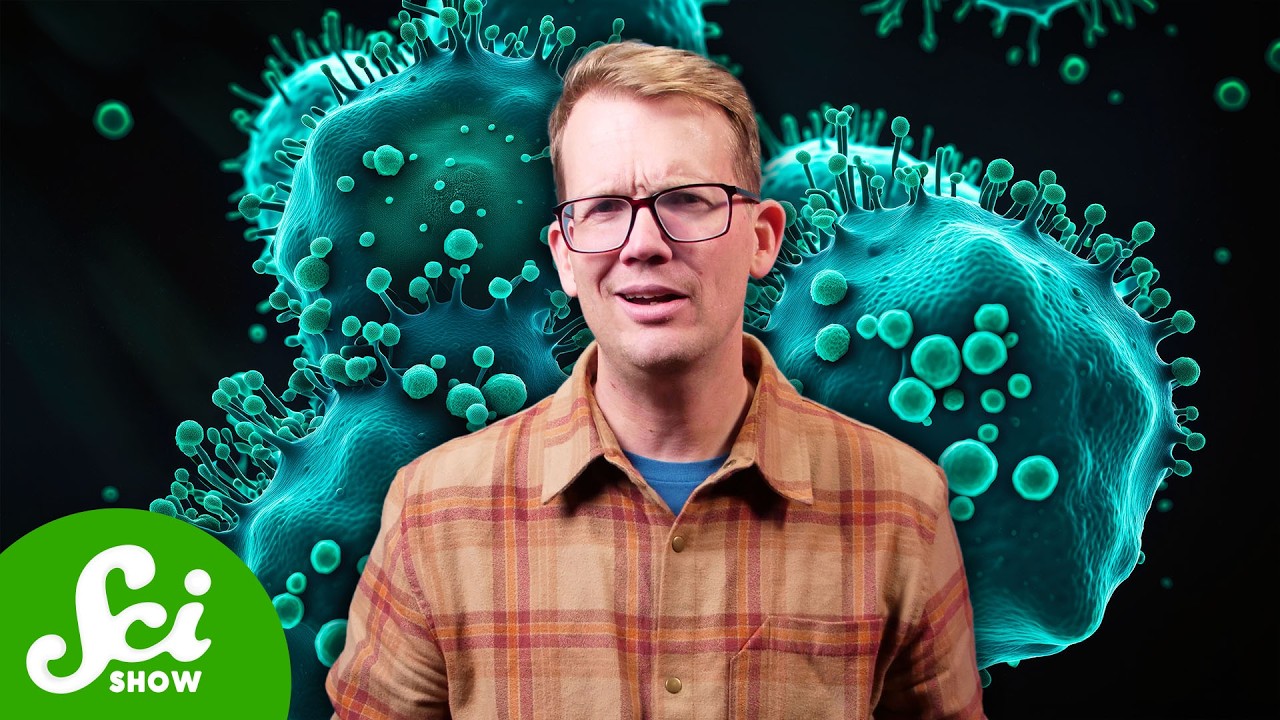 Why Isn’t Heart Cancer a Thing?
Next story: Why vitamin F didn't keep its name
Things we can learn from the video
Press to jump
- 0:28Cancer originating in the heart is distinct from cancer that spreads there from elsewhere.
- 1:41Adult heart cells rarely divide, reducing opportunities for uncontrolled cell replication.
- 2:06Devices that reduce the heart's workload can allow heart cells to replicate and heal.
- 4:16Green describes mouse experiments in which transplanted, non-beating hearts developed more cancer than beating hearts.
- 6:14Nesprin-2 relays mechanical movement to the nucleus, helping suppress genes involved in cell proliferation.
- 7:02Researchers hope to use this mechanical signaling to inform future cancer treatments.
Rarity needs explaining. In SciShow's most-watched new upload, Hank Green takes a question with a misleadingly absolute title, "Why Isn't Heart Cancer a Thing?", and makes the crucial distinction: heart cancer exists, but it is extremely rare.
The episode has reached roughly 1.7 million views. Green starts with a familiar part of the explanation: adult heart muscle cells rarely divide, leaving fewer opportunities for uncontrolled cell replication. Then he moves to the more surprising question of whether the heart's constant workload helps keep that division in check.
He describes experiments comparing beating hearts with extra, non-beating hearts transplanted into mice, followed by work with lab-grown heart tissue. The findings point toward mechanical movement restricting cancer growth. A protein called Nesprin-2 provides a possible connection between that movement and the genes governing cell proliferation. Green closes with researchers' hopes of turning that understanding into treatments, not a claim that they already have one.
Viewers are also examining the wording: several comments stress the difference between cancer being rare and nonexistent, while others discuss the distinction between tumors originating in the heart and cancer spreading there.
Elsewhere, Johnny Dickson hosts "5 Species That Love Fire," and another explainer follows the exceptionally smooth spheres used to test Einstein's predictions. "Using Radioactive Waste to Treat Cancer" looks at targeted radioactive medicines. Denali Kincaid supplies the week's unexpected industrial history with "The Deep Sea Sub Built By a Cereal Company": General Mills built Alvin.
Across the catalog, SciShow added about 4.4 million views, with its subscriber count unchanged. Daily viewing is currently around half its usual level; nearby science channel AsapSCIENCE is having a livelier-than-usual day. Within SciShow, the heart episode carries the most momentum, followed by the Alvin story and the earlier investigation into the missing vitamin F.
Published on Trari
A professional in this field? Want to write about Science & learning on Trari? Tell us ›
Where next?


What do you think?
Want to know when somebody answers you?
 Is this your channel?For the channel's owners and team: a ready picture and text for your audience
Share the story with your audience. Everything is ready:
For an Instagram story or a WhatsApp status
For a community post or your channel's description
The videos drawing views on SciShow right now
 5 Species That Love Fire204,418 views · 2026-11-09
 How 4 Perfect Space Balls Proved Einstein Right169,892 views · 2026-11-11
 Using Radioactive Waste to Treat Cancer166,156 views · 2026-11-12
 The Deep Sea Sub Built By a Cereal Company89,695 views · 2026-11-13
 Why Is There No Vitamin F?1,066,211 views
- Channel
- SciShow
- Subscribers
- 8,420,000
- Channel views, last 7 days
- 4,448,277
- Videos published this week
- 5
- Video published
- November 10, 2026
- Video views so far
- 1,729,753
- Views on its first day
- 442,092
The numbers
Here is SciShow's week in views, subscribers and new uploads.
