
 United States
 United Kingdom
 Canada
 Australia
 New Zealand
 Ireland
AsapSCIENCE explains the Atlantic's cold blob and a current's uncertain future
Mitchell Moffit's ocean explainer has passed a million views, tracing how Greenland meltwater could disrupt a vast heat-moving system.
 AsapSCIENCE
Story of
Why this story? The channel passed the 1,000,000 views mark.
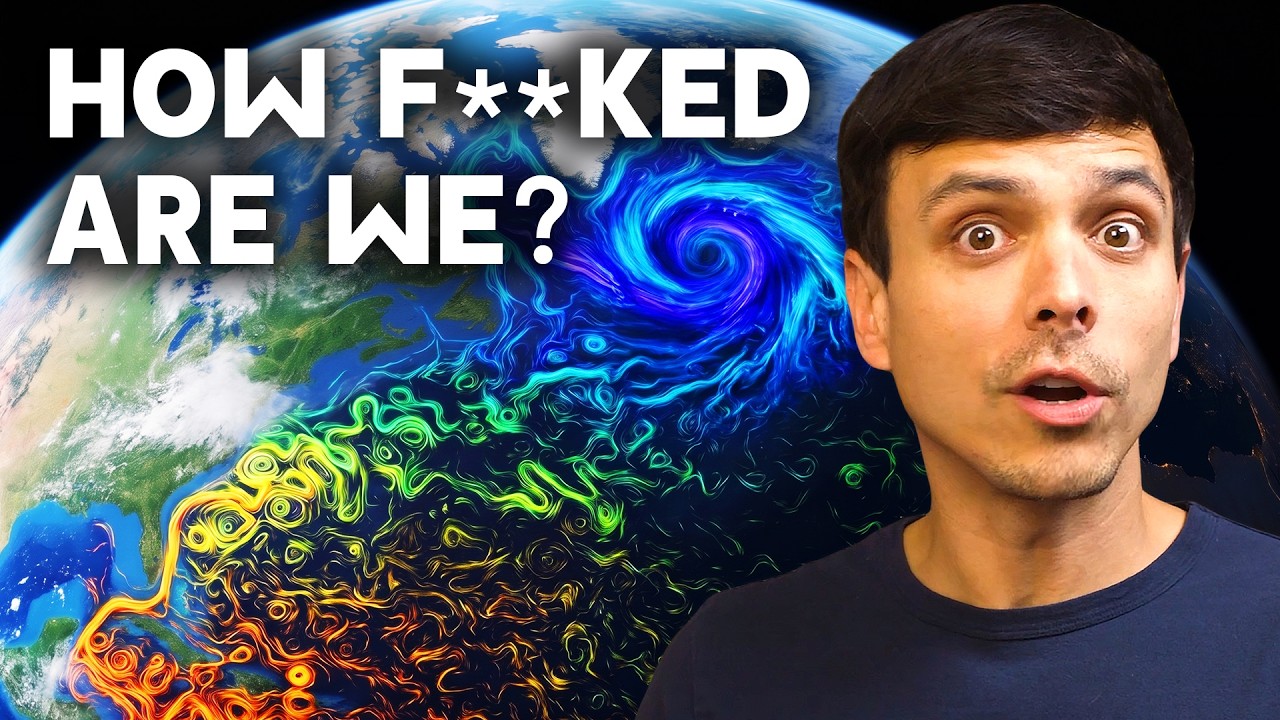 Nobody has EVER seen the ocean do this before
Next story: AsapSCIENCE's older-brother title gives viewers a younger-brother question
Things we can learn from the video
Press to jump
- 0:23The AMOC carries warm, salty water northward, with colder water returning south at depth.
- 1:17Buoys, sediment samples and satellites provide evidence used to investigate changes in the circulation.
- 1:45Greenland meltwater reduces salinity, making surface water less able to sink.
- 2:38Potential collapse effects include European cooling, shifting monsoons and sea-level rise along North America.
- 3:25A leaning-chair analogy explains how a system can cross a tipping point.
- 4:14A study's estimated collapse timing is discussed alongside scientific disagreement; the video offers no settled date.
A patch of cooling ocean might sound like welcome news on a warming planet. In AsapSCIENCE's explainer, that North Atlantic anomaly is the starting point for a much less reassuring question: what happens if the currents carrying heat northward weaken dramatically?
"Nobody has EVER seen the ocean do this before" has passed a million views within three days of publication. Written and animated by Mitchell Moffit, it uses whiteboard drawings to explain the Atlantic Meridional Overturning Circulation, or AMOC, before tackling the uncertainty around a possible collapse.
The mechanism is surprisingly easy to picture. Warm, salty water travels north, cools and sinks, with colder water returning south at depth. Greenland's melting ice adds freshwater, making the surface water less salty and harder to sink. The video walks through evidence from buoys, ocean sediment and satellites used to investigate how the system is changing.
A collapse could mean pronounced European cooling, altered African and Asian monsoons, and rising seas along North America. But the explainer's crucial distinction is between a risk and a timetable. It introduces a study published in 2023 that estimated a tipping point around 2057, then addresses scientific debate rather than treating that year as a deadline.
Viewers are bringing up The Day After Tomorrow and singling out the explanation of how scientists measure ocean circulation. For all the certainty of the title, the host's answer about the timing of a possible collapse is more restrained: "The genuine answer is that we don't know yet."
Published on Trari
A professional in this field? Want to write about Science & learning on Trari? Tell us ›
Where next?


What viewers say
Everything has run AMOC
@Gooseman2k2See it on YouTubeThe Day After Tomorrow, anyone?
@HexManiacArtieSee it on YouTubeThe part about buoys and mud samples showing the AMOC slowing was the clearest explanation I've seen. Scary, but at least now I understand how scientists actually measure it.
@dungimlangofficialSee it on YouTube
Public comments from the video's page on YouTube
Want to know when somebody answers you?
 Is this your channel?For the channel's owners and team: a ready picture and text for your audience
Share the story with your audience. Everything is ready:
For an Instagram story or a WhatsApp status
For a community post or your channel's description
- Channel
- AsapSCIENCE
- Subscribers
- 10,800,000
- Channel views, last 7 days
- 2,642,802
- Channel views, pace per day
- 687,650 (on a normal day: 321,192)
- Video published
- November 12, 2026
- Video views so far
- 1,157,723 (3 days online)
- Video views, pace per day
- 383,476 (on a normal day: 545,911)
The numbers
The ocean explainer crossed a million views in three days. Across AsapSCIENCE, daily views are also running at more than twice their usual level.

💡 Test your knowledge
What does the A in AMOC stand for?
AMOC stands for Atlantic Meridional Overturning Circulation.