
 United States
 United Kingdom
 Canada
 Australia
 New Zealand
 Ireland
South Park's patriotic beef gets Kenny Hesse's political dissection
Really American's recap reads the steakhouse chaos in "Guinea Pig on a Stick" as a satire of branding, prices and partisan loyalty.
 Really American
Story of
Why this story? 926,971 views so far, and here is what is inside it.
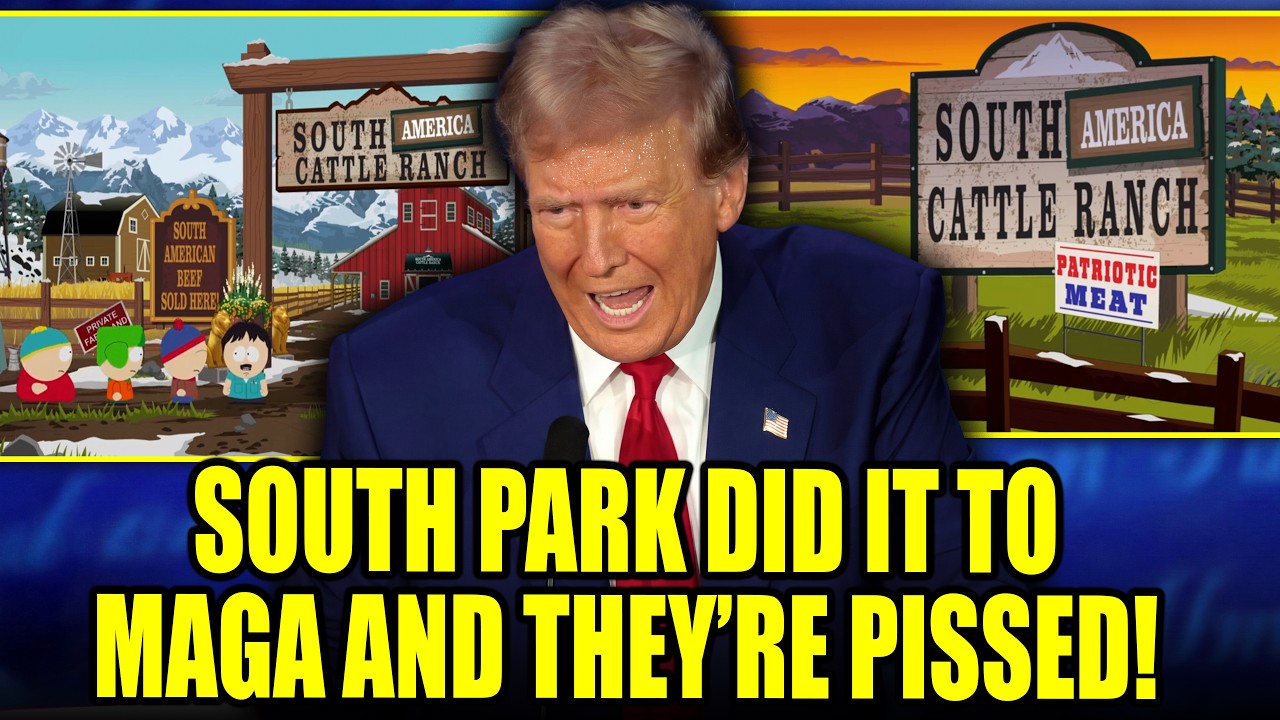 South Park Just HUMILIATED The Sh*t Out Of MAGA Literally And its AMAZING!
Things we can learn from the video
Press to jump
- 0:31Hesse interprets the diners' choices as satire of accepting flawed policies and overpriced goods.
- 1:12The school replaces Sloppy Joes with guinea pig because beef has become too expensive.
- 3:01The cattle-ranch investigation contrasts scarce school food with extravagant treatment for cows.
- 5:15An influencer's patriotic beef promotion collapses when he eats the product himself.
- 8:20Cheap food gets patriotic branding, completing the metaphor Hesse draws about marketing and political loyalty.
The school cafeteria can't afford beef, while cattle at a local ranch receive luxury spa treatments. That contrast gives Kenny Hesse plenty to work with in Really American's recap of South Park's "Guinea Pig on a Stick."
The upload mixes clips from the animated comedy with Hesse's political commentary. His central reading is straightforward: patriotic packaging can persuade people to accept an expensive, harmful product, even when the consequences are impossible to ignore.
In the episode's restaurant scenes, wealthy diners keep ordering South American beef despite its spectacularly unpleasant digestive effects. Hesse connects their willingness to keep eating with his criticism of MAGA loyalty, arguing that branding and media enthusiasm can override people's own experience of a bad deal. That is his interpretation of the satire, rather than an economic explanation supplied by the cartoon.
The recap follows the joke through increasingly absurd versions of the beef shortage. Schoolchildren get cuy, or guinea pig on a stick. Chain-steakhouse representatives turn the search for cattle into armed conflict. A conservative influencer enthusiastically promotes the beef, then suffers the consequences after taking a bite.
Hesse brings those scenes back to a distinction between what something costs, what it actually delivers and what its sellers call it. His closing analysis focuses on the rebranding of cheap food as a patriotic delicacy: the sales pitch changes, but the product doesn't.
The four-day-old upload has reached roughly 927,000 views. Its subject, rather than an unusual viewing surge, is the draw here: a school-lunch problem expanded into a steakhouse-sized political metaphor.
Published on Trari
Where next?



 Is this your channel?For the channel's owners and team: a ready picture and text for your audience
Share the story with your audience. Everything is ready:
For an Instagram story or a WhatsApp status
For a community post or your channel's description
- Channel
- Really American
- Subscribers
- 1,310,000 ▲ 10,000 this week
- Channel views, last 7 days
- 10,548,653
- Channel views, pace per day
- 1,393,440 (on a normal day: 1,697,860)
- Video published
- October 30, 2026
- Video views so far
- 926,971 (4 days online)
- Video views, pace per day
- 165,419 (on a normal day: 249,438)
The numbers
The recap is approaching a million views. Here is how its viewing and engagement stand.

💡 Test your knowledge
Who created South Park?
Trey Parker and Matt Stone created South Park, which premiered on Comedy Central in 1997.