
 United States
 United Kingdom
 Canada
 Australia
 New Zealand
 Ireland
PBS Space Time finds galaxies growing up unexpectedly fast
Matt O'Dowd explores whether early quasars explain galaxies that look surprisingly mature in James Webb's view of the young universe.
 PBS Space Time
Story of
Why this story? The channel's weekly summary: what went up this week, what is drawing views now, and where the channel stands among similar channels.
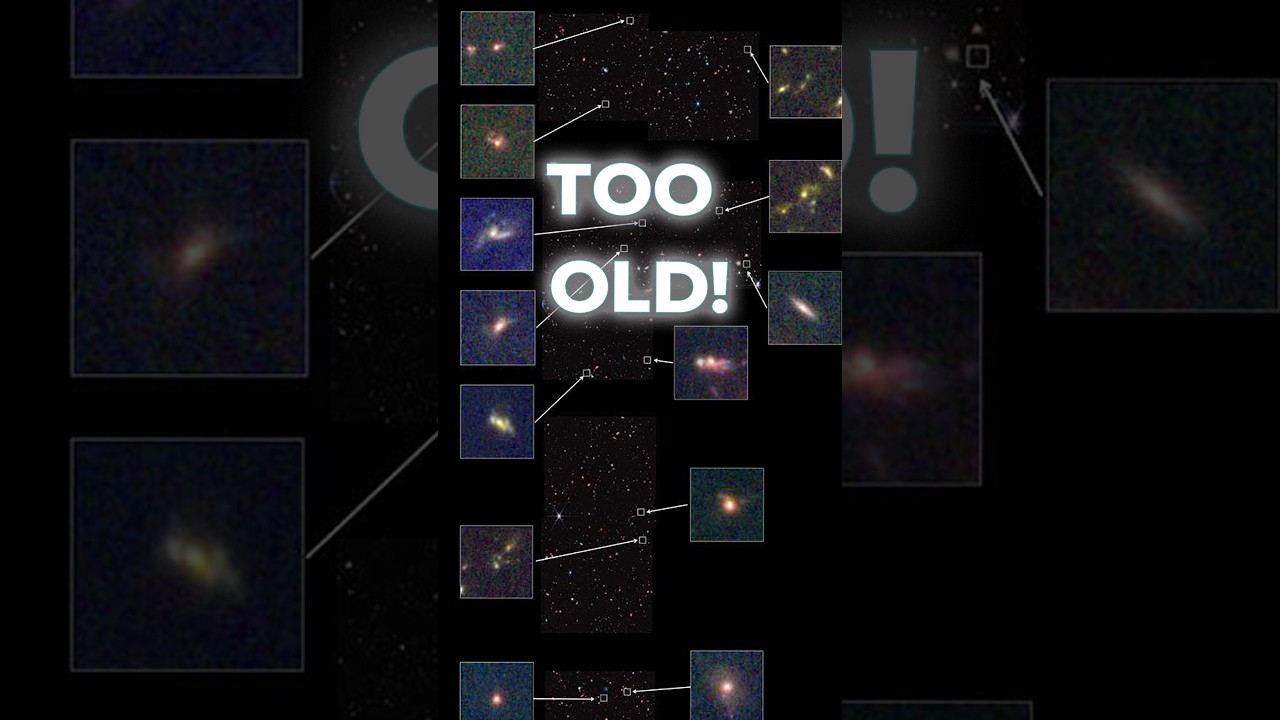 We Found Galaxies Too OLD For The Universe!
"Telescopes are time machines," Matt O'Dowd says, opening a cosmic growing-up problem: some galaxies look far more developed than astronomers expected so early in the universe's history.
PBS Space Time's most watched new upload, "We Found Galaxies Too OLD For The Universe!", has reached roughly 155,000 views. The title's paradox is about how quickly galaxies matured, not galaxies literally predating the universe. O'Dowd explains one possible mechanism: early quasars powered by supermassive black holes could heat and expel gas, shutting down star formation. That leaves another puzzle tucked inside the first: how did those black holes grow so quickly?
The comments pick up on science as unfinished business. Viewers discuss how discoveries have changed their picture of space, appreciate the telescope imagery and recognize the channel's habit of ending on the word "spacetime."
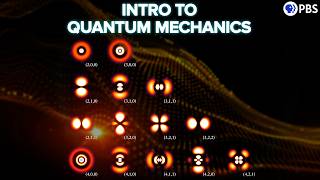
The other new upload, "String Theory Explained In Two Minutes!", gives vibrating strings, extra dimensions and quantum gravity a compact introduction. It had the stronger first-day audience of the two and now draws the most daily views among the channel's active videos. For anyone wanting the opposite of a quick explanation, the older, two-hour "So You Want to Understand Quantum Mechanics…" remains active alongside the IceCube neutrino episode.
The channel added about 10,000 subscribers over the week, though daily viewing is a little below its usual level. Among similarly sized science channels, Hank Green and NileBlue had substantially larger weekly audiences. PBS Space Time's own week offered a distinctive choice: a brief encounter with string theory or a much longer stay with quantum uncertainty.
Published on Trari
Where next?


What viewers say
I really do love how the past like 20 years but especially the past like 5 has really changed what we do and don't know about space.
Just a really cool thing to witness and I hope some are taking the time and appreciating it all and this renewed desire for space exploration and discovery@kennymorelandiii9406See it on YouTubePerfect. How boring would it be if we understood immediately?
@Shinku_no_sanbunSee it on YouTubeI'm glad that even the shorts continue the tradition of finishing every video on the word "spacetime."
@socalminstrelSee it on YouTube
4 more comments
Just stopping to appreciate that first render of the JWST from the ESA. Really incredible!!
@Renatus_EruditusSee it on YouTubeForward! To the past.
@leepope3500See it on YouTubethe spacetime ambient background music was too fire 🌋
@eristato0000See it on YouTube...spacetime.
Never gets old 🧡@Pratanjali64See it on YouTube
Public comments from the video's page on YouTube
 Is this your channel?For the channel's owners and team: a ready picture and text for your audience
Share the story with your audience. Everything is ready:
For an Instagram story or a WhatsApp status
For a community post or your channel's description
The videos drawing views on PBS Space Time right now

- Channel
- PBS Space Time
- Subscribers
- 3,540,000 ▲ 10,000 this week
- Channel views, last 7 days
- 1,306,794
- Videos published this week
- 2
- Video published
- October 26, 2026
- Video views so far
- 155,324
- Views on its first day
- 93,097
The numbers
Here is how PBS Space Time's audience and uploads moved over the week.

💡 Test your knowledge
Where is the IceCube neutrino observatory located?
IceCube uses instruments embedded deep in Antarctic ice to detect light produced by particle interactions.