
 United States
 United Kingdom
 Canada
 Australia
 New Zealand
 Ireland
Marcus Olang' takes ChatGPT back to English class
In a New York Times Opinion essay, the Nairobi writer explains why the habits his teachers rewarded are now treated as signs of a chatbot.
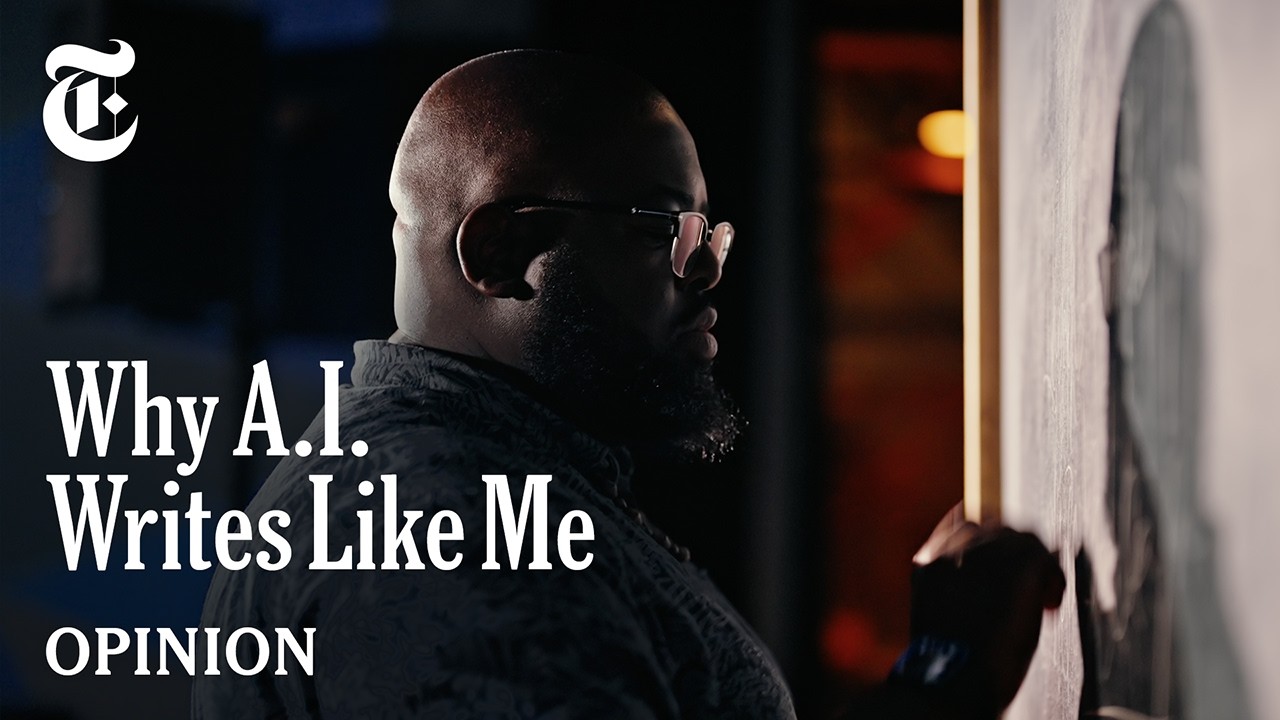 ‘I Don’t Write Like ChatGPT. ChatGPT Writes Like Me.’
Up nextTrari.com home page ›


 New York Times Opinion
Story of
Why this story? 909,182 views so far, and here is what is inside it.
Marcus Olang' spent days writing a project proposal, only to be told it sounded like ChatGPT and needed a "more human touch." His reply, in an essay for New York Times Opinion, turns the comparison around: "I don't write like ChatGPT. ChatGPT writes like me."
Olang' takes that line back to his classroom in Nairobi, Kenya. His teacher, Mrs. Amolo, taught him to show off his vocabulary, make points in threes and set contrasting ideas side by side. These weren't just flourishes. Knowing how to write that way mattered on national exams that could shape where a student went next.
Then comes "delve." Olang' shows a post by Y Combinator co-founder Paul Graham that treats the word as a ChatGPT tell, then traces it back to Old English. To Olang', it's ordinary vocabulary. Several viewers said much the same in the comments, while others recalled having their own papers or essays flagged or questioned because the writing sounded too polished.
Olang' points out that Kenyan workers helped evaluate AI-generated writing, then cites research showing that detectors are more likely to mislabel writing by people who learned English as an additional language. His point isn't simply that a detector can get it wrong. The same formal English that once proved you'd learned the rules can now make people suspect you didn't write a word.
Paul Graham is a British-American computer scientist, essayist and investor who co-founded the startup accelerator Y Combinator.
More on Wikipedia ›Published on Trari.com
Go back to Trari.com home page
Where next?
Things we can learn from the video
Press to jump
- 0:30Olang' argues that ChatGPT echoes the formal English he was taught in Nairobi.
- 2:30National writing exams could shape a student's educational prospects, giving those classroom rules real stakes.
- 4:05Olang' traces "delve" back to Old English after showing Paul Graham's post treating it as a chatbot tell.
- 5:46Kenyan data workers helped evaluate the writing produced by AI systems, Olang' explains.
- 6:30Olang' cites research showing that detectors disproportionately flag writing by people who learned English as an additional language.
- 8:05Olang' argues that casual, imperfect writing has become a marker of being human, reversing what school taught him.
A professional in this field? Want to write about Tech on Trari? Tell us ›
What viewers say
It never ceases to weird me out when I hear that words like "delve" are "archaic" or unusual. I use the word all the time. It seems totally natural.
@ashwinnmyburgh9364See it on YouTubeI recently completed an online master’s degree program, where I was constantly told that my writing “sounds like a textbook” or “sounds like AI” even though it was all me. Eventually, this became my response too—“I don’t write like AI, it writes like me.”
@sailorforceSee it on YouTubeWhat annoys me with the rule of threes and the "it's not X. It's Y" examples is that those are just good writing techniques, to the point that they got overused by human writers, whose writing then got fed into and "co-opted" by LLMs. So now to convey the same thing we have to "humanize" ourselves and change a good piece of writing to make it sound less LLM-y. Pretty annoying
@agent0422See it on YouTube
3 more comments
For Asian students too. This is what we learn when preparing for exams like TOEFL or IELTS.
@lunalin9870See it on YouTubeMany Nigerians will relate to this. Thanks for delving into this topic
@unclenifeSee it on YouTubeGot to love the cheeky "no robots were used in the making of this video" tag.
@1ScoutSee it on YouTube
Public comments from the video's page on YouTube
Want to know when somebody answers you?
 For the channel's owners and team
Share the story with your audience
A ready picture for an Instagram story or a WhatsApp status.
Ready text for a community post
- Channel
- New York Times Opinion
- Subscribers
- 227,000 ▲ 7,000 this week
- Channel views, last 7 days
- 2,411,668
- Channel views, pace per day
- 123,537 (on a normal day: 249,540)
- Video published
- November 22, 2026
- Video views so far
- 909,182 (6 days online)
- Video views, pace per day
- 61,392 (on a normal day: 289,886)
The numbers
The essay drew about 909,000 views in its first six days.

💡 Test your knowledge
Which word does Marcus Olang' trace back to Old English in the essay?
Olang' traces "delve" back to Old English after showing how it came to be treated as a sign of ChatGPT.