
 United States
 United Kingdom
 Canada
 Australia
 New Zealand
 Ireland
Mark Halperin's polling guest points to the "wrong mix"
David Burrell argues that matching a poll's demographics can still leave a hidden bias inside each group.
 Next Up with Mark Halperin
Story of
Why this story? The video opened at a pace of 135,885 views a day, 14 times a normal first day on this channel (9,749).
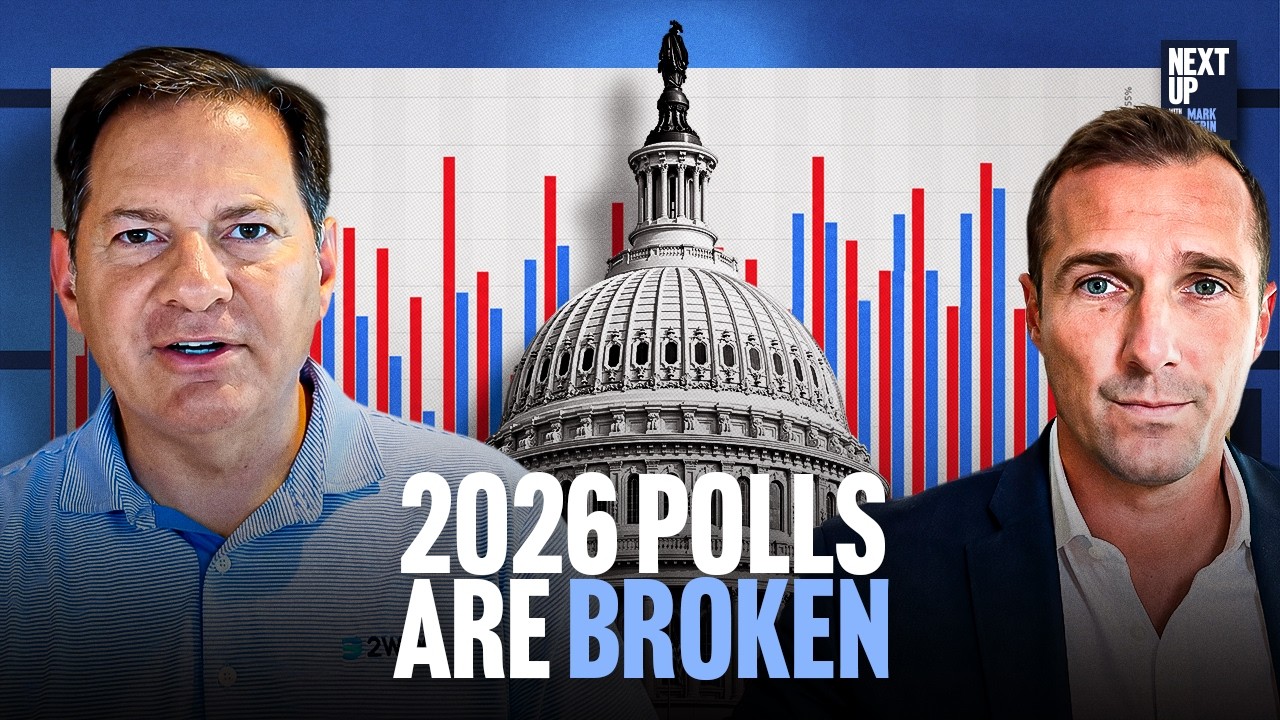 Why 2026 Polls Are ACTUALLY Broken
Things we can learn from the video
Press to jump
- 0:33Burrell argues that polls improve near Election Day as voters become more civically engaged.
- 5:30He says answering surveys has shifted from civic expression toward influencing political media narratives.
- 8:40Wick's study recontacted respondents from 2022 and 2024 to examine how sample weighting performs.
- 10:50Burrell presents findings that demographic weighting misses ideological and behavioral differences within respondent groups.
- 15:09The research discussion gives way to Halperin's sponsored segment for prediction-market platform Kalshi.
A poll can include the expected share of Republicans and still hear from the wrong slice of Republican voters. That is the problem David Burrell brings to Mark Halperin's discussion of election polling ahead of the midterms.
"It's not undercounting Republicans. A lot of times we think the polls have the right share," says Burrell, CEO of Wick Insights. "It's the wrong mix. It's the wrong kind of Republicans."
The interview, titled "Why 2026 Polls Are ACTUALLY Broken," passed 100,000 views in 14 hours, far beyond the channel's usual first-day audience. Its comment section was also much busier than usual.
Burrell's argument centers on who agrees to answer. He describes a shift from treating a survey as civic participation to seeing it as a way to influence political media narratives. In his account, that changes which voters make themselves available to pollsters, even within the same party.
Wick's research recontacted respondents from the 2022 and 2024 elections. Burrell says the findings expose ideological and behavioral differences that demographic weighting, the adjustments used to make a sample resemble the electorate, does not fix. He also argues that polls tend to improve closer to Election Day as more voters become engaged.
Several viewers describe ignoring unfamiliar calls or declining surveys because they do not want to share voting preferences. Others ask why Halperin continues to use polls if he considers their weaknesses so substantial. Those accounts echo the interview's question about participation, rather than establishing how widespread the problem is.
After the research discussion, Halperin delivers a sponsored segment for the prediction-market platform Kalshi.
Published on Trari
Where next?


 Is this your channel?For the channel's owners and team: a ready picture and text for your audience
Share the story with your audience. Everything is ready:
For an Instagram story or a WhatsApp status
For a community post or your channel's description
- Channel
- Next Up with Mark Halperin
- Subscribers
- 105,000
- Channel views, last 7 days
- 488,784
- Channel views, pace per day
- 70,565 (on a normal day: 64,498)
- Video published
- October 25, 2026
- Video views so far
- 103,886 (less than a day online)
- Video views, pace per day
- 135,885
The numbers
The polling interview drew an unusually large early audience for Next Up with Mark Halperin, with comments also arriving well above its usual first-day level.

💡 Test your knowledge
Which research company does Halperin's guest David Burrell lead?
Burrell is introduced in the interview as CEO of Wick Insights.