
 United States
 United Kingdom
 Canada
 Australia
 New Zealand
 Ireland
Ben Watts explains radar limits in Florida Learjet crash
The Mentour Now! presenter examines storm hazards and recovered wreckage while keeping the cause of the loss of control open.
 Mentour Now!
Story of
Why this story? One of the most watched videos since yesterday, with 389,609 views.
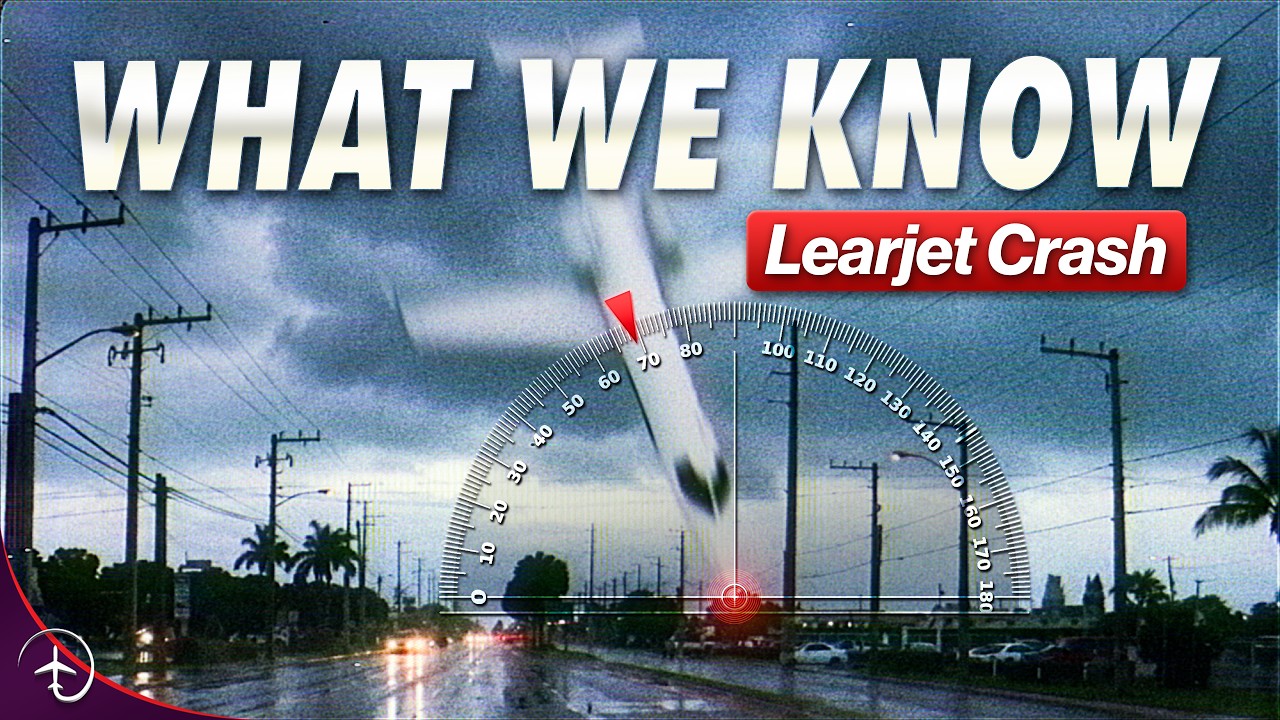 Everything We Know About The Learjet Crash
Next story: Who owns your airliner? Mentour Now! untangles aircraft leasing
Things we can learn from the video
Press to jump
- 1:57Watts distinguishes the pilot flying from the pilot monitoring, who handles communications and cross-checks the flight.
- 5:07Thunderstorm avoidance means keeping clear of cumulonimbus clouds, rather than simply attempting to climb above them.
- 10:24The radar explanation covers precipitation returns, reflectivity and radar shadows.
- 16:44Watts explains icing, Mach tuck and the narrow margin between low-speed stall and overspeed at altitude.
- 22:20The cockpit voice recorder has been recovered, but Watts says it is not yet known whether investigators can read it.
- 24:41Watts rejects criticism of the first officer's emotional distress during her final radio calls.
Weather radar can show pilots the precipitation ahead. Explaining what that picture does, and does not, tell them is central to Ben Watts's examination of the fatal Florida Learjet crash.
His Mentour Now! episode, "Everything We Know About The Learjet Crash", has drawn roughly 390,000 views since yesterday. It reconstructs the November 1 flight from Austin towards the Bahamas, which Watts reports ended near Greenacres with nine people killed and no further fatalities on the ground.
Rather than moving straight from the flight path to the impact, Watts pauses to explain the cockpit workload. One pilot flies while the other monitors the flight and handles communications. He then works through thunderstorm avoidance, the aircraft's weather radar and the difficulty of interpreting radar shadows. CGI cockpit scenes illustrate the reconstruction; the episode also includes a paid sponsor segment.
The technical explanations matter to the sequence he describes: reports of icing and turbulence, a turn into a storm cell and a request to climb before the aircraft entered a steep descent. Watts explains several possible aerodynamic hazards, but does not present any one of them as the established cause.
Investigators recovered the cockpit voice recorder and found sections of the left elevator away from the main crash site. Those discoveries are evidence, not an answer. "That's certainly useful information, but it still doesn't tell us how the aircraft went out of control," Watts says.
He closes by rejecting criticism of the first officer's distress during her final radio calls. Her communication under extreme circumstances, alongside the recovery of the recorder, is also a recurring subject in the comments.
Published on Trari
Where next?


What do you think?
Want to know when somebody answers you?
 Is this your channel?For the channel's owners and team: a ready picture and text for your audience
Share the story with your audience. Everything is ready:
For an Instagram story or a WhatsApp status
For a community post or your channel's description
- Channel
- Mentour Now!
- Subscribers
- 647,000 ▲ 1,000 this week
- Channel views, last 7 days
- 573,567
- Channel views, pace per day
- 268,535 (on a normal day: 67,614)
- Video published
- November 16, 2026
- Video views so far
- 389,609 (less than a day online)
- Video views, pace per day
- 591,795
The numbers
The Learjet analysis reached a substantial audience before its first full day online.
