
 United States
 United Kingdom
 Canada
 Australia
 New Zealand
 Ireland
Jeffrey Sachs links US outages to doubts about war with Iran
On Judging Freedom, Andrew Napolitano's guest argues that domestic resilience and political support matter as much as military power.
 Prof. Jeffrey Sachs : Can Trump Face Iran?
Up next



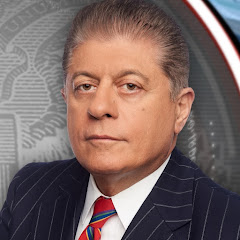 Judge Napolitano - Judging Freedom
Story of
Why this story? The video opened at a pace of 356,873 views a day, 19 times a normal first day on this channel (19,203).
109 more stories on War with Iran ›
Things we can learn from the video
Press to jump
- 2:00Sachs argues that further fighting with Iran offers no beneficial outcome and would bring political backlash.
- 4:02He says Trump and Netanyahu lack the domestic consensus and strategic capacity to sustain escalation.
- 12:33Sachs attributes the Ukraine war to NATO expansion and discusses Russia's longstanding objections.
- 21:28He advocates indivisible security: countries should not increase their security at a neighboring country's expense.
- 30:20Returning to Iran, Sachs argues that domestic infrastructure vulnerabilities limit America's capacity to wage another major war.
"Wars require the ability to mobilize a domestic constituency to pursue the war," Jeffrey Sachs tells Andrew Napolitano. That is the test he applies to the prospect of further fighting with Iran, before reports of disruptions at home give their discussion a more immediate turn.
The interview, titled "Prof. Jeffrey Sachs : Can Trump Face Iran?", drew roughly 240,000 views in its first half-day. A regular Judging Freedom video usually draws fewer than 20,000 across its opening day.
Speaking from Shenzhen, where he is attending an APEC summit, Sachs argues that further conflict with Iran offers Washington no beneficial outcome and would provoke substantial political opposition. His answer to the title's question is not a comparison of weapons: he questions whether Trump has the domestic support or strategic capacity to sustain an escalation.
Much of the conversation then turns to Ukraine. Sachs attributes the war to NATO enlargement and advocates a European security arrangement built around the principle that countries should not strengthen their security at their neighbors' expense. He presents that as an alternative to a US-dominated order.
Near the end, Napolitano brings up reports of Outlook outages, aviation ground stops and an NSA communications failure. Sachs uses those disruptions to return to Iran, arguing that vulnerability at home undermines the case for another major war. The outages are his illustration of limited national resilience, not evidence presented in the interview of a common cause.
American economist and public policy analyst who teaches at Columbia University and leads its Center for Sustainable Development.
More on Wikipedia ›Published on Trari
Where next?
What do you think?
Want to know when somebody answers you?
 For the channel's owners and team
Share the story with your audience
A ready picture for an Instagram story or a WhatsApp status.
Ready text for a community post
- Subscribers
- 797,000 ▲ 2,000 this week
- Channel views, last 7 days
- 4,044,597
- Channel views, pace per day
- 166,641 (on a normal day: 559,152)
- Video published
- November 17, 2026
- Video views so far
- 241,071 (less than a day online)
- Video views, pace per day
- 356,873
The numbers
The Sachs interview passed the channel's usual full-day audience well before its first day was complete.

💡 Test your knowledge
Who wrote The Grand Chessboard, the book Sachs discusses?
Brzezinski wrote The Grand Chessboard, published in 1997.