
 United States
 United Kingdom
 Canada
 Australia
 New Zealand
 Ireland
Could ultra-Orthodox abstentions help Eisenkot form Israel's government?
Political correspondent Matti Tuchfeld outlines an outside-support scenario, while describing repeat elections as Netanyahu's preferred alternative to a failed unity deal.
 Israel
Why this story? One of C14's most watched videos since yesterday, with 61,541 views.
C14: Israel's Channel 14, a news channel on the political right, on air since 2014 (as Channel 20 until 2021). 497K subscribers and 758M views.
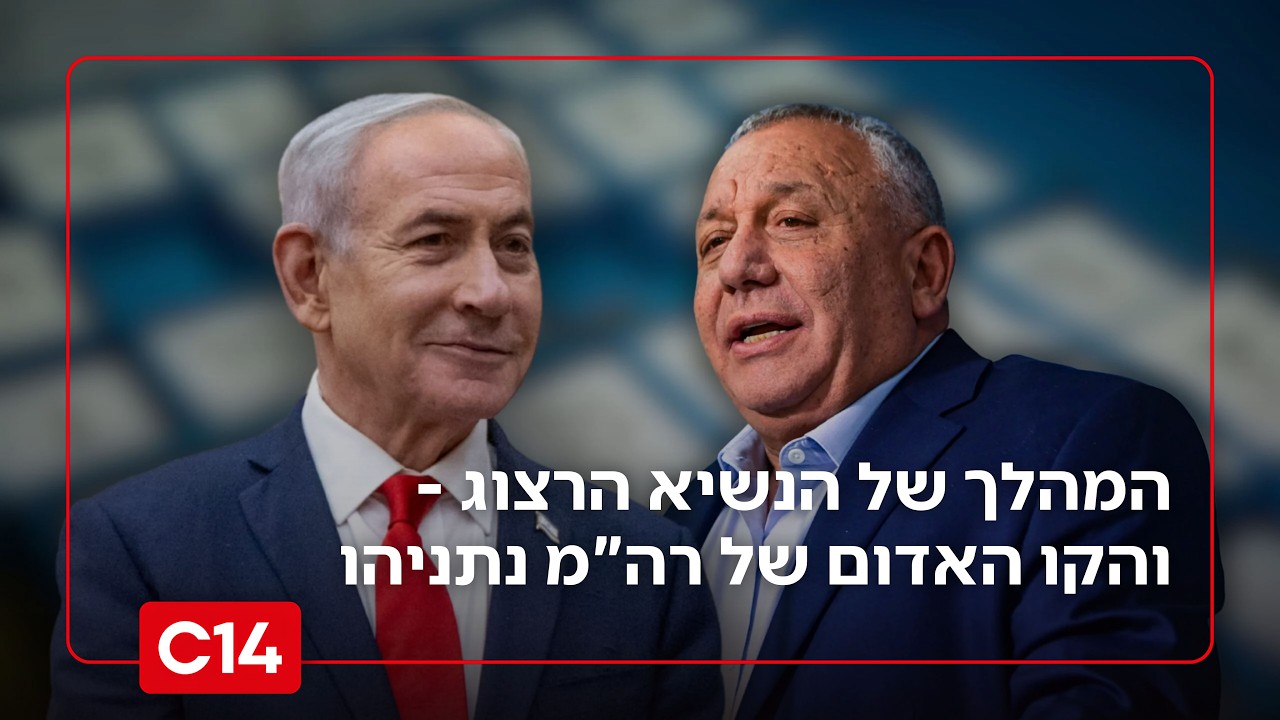 התרחיש המנצח של נתניהו נחשף - וההכרעה הדרמטית של הנשיא לגבי איזנקוט
Next story: Bennett's draft pledges face the coalition test in archive report
51 more stories on Israeli post-election coalition talks ›
Things we can learn from the video
Press to jump
- 0:34Tuchfeld expects Herzog to give Eisenkot the first opportunity to form a government, based on party recommendations.
- 1:38United Torah Judaism could abstain in the approval vote in exchange for legislation, including a conscription law.
- 5:13Tuchfeld says Eisenkot publicly rejected approaches seeking a unity government.
- 6:08Netanyahu's remaining paths, Tuchfeld argues, include repeat elections or a court challenge concerning the election results.
United Torah Judaism could stay outside a government led by Gadi Eisenkot yet still help it take office, political correspondent Matti Tuchfeld argues in a segment on Israel's Channel 14 (C14).
Speaking with Tal Meir on the morning program Israel This Morning, Tuchfeld describes a possible bargain: the ultra-Orthodox party could abstain in the parliamentary vote approving a government, providing an outside safety net in exchange for legislation, particularly a military conscription law. He presents this as a possible arrangement, not an agreement already reached.
The distinction matters because choosing someone to attempt to form a government and securing parliamentary approval are separate steps. The segment displays Naftali Bennett's statement that he will recommend Eisenkot to President Isaac Herzog. Tuchfeld says the political expectation is increasingly that Herzog will give Eisenkot the first opportunity to assemble a government.
Eisenkot, a former Israeli military chief who leads the Yashar party, challenged Prime Minister Benjamin Netanyahu in the election. Although the upload's title promises the president's "dramatic decision," the discussion offers a forecast of Herzog's choice rather than an announcement that he has made it.
The second half turns to Netanyahu's options. According to Tuchfeld, Eisenkot publicly rejected unity-government approaches from figures including Yoav Kisch and Orit Strook. Tuchfeld describes Netanyahu as unwilling to abandon any of his bloc's partners and says another election is his preferred remaining scenario.
He also raises a possible administrative-court challenge concerning the election results. The practical question running through the interview is therefore not simply who receives the mandate first, but who can obtain enough parliamentary support, including abstentions, to put a government in place.
Leader of Israel’s Yashar party and a former military chief of staff. He was the main challenger to Benjamin Netanyahu in the 2026 parliamentary election.
More on Wikipedia ›Published on Trari
More on Israeli post-election coalition talks


Where next?


What do you think?
Want to know when somebody answers you?
- Channel
- C14
- Subscribers
- 496,000 ▲ 4,000 this week
- Channel views, last 7 days
- 14,755,704
- Channel views, pace per day
- 3,143,192 (on a normal day: 1,561,675)
- Video published
- November 2, 2026
- Video views so far
- 61,541 (less than a day online)
- Video views, pace per day
- 64,098
The numbers
The interview drew about 62,000 views since yesterday.

💡 Test your knowledge
Which Israeli president is weighing party recommendations in this report?
The discussion concerns President Isaac Herzog's choice of whom to task with forming a government.