
 United States
 United Kingdom
 Canada
 Australia
 New Zealand
 Ireland
Takaichi's investment bet meets Japan's household squeeze
Bloomberg Originals examines whether a vast public-and-private investment push can deliver growth while import costs, debt and a shrinking workforce constrain Japan.
 Bloomberg Originals
Story of
Why this story? 986,565 views so far, and here is what is inside it.
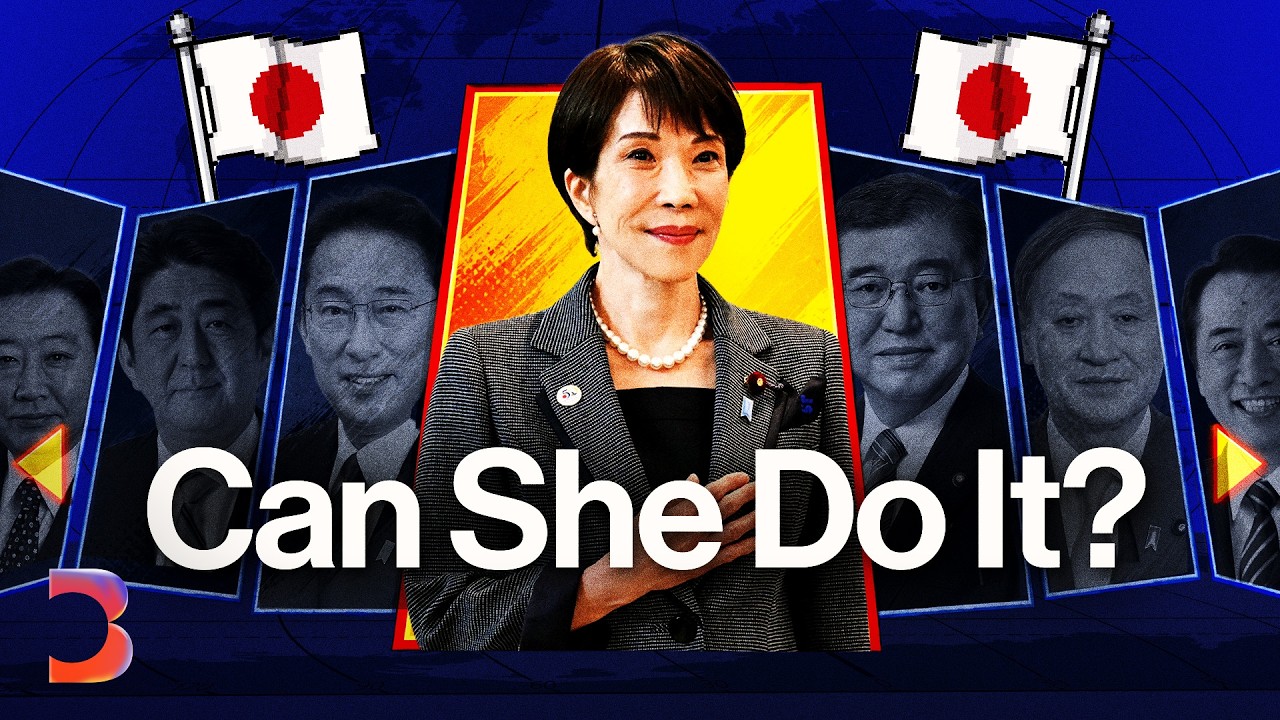 Can Japan’s Economy Afford Takaichi’s Big Bet?
Things we can learn from the video
Press to jump
- 1:14Takaichi rose from Nara without a dynastic political background, an unusual route to Japan's top office.
- 4:04A weak yen raises import costs, adding to the pressure from returning inflation.
- 5:50Japan's shrinking population creates workforce pressures that sit uneasily alongside stricter immigration controls.
- 7:47The investment target directs public and private money toward strategic sectors including AI, quantum computing and defense.
- 8:26Tensions with China and relations with the US shape the discussion of greater defense spending.
- 10:17The affordability question turns to government debt, bond issuance and expectations for Takaichi's second year.
Growth has a price. Sanae Takaichi wants investment in artificial intelligence, semiconductors, defense and even manga to help build a richer, more secure Japan. But the households waiting for that prosperity are already contending with higher living costs.
That tension drives Bloomberg Originals' "Can Japan's Economy Afford Takaichi's Big Bet?" The report examines the prime minister's first year in office and a roughly $2.3 trillion investment target, asking how an ambitious growth agenda fits a country with enormous government debt. Importantly, the target combines public and private investment: it is not simply a government spending bill.
Bloomberg reporters Erica Yokoyama, Sakura Murakami and Alastair Gale connect the economic pressures. A weak yen makes imports more expensive. A shrinking workforce complicates the pursuit of growth, while stricter immigration controls create another constraint on the supply of workers. Takaichi's promises therefore reach beyond picking promising technologies: they run into questions about who will do the work and how investment will be financed.
The political portrait supplies a revealing contrast. Takaichi rose from Nara without a dynastic political lineage, with an enthusiasm for heavy metal drumming that distinguishes her from the familiar image of a Japanese political leader. Yet her socially conservative platform and intensely work-focused public persona are central to the account of her governing style.
The report also links economic ambition to security, examining tensions with China, higher defense spending and relations with Washington. Its closing section returns to government borrowing and the sustainability of issuing more bonds, leaving the title's question as a fiscal trade-off rather than a simple yes or no.
Published on Trari
Where next?



 Is this your channel?For the channel's owners and team: a ready picture and text for your audience
Share the story with your audience. Everything is ready:
For an Instagram story or a WhatsApp status
For a community post or your channel's description
- Channel
- Bloomberg Originals
- Subscribers
- 5,180,000 ▲ 10,000 this week
- Channel views, last 7 days
- 4,312,917
- Channel views, pace per day
- 503,713 (on a normal day: 585,480)
- Video published
- October 23, 2026
- Video views so far
- 986,565 (6 days online)
- Video views, pace per day
- 82,497 (on a normal day: 166,673)
The numbers
The report has drawn nearly a million views since publication. Here is how it sits alongside Bloomberg Originals' wider audience.

💡 Test your knowledge
Which cultural industry is included in Takaichi's investment agenda described in the report?
The investment agenda spans technology and defense but also includes manga.