
 United States
 United Kingdom
 Canada
 Australia
 New Zealand
 Ireland
Microsoft and Alphabet face a harder question about AI spending
Bloomberg's Ed Ludlow says investors want cash and profit even as the technology giants keep building.
 Bloomberg Podcasts
Story of
Why this story? The video opened at a pace of 60,143 views a day, 22 times a normal first day on this channel (2,677).
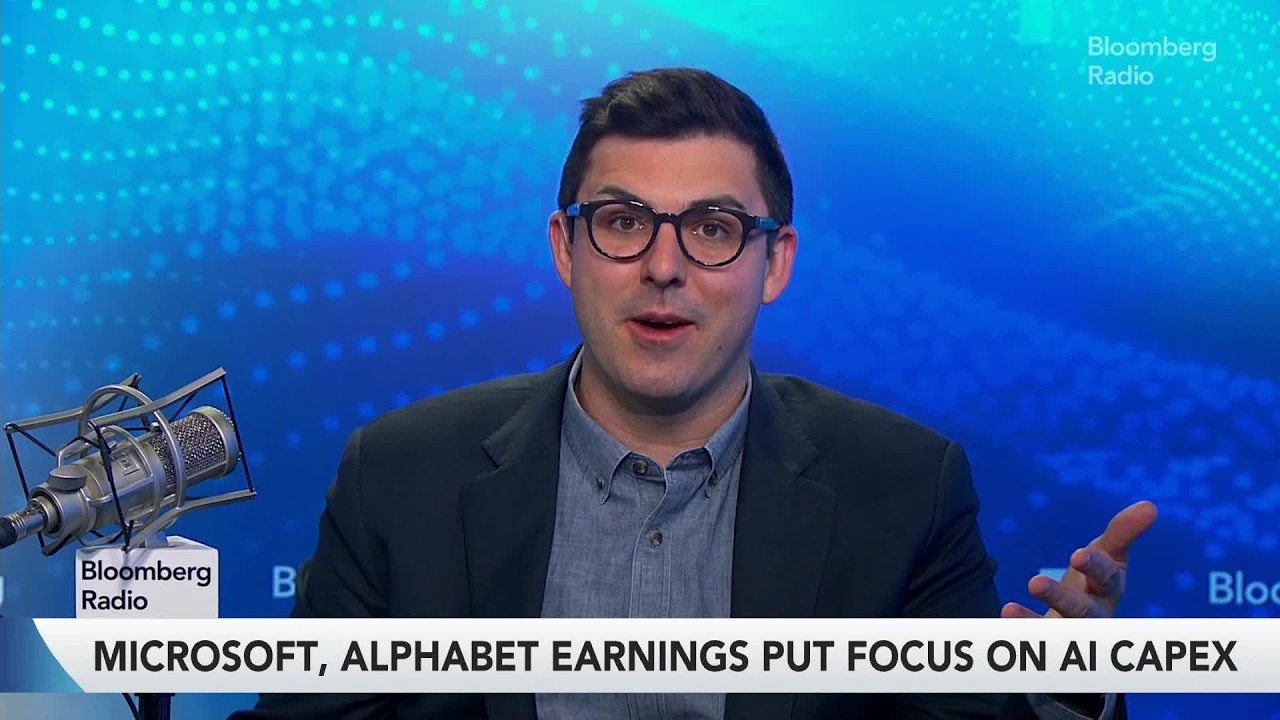 Microsoft, Alphabet Earnings Put Focus on AI Cash Flow Drain
Things we can learn from the video
Press to jump
- 0:46Ludlow explains why Microsoft's expense management and free cash flow matter to investors.
- 3:05Google Cloud faces high growth expectations, while AI's role in search remains under scrutiny.
- 4:12Ludlow says heavy AI spending will continue despite pressure for greater profit.
- 5:21AI models can run on mobile devices and local company infrastructure, not just in the cloud.
Ed Ludlow puts a blunt demand behind the excitement about artificial intelligence: "Wall Street wants more. They want profit." In Bloomberg Podcasts' earnings preview, the question is not simply whether Microsoft and Alphabet can sell more AI services, but how much cash their enormous investments leave behind.
The discussion drew about 44,000 views in 13 hours, already far beyond the channel's usual full-day audience for comparable videos. Its focus is the less glamorous side of the AI boom: expenses, workforce reductions and the pressure to turn expanding businesses into cash.
"Wall Street cares about free cash flow now, it really does," Ludlow tells hosts Tom Keene and Paul Sweeney. Free cash flow generally means the money left from operations after capital spending, which makes costly computing infrastructure central to the conversation.
For Alphabet, Ludlow describes expectations for rapid Google Cloud growth alongside scrutiny of AI's integration into search. But investors hoping for a retreat from heavy spending do not get that answer here: he says high expenditures will continue.
This is a preview, not a report on the results. In a subsequent Bloomberg Businessweek episode, the channel reports disappointing Alphabet sales across most core businesses, while Microsoft's cloud results leave investors more optimistic.
The preview also looks beyond giant data centers. Near the end, Keene asks about bringing AI processing closer to users, and Ludlow explains how models can run on mobile devices or a company's own local infrastructure rather than relying solely on the cloud.
Published on Trari
Where next?



What viewers say
Will companies trust the IP to AI agents?
@TM-zp1dcSee it on YouTube
Public comments from the video's page on YouTube
 Is this your channel?For the channel's owners and team: a ready picture and text for your audience
Share the story with your audience. Everything is ready:
For an Instagram story or a WhatsApp status
For a community post or your channel's description
- Channel
- Bloomberg Podcasts
- Subscribers
- 603,000 ▲ 6,000 this week
- Channel views, last 7 days
- 3,247,238
- Channel views, pace per day
- 300,828 (on a normal day: 410,049)
- Video published
- October 28, 2026
- Video views so far
- 43,723 (less than a day online)
- Video views, pace per day
- 60,143
The numbers
The earnings preview has already drawn a much larger audience than Bloomberg Podcasts usually gets for a comparable video's first day.

💡 Test your knowledge
What is Microsoft's cloud computing platform called?
Azure is Microsoft's cloud computing platform.