
 United States
 United Kingdom
 Canada
 Australia
 New Zealand
 Ireland
BBC examines North Korea link to $6.3bn Binance theft
The explainer examines fake-job recruitment tactics and customer safeguards, while stressing that responsibility has not officially been confirmed.
 BBC News
Story of
Why this story? One of BBC News's most watched videos since yesterday, with 170,678 views.
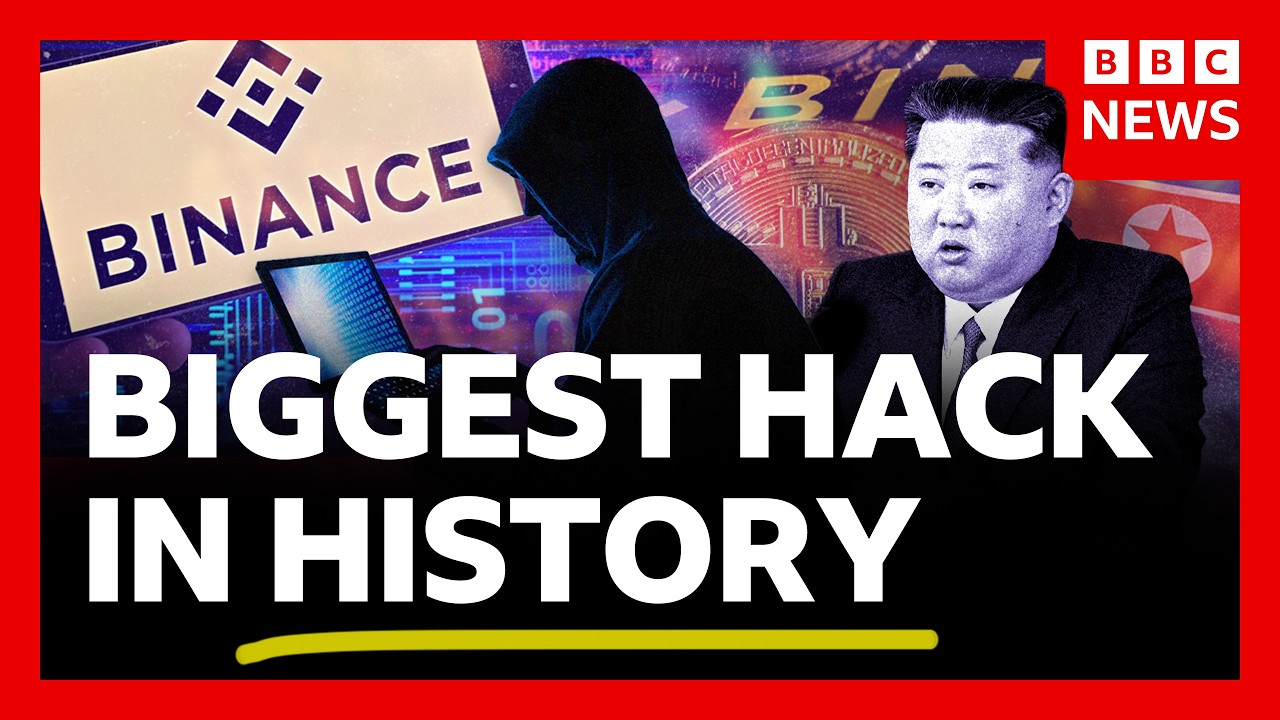 Why is North Korea being blamed over the $6.3bn Binance hack? | BBC News
Things we can learn from the video
Press to jump
- 1:03De-Graft Mensah explains how cryptocurrency differs from conventional money and how blockchains work.
- 3:15Emily Taylor describes fake job adverts as a way to target engineers and compromise internal systems.
- 4:23Kurumi Mori outlines the suspected TraderTraitor connection, stressing that responsibility has not officially been confirmed.
- 5:36Joe Tidy discusses Binance's customer-fund assurances, emergency reserves and withdrawal freeze.
- 6:10The discussion widens to industry risks, previous crypto thefts and physical attacks targeting cryptocurrency owners.
Fake job adverts can offer hackers a route into systems that hold enormous sums of money. That is one technique cybersecurity expert Emily Taylor describes in BBC News' examination of the reported $6.3bn theft from cryptocurrency exchange Binance.
The report moves beyond the market repercussions to ask why suspicion has fallen on North Korea. But BBC Tokyo correspondent Kurumi Mori makes an important distinction before setting out the evidence: "Nothing has officially been confirmed, but here's what we know so far."
Mori outlines intelligence linking the theft to the North Korean hacking group TraderTraitor. According to the BBC's report, such operations are used to help fund the country's weapons and nuclear programmes. The suspected connection is the subject of the investigation, not a confirmed finding.
Taylor, chief executive of Oxford Information Labs, explains how social engineering targets the people responsible for technical systems. Fake recruitment approaches can lure engineers into compromising those systems. Her account describes a hacking technique rather than establishing every step taken in this particular attack.
For customers, cyber correspondent Joe Tidy separates Binance's reassurance from the immediate restrictions. "The company is saying your money is safe," he reports, while also discussing its emergency funds and a freeze on withdrawals. That leaves a practical distinction at the centre of the explainer: an assurance that funds are protected is not the same as being able to withdraw them.
The world’s largest cryptocurrency exchange by daily trading volume. Founded in 2017, it has no official company headquarters.
More on Wikipedia ›Published on Trari
Where next?



 Is this your channel?For the channel's owners and team: a ready picture and text for your audience
Share the story with your audience. Everything is ready:
For an Instagram story or a WhatsApp status
For a community post or your channel's description
- Channel
- BBC News
- Subscribers
- 20,200,000
- Channel views, last 7 days
- 36,111,174
- Channel views, pace per day
- 8,449,586 (on a normal day: 4,859,374)
- Video published
- October 30, 2026
- Video views so far
- 170,678 (less than a day online)
- Video views, pace per day
- 241,302
The numbers
The BBC explainer drew about 171,000 views since yesterday, the largest audience among the channel's new uploads over that period.
