
 United States
 United Kingdom
 Canada
 Australia
 New Zealand
 Ireland
Erika Cheung recalls the test failures behind her Theranos warning
60 Minutes Australia's archive interview follows the whistleblower from a starstruck recruit to a scientist determined to stop patient testing.
 60 Minutes Australia
Story of
Why this story? One of 60 Minutes Australia's most watched videos since yesterday, with 27,139 views.
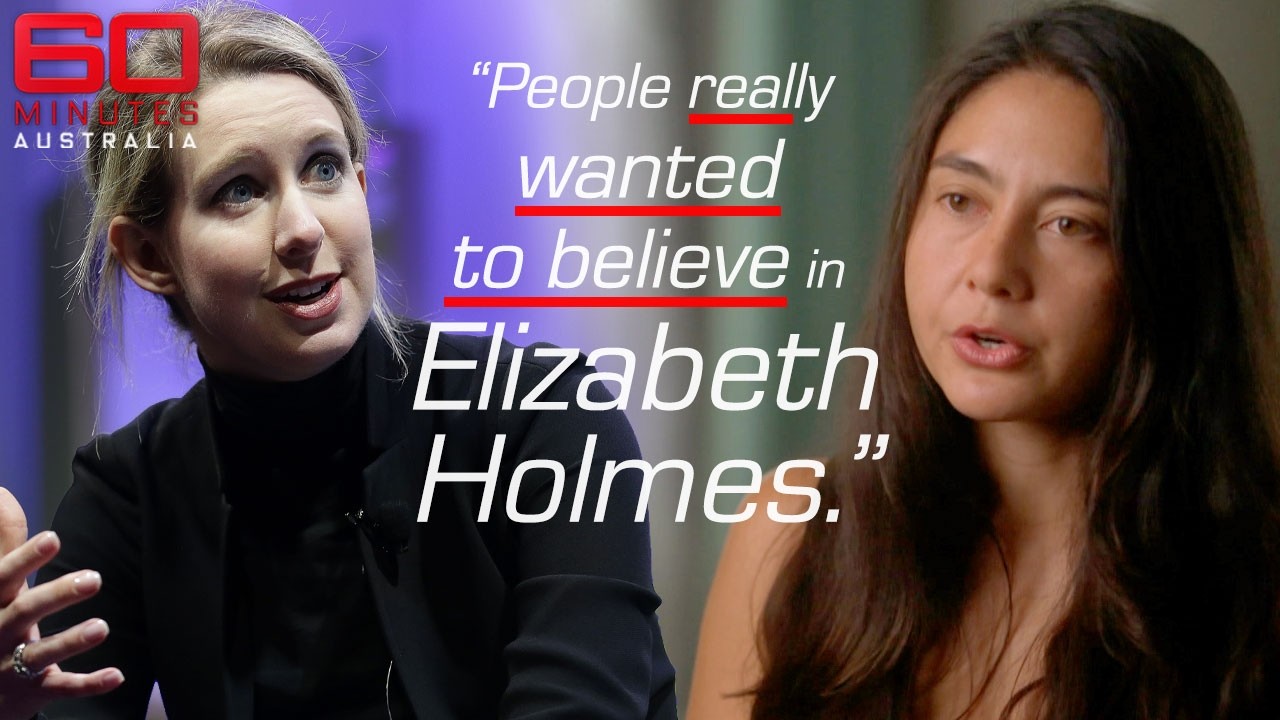 Theranos fraud: Exposing the chaotic and fraudulent practices inside the lab | 60 Minutes Australia
Next story: Hank Green explains the lure of the "Theranos trap"
Things we can learn from the video
Press to jump
- 0:20Cheung explains why Theranos's promise of affordable healthcare persuaded her to join the startup.
- 6:48She describes a laboratory relying on modified commercial machines and poorly functioning Edison devices.
- 9:14Cheung recalls highly variable blood-test results, including hepatitis C and thyroid panels.
- 12:15Management discarded failing results as statistical outliers, Cheung says, allowing flawed testing to continue.
- 24:52Unsuccessful internal complaints led Cheung to become a whistleblower; she describes surveillance and threats of lawsuits.
- 28:08Cheung recounts filing an anonymous regulatory complaint; the segment then describes inspectors finding severe laboratory deficiencies.
Erika Cheung could not trust Theranos's blood tests for herself or her family. Continuing to run them for other people became impossible to justify, she tells Tara Brown in an interview newly uploaded by 60 Minutes Australia.
The conversation comes from the programme's 2021 report, Blood Money. It is an account of the laboratory's failures and Cheung's decision to speak out, rather than a new development in the case. The upload drew about 27,000 views since yesterday.
Cheung describes joining the Silicon Valley startup in 2013, drawn by its promise of accessible, affordable healthcare. Theranos's ambition was to perform hundreds of tests quickly and cheaply using blood from a finger prick instead of a conventional blood draw. Meeting founder Elizabeth Holmes, Cheung initially felt starstruck.
Inside the laboratory, she says, the reality did not match that vision. Cheung describes reliance on modified commercial equipment and poorly functioning Edison devices, with highly variable results on tests including hepatitis C and thyroid panels.
Her account becomes particularly specific about what happened when tests failed: management treated troubling results as statistical outliers to be discarded, she says. She recalls raising concerns internally, being dismissed and being told to continue processing patient samples.
Cheung also describes the strain of questioning her own judgement while worrying about patients receiving inaccurate results. After internal complaints brought no action, she sought legal advice and submitted an anonymous complaint to the Centers for Medicare & Medicaid Services. According to the segment, federal inspectors subsequently found severe laboratory deficiencies and stopped the facility from testing patients.
Cheung states her purpose plainly: "My objective was to get Theranos to stop processing patient samples."
An American health-technology company founded by Elizabeth Holmes in 2003. It falsely claimed its compact devices could deliver fast, accurate blood tests using very small samples.
More on Wikipedia ›The founder of Theranos, an American businesswoman convicted of fraud connected to the company.
More on Wikipedia ›Published on Trari
More on Theranos

Where next?


What do you think?
 Is this your channel?For the channel's owners and team: a ready picture and text for your audience
Share the story with your audience. Everything is ready:
For an Instagram story or a WhatsApp status
For a community post or your channel's description
- Channel
- 60 Minutes Australia
- Subscribers
- 6,760,000
- Channel views, last 7 days
- 5,888,299
- Channel views, pace per day
- 992,782 (on a normal day: 940,013)
- Video published
- November 11, 2026
- Video views so far
- 55,454 (2 days online)
- Video views, pace per day
- 27,136 (on a normal day: 29,940)
The numbers
The archive interview added about 27,000 views since yesterday. Its viewing figures accompany the report below.
