
 United States
 United Kingdom
 Canada
 Australia
 New Zealand
 Ireland
Dushka questions border changes floated around Abu Dhabi talks
The Ukrainian journalist examines reported peace proposals, arguing that territorial arrangements cannot substitute for lasting military support and security guarantees.
 Ukraine
Why this story? One of 24 Канал's most watched videos since yesterday, with 319,869 views.
24 Канал: A Ukrainian news channel from Lviv, on air since 2006. 9.1M subscribers and 19B views.
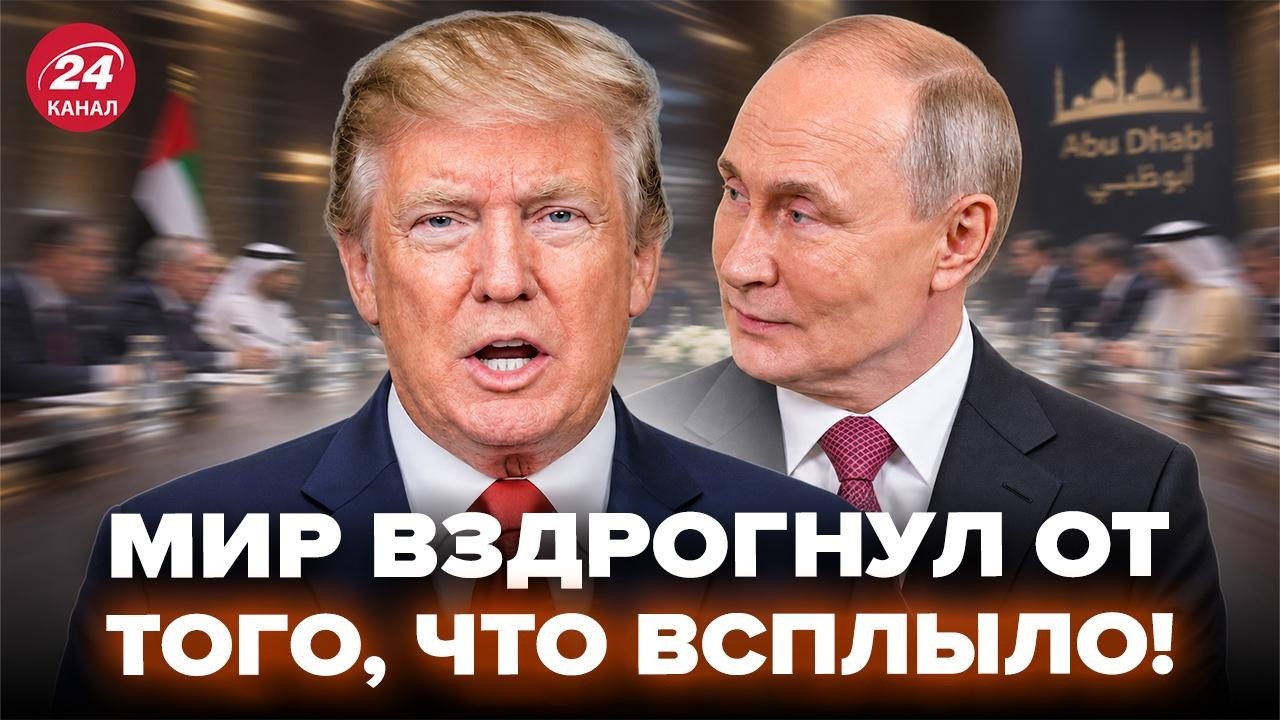 ⚡️Вот И ТОЧКА! НЕ ПОВЕРИТЕ, что раскопали о ВСТРЕЧЕ в Абу-Даби! Эту ДЕТАЛЬ ТРАМП пытался СКРЫТЬ
Next story: China, US and Western Europe hold keys to war's course, Wanner says
32 more stories on Abu Dhabi Ukraine peace talks ›
Things we can learn from the video
Press to jump
- 3:00Dushka reviews an Economist article about changing Ukrainian regions' administrative boundaries as part of peace proposals.
- 5:26He distinguishes internal boundary changes from constitutional procedures and restrictions under martial law.
- 9:28He argues Ukraine needs long-term military support, substantial armed forces and clear security guarantees.
- 13:41Kaja Kallas appears in an interview excerpt discussing American election results and political change.
- 18:47A Wall Street Journal report introduces Beijing's conditions and preparations for potential high-level talks.
- 20:36Dushka urges patience and later expresses hope that the new U.S. Congress will put pressure on Trump.
Changing the administrative map of Ukraine would not answer the harder question of how to protect it, journalist Oleksiy Dushka argues in his analysis of proposals surrounding the Abu Dhabi peace talks.
In a video podcast carried by Ukraine's Channel 24 (24 Канал), Dushka reviews press reports about possible arrangements involving Kyiv, Moscow and Washington. This is commentary on reported proposals, rather than footage of the negotiations or an announcement of an agreed settlement.
His central discussion begins with an article in The Economist about proposed changes to the administrative boundaries of Ukrainian regions. Dushka distinguishes those internal boundaries from the country's international borders. He says changing regional boundaries does not require a referendum, while also discussing constitutional procedures and restrictions under martial law.
For Dushka, the political risks extend beyond the map. He warns that Moscow could use demands for federalization or elections to weaken Ukraine's leadership. Those are his assessments of possible Kremlin tactics, not measures he establishes as agreed at the talks.
The episode's description says President Donald Trump had publicly suggested Ukraine would probably have to relinquish some territory, while the American side was seeking a model for its protection. Dushka questions what such protection would amount to. He argues that Ukraine needs sustained military assistance, substantial armed forces and clear security commitments, rather than assurances detached from the means to defend itself.
He also describes Russian tactical difficulties and attacks on civilian infrastructure and bridges across the Dnipro River. An interview excerpt features EU foreign policy chief Kaja Kallas commenting on the American midterm results and the political changes ahead.
The discussion then widens to Trump's dealings with European allies and Moscow over military bases and energy supplies. Dushka rejects the feasibility of rolling NATO back to its 1997 position. Turning to China, he reviews a Wall Street Journal report about Beijing's conditions and preparations for potential high-level talks, placing Ukraine's diplomacy within a wider set of negotiations.
His closing prescription is for Ukraine to endure while awaiting the new U.S. Congress, which he hopes could increase political pressure on Trump. That is the episode's concluding judgment, not a reported commitment from Washington.
Estonian politician and diplomat who has served as the EU’s foreign policy chief and a vice-president of the European Commission since 2024. She previously led Estonia’s government.
More on Wikipedia ›Published on Trari
More on Abu Dhabi Ukraine peace talks


Where next?


What do you think?
- Channel
- 24 Канал
- Subscribers
- 9,130,000 ▲ 10,000 this week
- Channel views, last 7 days
- 71,241,947
- Channel views, pace per day
- 4,333,490 (on a normal day: 9,389,531)
- Video published
- November 10, 2026
- Video views so far
- 319,869 (less than a day online)
- Video views, pace per day
- 506,950
The numbers
The analysis drew about 320,000 views since yesterday, placing it among Ukraine's most-watched new news videos.
