
 United States
 United Kingdom
 Canada
 Australia
 New Zealand
 Ireland
Russia's economic strain won't force peace, Lipsits argues
The economist points to payment delays, regional cuts and dependence on China, but says the Kremlin's priorities are not economic.
 Ukraine
Why this story? One of 24 Канал's most watched videos since yesterday, with 315,572 views.
24 Канал: A Ukrainian news channel from Lviv, on air since 2006. 9.1M subscribers and 19B views.
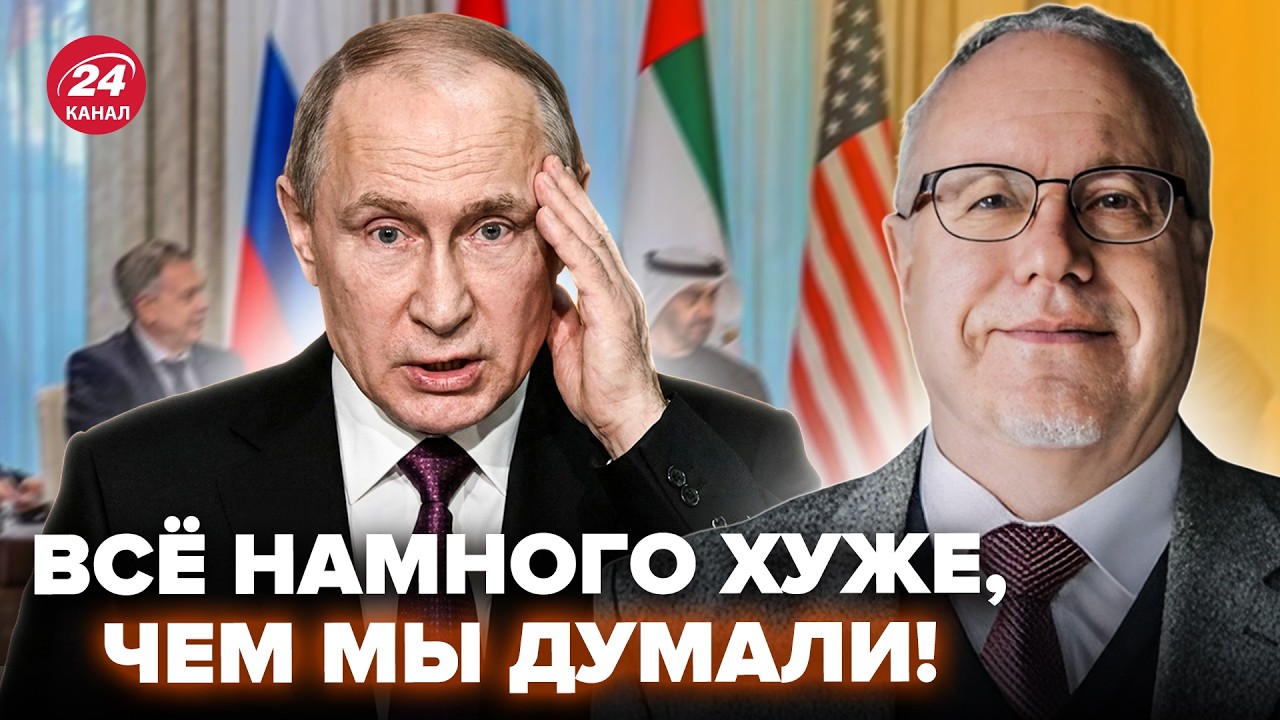 ⚡ЛИПСИЦ: Вы НЕ ПОВЕРИТЕ, что началось ПОСЛЕ ПЕРЕГОВОРОВ! Россию НЕ СПАСТИ. УЖАС уже по всем регионам
Next story: China, US and Western Europe hold keys to war's course, Wanner says
32 more stories on Abu Dhabi Ukraine peace talks ›
Things we can learn from the video
Press to jump
- 1:20Lipsits argues that economic damage does not mean the Kremlin will accept peace terms.
- 2:48He cites delayed military payments as a sign of budget pressure, then discusses debt costs and default risks.
- 11:08Lipsits describes school and hospital staffing cuts; the discussion moves to regional taxes and pension pressures.
- 27:02He attributes falling yuan settlements to Chinese banks' concerns about US secondary sanctions.
- 32:20Palladium provides his example of how technological change can erode the value of Russia's raw materials.
- 39:45Asked about selling Russian property, Lipsits identifies transferring the proceeds abroad as the main obstacle.
Economic damage from the war does not necessarily make Moscow more willing to end it, economist Igor Lipsits argues in a discussion with host Mark Feygin published by Ukraine's Channel 24.
The interview, carrying Feygin Live branding, opens with a question about the Abu Dhabi contacts: could Russia's financial problems help produce peace? Lipsits separates the two issues. In his assessment, Vladimir Putin puts his own political survival ahead of the economy and living standards, so mounting costs should not be mistaken for a commitment to compromise.
Lipsits cites delayed payments to military personnel away from the front as evidence of budget pressure. He discusses rising debt-servicing costs and the possibility of default, without announcing that a default has occurred. He also argues that higher world oil prices are not translating straightforwardly into stronger Russian budget receipts, partly because the state must compensate refineries for costs following drone attacks.
His criticism extends to central bank governor Elvira Nabiullina's high-interest-rate policy. Lipsits argues that monetary policy has limited power to resolve pressures driven by wartime spending and demographic decline.
The conversation then moves from national finances to everyday services. Lipsits describes staffing cuts in schools and hospitals, higher regional taxes and fees, and weakening retail, service-sector and domestic-tourism activity. He says pension savings are being directed into government bonds to finance military expenditure, and warns of future delays to pensions and public-sector wages. Those delays are presented as a risk, not an established nationwide development.
Turning to China, Lipsits argues that Russia's dependence runs deeper than its diplomatic language suggests. He attributes falling yuan settlements to Chinese banks' fear of US secondary sanctions and describes Chinese components as essential to Russian weapons production.
He uses palladium to illustrate another vulnerability: mineral wealth is valuable only while buyers need it. In his account, growing electric-vehicle use undermines demand for a metal associated with conventional vehicle exhaust systems.
The interview includes a paid promotional break. Its final audience question concerns selling Russian property: Lipsits says the central problem is no longer simply the sale price, but the difficulty of moving the proceeds abroad.
Russian economist who heads the Central Bank of Russia. She previously served as economic development minister and as an economic adviser to Vladimir Putin.
More on Wikipedia ›Published on Trari
More on Abu Dhabi Ukraine peace talks


Where next?


What do you think?
- Channel
- 24 Канал
- Subscribers
- 9,130,000 ▲ 10,000 this week
- Channel views, last 7 days
- 80,350,876
- Channel views, pace per day
- 13,923,102 (on a normal day: 9,864,042)
- Video published
- November 12, 2026
- Video views so far
- 315,572 (less than a day online)
- Video views, pace per day
- 438,601
The numbers
The discussion drew about 316,000 views since yesterday, placing it among Ukraine's most-watched new news videos.
