
Why do Americans vote early? Ben Blissett starts with an 1845 law
TLDR News Global's midterm explainer moves from Tuesday elections to VoteHub models and polls that, in its reading, favor Democrats, with a pinch of salt attached.
 TLDR News Global
Story of
No. 37 on the daily chartNo. 6 on the News chart
Why this story? One of the most watched videos since yesterday, with 931,122 views.
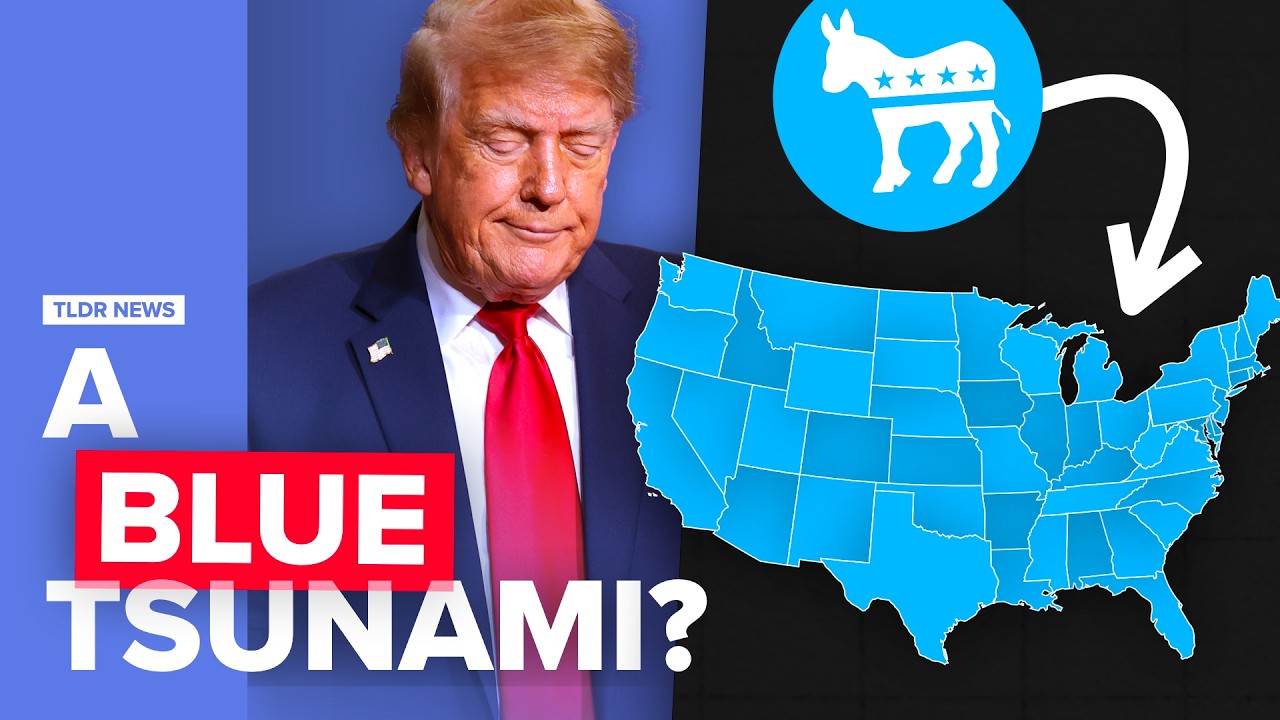 Why Early Voting Data Looks Pretty Good for Democrats
Things we can learn from the video
Press to jump
- 0:58Early voting matters more in the US because elections fall on a weekday, a rule dating to an 1845 act.
- 2:17Access varies widely: easy in Minnesota and Vermont, restricted in New Hampshire and Mississippi.
- 3:07Early data shows who voted, not how; analysts infer from registration, demographics and where turnout is high.
- 4:06VoteHub modeling points to Democratic leads in Senate races including Texas, Georgia and Ohio.
- 5:09Reuters/Ipsos and New York Times/Siena polls show low Trump approval and a Democratic advantage.
- 6:14The open question: a broader Democratic electorate, or the same voters casting ballots sooner?
The story of early voting starts with an 1845 act of Congress. That law gave Americans a weekday election, "the Tuesday next after the first Monday in November," and Ben Blissett uses it to open his explanation of why early voting matters far more in the United States than in most other countries.
His video, "Why Early Voting Data Looks Pretty Good for Democrats," has drawn roughly 931,000 views since yesterday. It is the second midterm piece in a week for TLDR News Global, after an analysis of why the channel sees Trump's economy as electorally toxic. Between them came videos on Turkey's economy and Saudi Arabia's crown prince.
Blissett first maps the patchwork. Minnesota and Vermont make early voting easy, while New Hampshire and Mississippi restrict it. Then he sets out what the early numbers can and cannot show. "They don't tell you how people are actually voting, because ballots are secret," he says. Analysts work from registration rolls, demographic models and where turnout is running high, and he warns that any conclusions should be taken "with a sizable pinch of salt."
The optimistic half follows. VoteHub's modeling, as the video presents it, points to Democratic leads in Senate races including Texas, Georgia and Ohio. Polling from Reuters/Ipsos and the New York Times/Siena shows low approval for Trump and an edge for Democrats. Blissett says these numbers "all look really quite great for Democrats."
He then raises the question that limits that reading. Do the early ballots show a larger, enthusiastic Democratic electorate, or only habitual voters getting their ballots in sooner? The video leaves it open. A sponsored segment for Proton Mail closes it out.
The comment section is moving at about twice the channel's usual first-day pace. Many commenters ask why Election Day is not a national holiday. Others warn against reading a favorable forecast as a result.
Published on Trari
Where next?


 Is this your channel?For the channel's owners and team: a ready picture, text and badge for your audience
Share the story with your audience. Everything is ready:
For an Instagram story or a WhatsApp status
For a community post or your channel's description
For your website

You may use the picture, the badge, and link it to this story.
- Channel
- TLDR News Global
- Subscribers
- 1,180,000
- Channel views, last 7 days
- 3,464,561
- Channel views, pace per day
- 149,934 (on a normal day: 653,356)
- Video published
- October 23, 2026
- Video views so far
- 931,122 (less than a day online)
- Video views, pace per day
- 1,017,256
The numbers
One explainer accounts for most of the channel's attention since yesterday, and its comment section is filling faster than usual.

💡 Test your knowledge
In which year did Congress pass the act that set America's Tuesday Election Day, as described in the video?
Blissett traces the Tuesday election date to an 1845 act of Congress.