
 United States
 United Kingdom
 Canada
 Australia
 New Zealand
 Ireland
Ed Zitron questions Anthropic's borrowing options ahead of its IPO
A reported warning about its credit prospects turns the conversation from AI's capabilities to the cost of keeping it running.
 The Tech Report
Story of
Why this story? One of the most watched videos since yesterday, with 380,853 views.
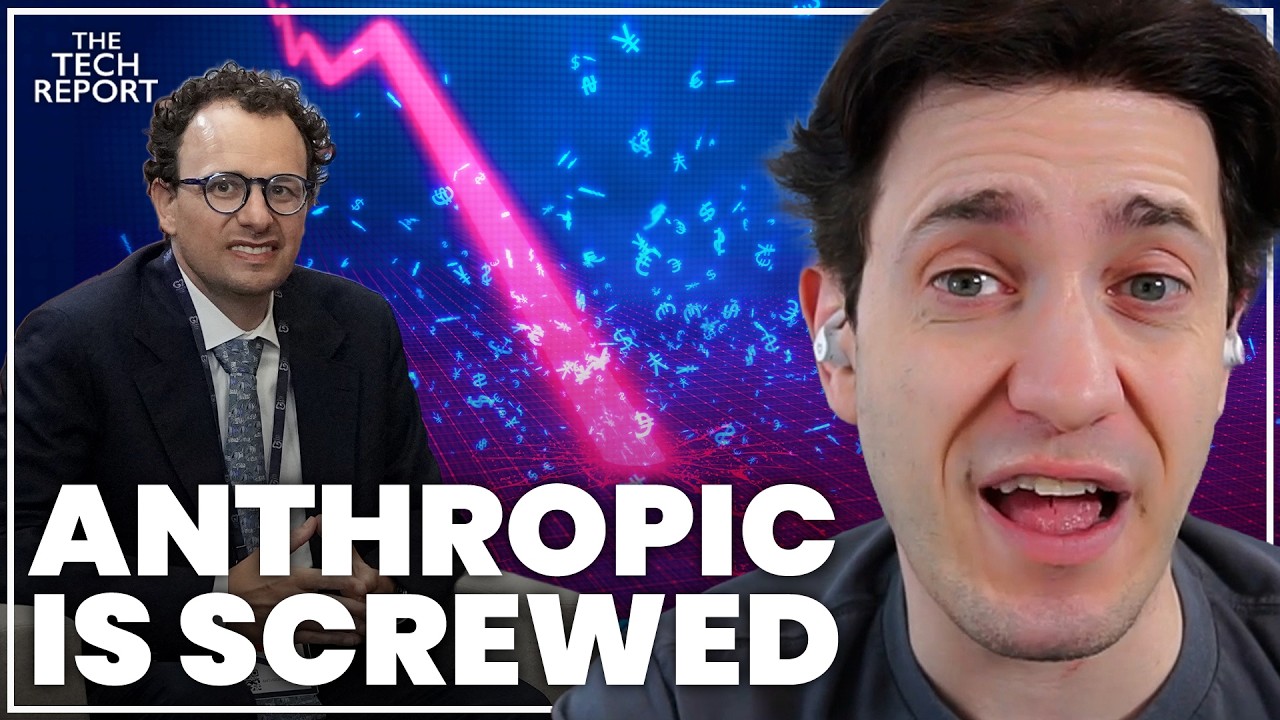 AI Bubble: This is bad for Anthropic on every level | Ed Zitron
Things we can learn from the video
Press to jump
- 1:42Zitron argues that computing discounts make Anthropic's past financial performance an unreliable guide to future costs.
- 2:46He examines reported non-cancellable commitments and the computing bills they could create.
- 13:36The title's credit concern comes into focus through a Financial Times report about Blackstone's warning.
- 15:06Zitron explains why a below-investment-grade rating can make borrowing more expensive.
- 28:35He argues that investment flowing back into cloud purchases complicates the industry's revenue-growth story.
- 34:21Pound cites Sløk's analysis of venture-capital-funded computing demand, prompting questions about what happens when subsidies end.
Selling shares is one thing. Borrowing cheaply afterward is another. That distinction drives Ed Zitron's conversation with Isaac Pound about Anthropic, the company behind Claude, in an interview that has drawn roughly 380,000 views since yesterday.
Carried by clips channel The Tech Report, the discussion centres on a Financial Times report that Blackstone warned Anthropic might not secure an investment-grade credit rating after its IPO. This is a warning about its prospects, not an announced downgrade. Zitron's concern is straightforward: a company facing enormous computing bills could also face more expensive borrowing.
The Better Offline host works through what he describes as $430 billion in non-cancellable contract commitments. He argues that earlier computing discounts make past financial performance a poor guide to the costs ahead. "The S-1 is about a company that no longer exists," he says of Anthropic's stock-market registration filing.
The headline's credit-rating question gets its fullest treatment about fourteen minutes in, when Pound and Zitron examine the breaking report. Zitron explains how a below-investment-grade rating can raise interest costs, making the money needed to sustain computing commitments harder to obtain on favourable terms.
The second half widens the question: who is ultimately paying for all this computing? Pound cites economist Torsten Sløk's analysis of venture-capital funding behind AI spending. Zitron argues that cloud revenue supported by investment in AI customers is different from demand sustained by those customers' own profitable businesses.
That also separates this interview from a simple prediction that the bubble will burst. Its central concern is what happens when subsidies and cheap borrowing stop cushioning the bills. Zitron closes with his blunt assessment: "AI is built for unlimited resources, and when it falls apart, it will be because, well, they found out that the resources are actually extremely limited indeed."
Published on Trari
Where next?



 Is this your channel?For the channel's owners and team: a ready picture and text for your audience
Share the story with your audience. Everything is ready:
For an Instagram story or a WhatsApp status
For a community post or your channel's description
- Channel
- The Tech Report
- Subscribers
- 131,000 ▲ 2,000 this week
- Channel views, last 7 days
- 1,268,254
- Channel views, pace per day
- 96,204 (on a normal day: 254,556)
- Video published
- October 30, 2026
- Video views so far
- 380,853 (less than a day online)
- Video views, pace per day
- 688,852
The numbers
The interview drew roughly 380,000 views in its first nine hours. Comments had already exceeded the channel's usual full first-day total.

💡 Test your knowledge
Which podcast does Ed Zitron host?
Zitron is introduced as the host of Better Offline.