
 United States
 United Kingdom
 Canada
 Australia
 New Zealand
 Ireland
Steve Eisman builds a castle to explain why AI has no moat
The full Diary Of A CEO episode moves from a 2007 Las Vegas dinner to advice on renting, and ends with a letter from his wife, Valerie.
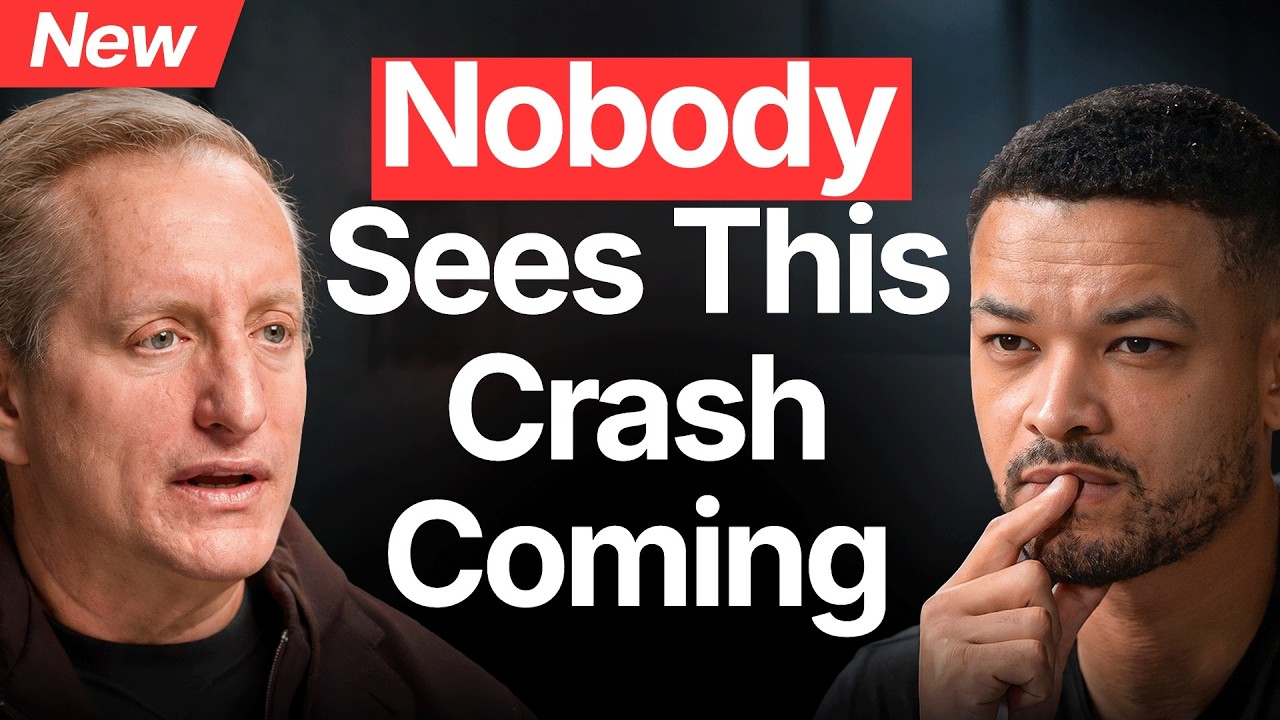 The Man Who Predicted The Last Crash WARNS A Recession Starts If These 2 Fail! | Steve Eisman
Up nextTrari.com home page ›


 The Diary Of A CEO
Story of
No. 16 on the daily chartNo. 1 on the Money chart
Why this story? One of the most watched videos since yesterday, with 1,831,251 views.
The prop that sums up Steve Eisman's case is a small model castle. Sitting across from Steven Bartlett, he uses it to explain the moat, the defence that keeps rivals away from a profitable business. Then he argues that the AI industry has almost none. "I think the AI business has basically no moats around it," he says.
That is where the full episode goes further than the short trailer the channel posted alongside it. Eisman, the investor whose bet against subprime mortgages was told in The Big Short, says tech executives' warnings that AI could end the world are a way of building a different kind of moat. In his view, they are meant to bring in regulation that would hold back cheaper Chinese open-weight models. He calls the doomsday talk science fiction.
The interview drew about 1.8 million views in its first 20 hours. It starts with the story that made his name: a 2007 dinner in Las Vegas with CDO manager Wing Chau, and the credit default swaps he describes as "a form of insurance." Most of the lesson he takes from those years fits in one line: "One of the problems with lending is that the losses show up later."
The tabletop fills up again when he shows how much Nvidia and the big cloud companies rely on Anthropic and OpenAI. If both went bankrupt, he says, the US would be in recession the next day. His most down-to-earth point is about the grid: "The binding constraint is not money, it's power." Local opposition to data centres, he adds, is a risk Wall Street struggles to price.
The personal finance advice is plainer than the title. He recommends regular payments into an S&P 500 index fund, no crypto and no gold, and the description adds that he favours renting over buying a house for now. That last point drew the most debate in the comments, where some viewers argue that in their countries a mortgage costs about the same as rent.
The last minutes turn personal. Eisman talks about losing his son and how it changed his life. The episode closes with a letter from Valerie, his wife and his partner on their financial podcast.
Published on Trari.com
Go back to Trari.com home page
Where next?
Things we can learn from the video
Press to jump
- 2:16Asked whether AI is a bubble, Eisman leans towards yes but says the midterms made him less sure.
- 4:03The 2007 Las Vegas dinner with Wing Chau, and how volume-based pay let lending standards slip.
- 9:36How credit default swaps let his fund bet against subprime and make roughly a billion dollars.
- 20:56Props show Nvidia and cloud giants depending on Anthropic and OpenAI. Both failing would mean recession, he says.
- 37:08Electricity transmission, not money, is what limits new data centres, he argues.
- 57:31With $1,000, he would steadily put money into an S&P 500 index fund.
A professional in this field? Want to write about Money & self-improvement on Trari? Tell us ›
What viewers say
Steve Eisman is next level. I am a fan. Sharp as a tack and communicates with immense clarity and relatablilty
@BigGfromtheGroupHomeSee it on YouTubeEisman is very good at explaining concepts and phenomena that confuse most people.
@oldbutstillyoung2170See it on YouTubeMan the quality of this show is beyond anything big networks have to offer. 👏👏👏👍
@georgetowers4401See it on YouTube
5 more comments
I honestly think the AI bubble bursting and dealing with the aftermath would be better than the path we have been on for the last 5 years.
@mrthomas3682See it on YouTubeIf you are interested in markets then Steve Eisman’s podcast is one of the very best imo. He simplifies and explains things so well and is a great communicator.
@srbenjoSee it on YouTubeYour interviews have been excellent lately.
You've been doing a great job pressing guests on positions that don't hold up under scrutiny. In both this conversation and the Bernie interview, you pushed hard on AI and the risks that come with it, and neither guest had a convincing answer once you followed up. That kind of persistence is rare on YT nowadays. Keep it up!@ASH-RAIDSee it on YouTubeThank you for editing and adding Bernies answer directly in the podcast!
@mariatancuSee it on YouTubeLove Steve Eisman. He just doesn't care about anything but telling it how he sees it. In a world mush mouths, I appreciate his bluntness.
@fins400See it on YouTube
Public comments from the video's page on YouTube
A question for readersWhich AI company do you think has the strongest moat, if any?
Want to know when somebody answers you?
 For the channel's owners and team
Share the story with your audience
A ready picture for an Instagram story or a WhatsApp status.
Ready text for a community post
- Channel
- The Diary Of A CEO
- Subscribers
- 22,100,000 ▲ 100,000 this week
- Channel views, last 7 days
- 34,649,135
- Channel views, pace per day
- 5,432,881 (on a normal day: 4,753,319)
- Video published
- November 23, 2026
- Video views so far
- 1,831,251 (less than a day online)
- Video views, pace per day
- 1,978,748
The numbers
A long interview drawing this many views in less than a day is the channel's usual territory, and this one sits among the most watched new videos since yesterday.

💡 Test your knowledge
Which Wall Street bank's collapse in September 2008 became a defining moment of the financial crisis?
Lehman Brothers filed for bankruptcy on 15 September 2008, the largest bankruptcy filing in US history.