
 United States
 United Kingdom
 Canada
 Australia
 New Zealand
 Ireland
Iran diplomacy divides panel over trust, pressure and the nuclear deal
A Tehran-based guest describes indirect contacts with Washington, while American party representatives disagree over whether pressure or negotiation offers a way out.
 Arab worldStory of
Why this story? One of سكاي نيوز عربية's most watched videos since yesterday, with 104,226 views.
سكاي نيوز عربية: An Arabic news channel broadcasting from Abu Dhabi since 2012. 7.4M subscribers and 4B views.
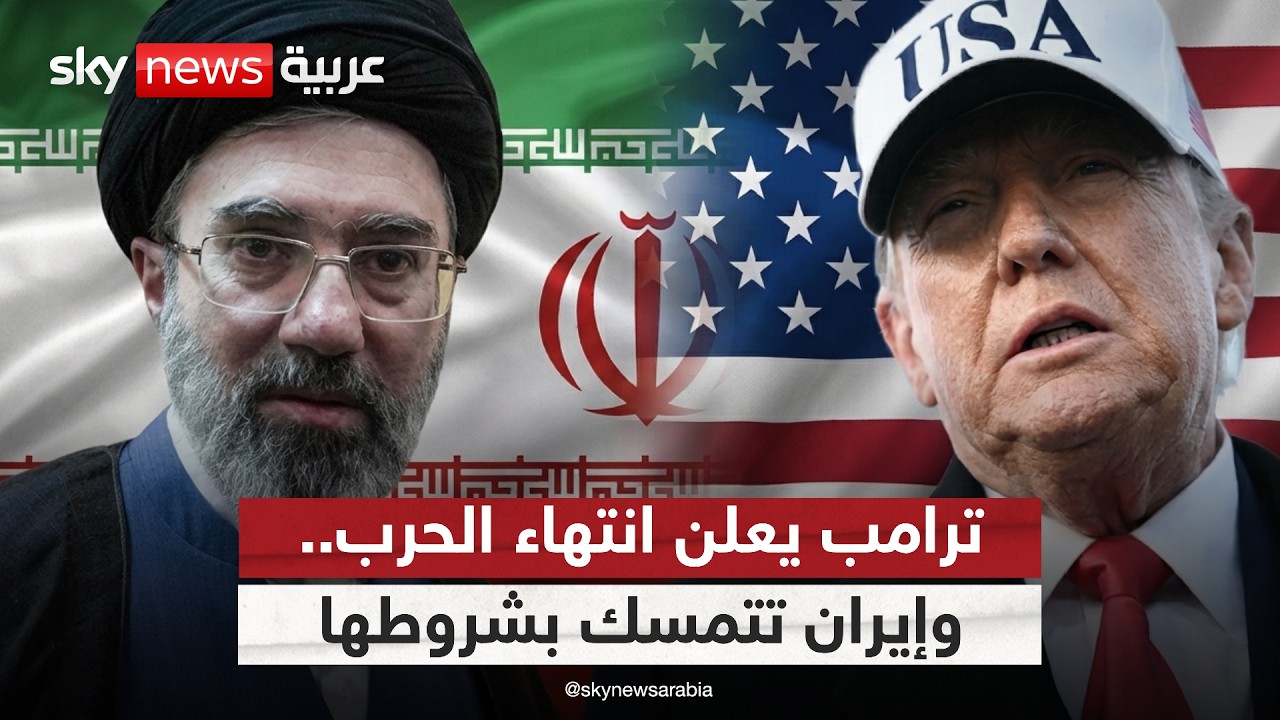 ترامب يعلن انتهاء الحرب عسكريا.. وإيران تتمسك بالشروط السبعة | #ستوديو_وان_مع_فضيلة
Next story: El Houssaini sees Morocco strengthened in Western Sahara dispute
Things we can learn from the video
Press to jump
- 1:51Al-Shulaimi argues that Gulf states need stability, oil exports and an open Strait of Hormuz.
- 6:20Abshenas says intermediaries are carrying indirect U.S.-Iran contacts, but direct negotiations have not begun.
- 10:14Al-Hadi defends the 2015 nuclear agreement and argues that mistrust complicates a diplomatic settlement.
- 22:40Al-Shulaimi argues that every side has incurred losses, rejecting a straightforward winner-and-loser account.
- 24:05Al-Suwaisi reviews successive Trump statements declaring the war nearly over, ended, and the ceasefire terminated.
- 31:44Shahoud sees little prospect of agreement and argues that economic pressure has weakened Iran.
The possibility of a U.S.-Iran agreement produces sharply different answers in a televised discussion: one guest says intermediaries are carrying messages, another sees little prospect of a deal, and a third argues that mistrust makes diplomacy difficult but still possible.
United Arab Emirates-based Sky News Arabia brings those positions together on Studio One, hosted by Fadhila Al-Suwaisi. The programme examines President Donald Trump's statement that the war is effectively over militarily, alongside his warning that Washington remains ready to act if circumstances change.
The opening cites Axios reporting that Trump told Qatar's prime minister, Sheikh Mohammed bin Abdulrahman Al Thani, he wanted an agreement and would give negotiations a chance. It also carries a contrasting message from Mohsen Rezaei, secretary of Iran's Supreme National Security Council: he accuses Washington of inventing reports of talks and demands acceptance of Iran's seven conditions.
From Tehran, researcher Emad Abshenas distinguishes indirect contacts through mediators from direct negotiations, which he says have not begun. He argues that Tehran wants a comprehensive regional agreement and that Trump's shifting statements cannot be relied upon.
The programme gives that criticism a chronological backdrop. At about 24 minutes, Al-Suwaisi presents a screen-based sequence of Trump's declarations, including a March statement that the war was nearly over, a June announcement that it had ended, and a July declaration ending the ceasefire.
The deepest disagreement concerns what earlier diplomacy achieved. Sameh Al-Hadi, introduced as a Democratic Party member and researcher on American affairs speaking from Michigan, argues that the 2015 nuclear agreement protected regional interests and constrained escalation. He blames Trump's administration for undermining it and maintains that a political settlement is necessary.
Republican Party member Nicolas Shahoud, speaking from Washington, instead portrays Iran's demands as manoeuvring under pressure. He argues that economic restrictions have weakened Iran and gives an exceptionally pessimistic assessment of the chances of agreement. Both he and Kuwaiti security commentator Fahad Al-Shulaimi criticise the earlier nuclear deal.
Al-Shulaimi puts Gulf trade and an open Strait of Hormuz at the centre of his argument for ending the conflict. Despite his assessment that Iran's capabilities have diminished, he rejects a simple victory narrative: in his view, the United States, Iran and regional economies have all suffered losses.
Qatar’s prime minister since March 2023 and foreign minister since 2016. He is a diplomat, economist and politician.
More on Wikipedia ›An Iranian politician and military officer who has served as secretary of the Supreme National Security Council since August 2026. He is affiliated with the Resistance Front of Islamic Iran.
More on Wikipedia ›Iran’s national security council, established through constitutional changes in 1989 to safeguard the country’s national interests, sovereignty, territorial integrity and Islamic revolution.
More on Wikipedia ›Published on Trari
Where next?


What do you think?
- Channel
- سكاي نيوز عربية
- Subscribers
- 7,410,000
- Channel views, last 7 days
- 11,828,846
- Channel views, pace per day
- 676,537 (on a normal day: 1,786,796)
- Video published
- November 10, 2026
- Video views so far
- 104,226 (less than a day online)
- Video views, pace per day
- 139,271
The numbers
The discussion drew about 104,000 views since yesterday, placing it among the Arab world's most-watched new news videos.
