
 United States
 United Kingdom
 Canada
 Australia
 New Zealand
 Ireland
A paper airplane loops through Science Explained's space-filled week
Seven uploads range from astronaut balance to NASA's inflatable habitat test, with the paper-plane demonstration approaching 300,000 views.
 Science Explained
Story of
Why this story? The channel's weekly summary: what went up this week, what is drawing views now, and where the channel stands among similar channels.
 How a Paper Airplane Flies in Zero Gravity
Next story: ExtinctZoo reads prehistoric conflict in bones and arrowheads
A gentle toss sends the white paper airplane upward, around a vertical loop and back toward the astronaut's hands. Science Explained's most-watched new upload makes a familiar classroom toy behave rather differently inside a space station.
"How a Paper Airplane Flies in Zero Gravity" credits Astro_Wakata for the footage. The important distinction is in the comments: microgravity does not mean a vacuum. There is air inside the station for the wings to interact with, even though the astronaut and airplane experience weightlessness as they orbit Earth. Several viewers focus on that distinction; others ask about a plane appearing to disappear near the equipment.
The channel shares demonstrations and other creators' footage, and its seven uploads offered quite a range. "High-Speed Racing Through Twisting Waterways" drew the next-largest audience among the new releases, while "The Artist Who Lived Inside a Rock for a Week" supplied an earthbound curiosity. Those two and the paper airplane are also the channel's busiest uploads right now.
Space provided a loose thread elsewhere: NASA footage tested an inflatable habitat's breaking point, while a clip credited to Jessica Meir showed the challenge of relearning balance after months away from Earth.
Channel-wide daily viewing is running at its usual level, while subscribers are being added at roughly 10,000 a day. Science Explained has the same subscriber total as Ben Eater, whose daily viewing is a little below its usual level. Here, the week's simplest prop has supplied its most-watched new demonstration: folded paper, moving air and an unfamiliar sense of up.
Published on Trari
Where next?


A professional in this field? Want to write about Science & learning on Trari? Tell us ›
What viewers say
Zero gravity but not vacuum!
@navneetpandit7299See it on YouTubeZero gravity but there is air.
That is why plane changes its direction.@aforashish7See it on YouTubeWait...how did that plane make it inbetween those two pieces it flew to? That top fin shouldve kept it from getting in there in the first place, right? Cuz you can see it drift along that gap like that top fins not there
@harrysosajr8684See it on YouTube
Public comments from the video's page on YouTube
Want to know when somebody answers you?
 Is this your channel?For the channel's owners and team: a ready picture and text for your audience
Share the story with your audience. Everything is ready:
For an Instagram story or a WhatsApp status
For a community post or your channel's description
The videos drawing views on Science Explained right now
 High-Speed Racing Through Twisting Waterways245,921 views · 2026-11-12
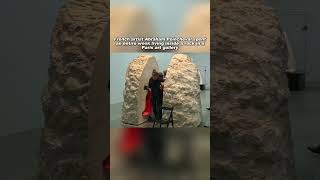 The Artist Who Lived Inside a Rock for a Week55,231 views · 2026-11-15
 NASA Tests the Breaking Point of an Inflatable Space Habitat22,730 views · 2026-11-14
 China's first nuclear bomb test in 196414,480 views · 2026-11-13
 Relearning Balance After Months in Space13,465 views · 2026-11-11
- Channel
- Science Explained
- Subscribers
- 1,400,000
- Videos published this week
- 7
- Video published
- November 10, 2026
- Video views so far
- 298,810
The numbers
Here is how Science Explained's uploads and audience are moving this week.

💡 Test your knowledge
What allows the paper airplane's wings to generate lift inside the space station?
The station contains air, so aerodynamic forces can act on the airplane even in microgravity.