
 United States
 United Kingdom
 Canada
 Australia
 New Zealand
 Ireland
MIT OpenCourseWare's modeling class starts with a problem, not a system
Hazhir Rahmandad's hands-on seminar joins twelve new uploads, with examples spanning horse markets, energy efficiency and predator-prey dynamics.
 MIT OpenCourseWare
Story of
Why this story? The channel's weekly summary: what went up this week, what is drawing views now, and where the channel stands among similar channels.
 Session 1: Stocks: Horse Market, Oil Market, and Transportation System
Things we can learn from the video
Press to jump
- 5:20Students build models before class, submit their work, and use classroom critiques to refine their approach.
- 23:55The modeling process moves from problem definition through qualitative structure, simulation, calibration and analysis.
- 33:25Problem definition can begin with an observed behavior, a mechanism or a policy question.
- 42:25Model a specific problem rather than an entire system to avoid unmanageable complexity.
- 53:30Start with one stock variable, test equilibrium, and expand the model iteratively.
- 56:40Trace causal feedback loops, then break a suspected loop to test an explanation for the model's behavior.
Where do you start when a model threatens to become as complicated as the world it describes? Hazhir Rahmandad's answer is to narrow the problem, then build something small enough to test.
That practical instinct runs through "Session 1: Stocks: Horse Market, Oil Market, and Transportation System," MIT OpenCourseWare's most-watched new upload of the week, approaching 100,000 views. The Spring 2025 seminar bridges introductory coursework and professional modeling practice. Students submit their attempts before class, then work through critiques together. Getting something imperfect onto the page is part of the method.
Rahmandad warns against trying to model an entire system instead of a specific problem: complexity can swallow the project. For anyone stuck at the beginning, he offers a concrete route forward: start with a single stock variable, test it in equilibrium, and add structure gradually. Later, he explains how breaking a suspected feedback loop can help test whether it actually causes the behavior a model produces.
The comments have their own classroom logistics. Viewers point newcomers past the opening administration to the substantive discussion, while another describes learning advanced computer science and mathematics through OCW while still in school.
Twelve uploads filled the week, including lessons on predator-prey relationships, energy efficiency and market boom-and-bust dynamics. The opening session also has the strongest daily momentum, followed by the predator-prey lesson. An earlier conversation about MIT Open Learning's Wikipedia collaboration remains active too.
The channel added 10,000 subscribers over the week, matching the weekly gains at 3Blue1Brown and Johnny Harris, though its daily viewing is a little below its usual level. For OCW learners, the week's distinctive addition is a seminar that makes the unfinished model part of the lesson.
Published on Trari
Where next?



What viewers say
Very Informative and Useful Content is uploaded by you for us. Getting free content from the world's Top School is not less than a lifetime present for me. MIT OCW has helped me learn Computer Science and Mathematics of higher level at the age of 16; I appreciate it so much. Thanks, MIT OCW, for such generous act of providing quality education free for us.
@JEE2028TOPPERSee it on YouTubeStarts @ 11:56
@shapedsilver3689See it on YouTubeThis is the best Netflix
@JoseAi-d1zSee it on YouTube
2 more comments
10:32 wow very conscientious on this. Respect for having that perspective for his course system
@lukedowneslukedownes5900See it on YouTubeTough lecture to ontologically put together, but still helpful
@lukedowneslukedownes5900See it on YouTube
Public comments from the video's page on YouTube
 Is this your channel?For the channel's owners and team: a ready picture and text for your audience
Share the story with your audience. Everything is ready:
For an Instagram story or a WhatsApp status
For a community post or your channel's description
The videos drawing views on MIT OpenCourseWare right now
 Session 4: Predator Prey with Carrying Capacity4,421 views · 2026-10-20
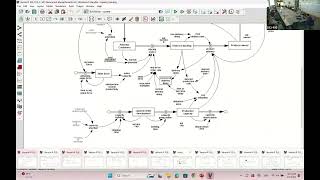 Session 7: Market Growth with Boom and Bust1,376 views · 2026-10-20
 Session 11: Student Projects (cont’d)1,103 views · 2026-10-20
 Session 6: Ponzi896 views · 2026-10-20
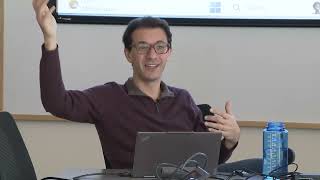 Session 3: Energy Efficiency Co-Flows603 views · 2026-10-20
 Wikipedia & MIT Open Learning: A New Strategic Collaboration32,149 views
- Channel
- MIT OpenCourseWare
- Subscribers
- 6,550,000 ▲ 10,000 this week
- Channel views, last 7 days
- 1,546,442
- Videos published this week
- 12
- Video published
- October 20, 2026
- Video views so far
- 97,101
- Views on its first day
- 35,621
The numbers
Here is MIT OpenCourseWare's week in views and subscribers.

💡 Test your knowledge
Who teaches the modeling seminar featured in this week's note?
Rahmandad teaches MIT's Building Serious System Dynamics Models from Scratch seminar.