
 United States
 United Kingdom
 Canada
 Australia
 New Zealand
 Ireland
Margaret MacMillan warns against treating world war as inevitable
The historian joins Andrew Coyne to examine dangerous historical parallels, uncertain alliances and Canada's dependence on American defense.
 The Globe and Mail
Story of
Why this story? The video opened at a pace of 74,572 views a day, 18 times a normal first day on this channel (4,156).
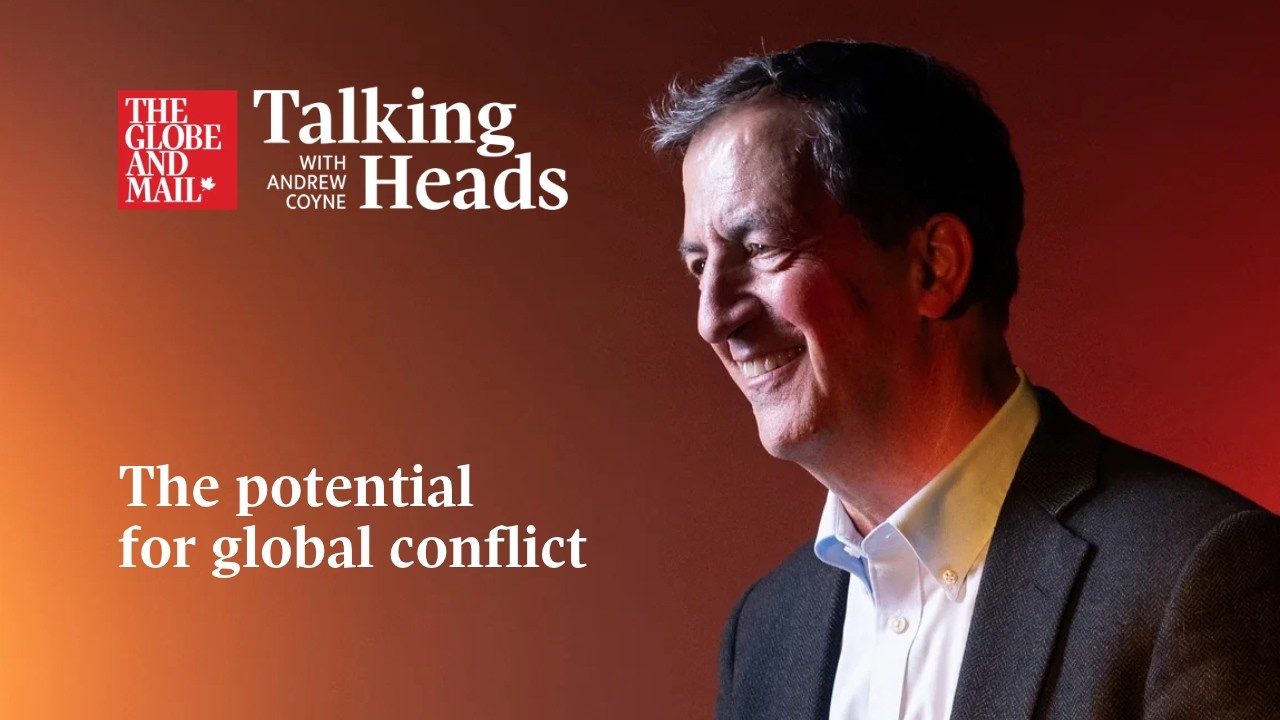 A new world order and the possibility of global war | Talking Heads with Andrew Coyne
Next story: Why ASEAN can convene world powers but cannot command its members
Things we can learn from the video
Press to jump
- 4:18MacMillan argues world war is not inevitable and warns that escalating rhetoric can make conflict more likely.
- 7:23Cold War nuclear close calls challenge the idea that its apparent stability guaranteed safety.
- 15:12Pre-First World War parallels include nationalist rivalry, imperial competition and assumptions that fighting would be short.
- 20:00Structural rivalries would persist without Trump, MacMillan argues, but individual leaders can heighten the danger.
- 27:18Doubts about US commitment to NATO prompt discussion of alternative defensive coalitions.
- 32:38Canada's vulnerabilities include military underinvestment, Arctic security pressures and dependence on American defense guarantees.
The difference between "if" and "when" matters when the subject is war. In her Talking Heads conversation with Andrew Coyne, historian Margaret MacMillan warns that expecting a conflict can itself make the danger worse.
"Once you begin to think something is likely to happen, it becomes more likely," she says. Her argument is not that another world war must come, but that leaders still have choices, and their assumptions can narrow those choices dangerously.
The Globe and Mail interview drew roughly 49,000 views in its first 11 hours, already far beyond the channel's usual full-day audience for regular videos. It follows Coyne's conversation with political scholar Robert Kagan about whether Canada can keep counting on American military protection.
MacMillan brings the perspective of an author whose books include The War That Ended Peace. She draws parallels with Europe before the First World War: nationalist rivalries, imperial competition and the disastrous expectation that fighting would be brief. She also challenges the comforting memory of a stable Cold War, recalling nuclear close calls rather than an unbroken record of dependable restraint.
Asked about Donald Trump's role, she distinguishes longstanding rivalries between powers from the additional danger unpredictable leaders can introduce. The discussion then turns to European doubts about American commitment to NATO and possible defensive coalitions involving countries such as Australia and Japan.
For Canada, MacMillan identifies military underinvestment, Arctic vulnerability and reliance on American guarantees as connected problems. Her answer to the episode's frightening premise remains a rejection of fatalism: political decisions helped create these risks, and political choices still matter.
Canadian historian and emeritus professor at the University of Oxford whose expertise is the history of international relations.
More on Wikipedia ›Published on Trari
Where next?


What do you think?
Want to know when somebody answers you?
 Is this your channel?For the channel's owners and team: a ready picture and text for your audience
Share the story with your audience. Everything is ready:
For an Instagram story or a WhatsApp status
For a community post or your channel's description
- Channel
- The Globe and Mail
- Subscribers
- 268,000 ▲ 2,000 this week
- Channel views, last 7 days
- 643,355
- Channel views, pace per day
- 135,880 (on a normal day: 99,839)
- Video published
- November 15, 2026
- Video views so far
- 49,046 (less than a day online)
- Video views, pace per day
- 74,572
The numbers
The interview has already exceeded the channel's usual first-day views for regular videos. Comments have also passed the usual full-day level.

💡 Test your knowledge
In which year was NATO founded?
NATO was established with the signing of the North Atlantic Treaty in 1949.