
 United States
 United Kingdom
 Canada
 Australia
 New Zealand
 Ireland
Who was watching the books? FRONTLINE revisits "Bigger Than Enron"
Hedrick Smith's 2002 investigation makes its YouTube debut, examining how accounting watchdogs became entangled with the companies they scrutinized.
 FRONTLINE PBS | Official
Story of
Why this story? The video opened at a pace of 141,452 views a day, 24 times a normal first day on this channel (5,978).
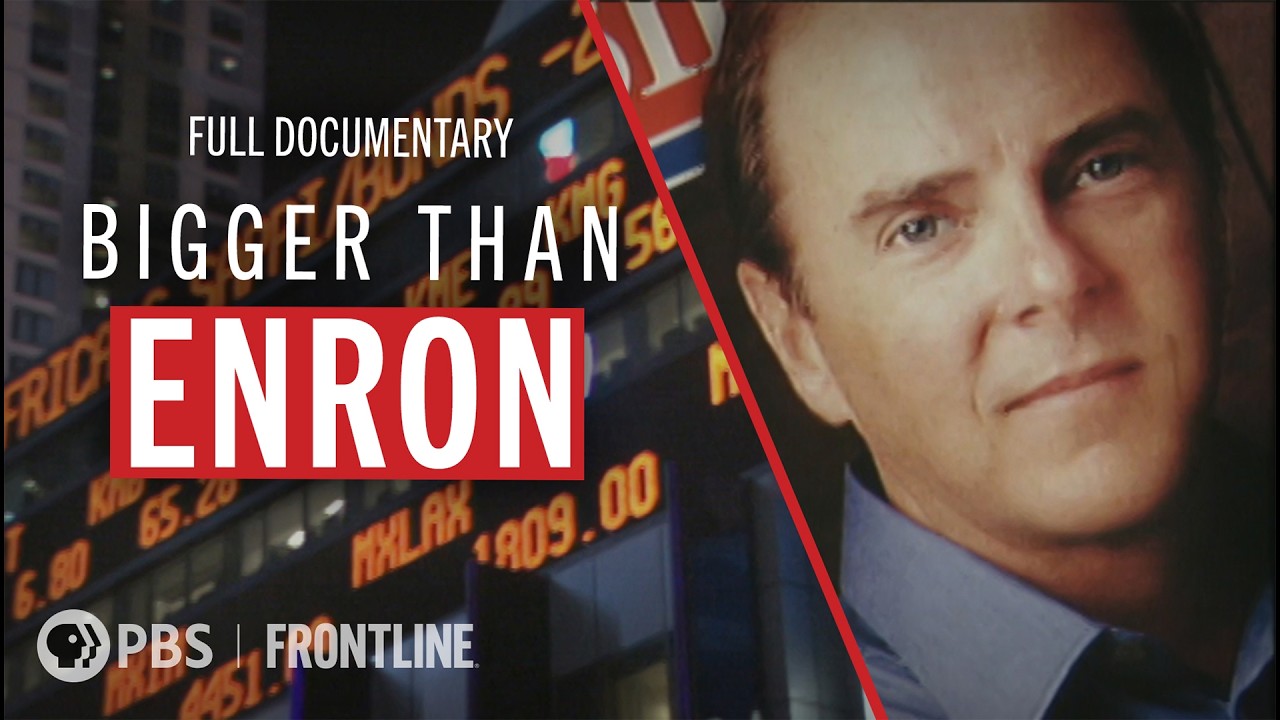 Inside Major Corporate Accounting Scandals | Bigger Than Enron (full documentary) | FRONTLINE (PBS)
Things we can learn from the video
Press to jump
- 2:27Arthur Levitt describes a corporate culture that put meeting Wall Street expectations ahead of truthful accounting.
- 5:05Executive stock options create incentives to push share prices higher.
- 12:53Accounting standard-setters retreat under congressional pressure, allowing stock-option costs to remain in footnotes.
- 28:22The investigation widens to accounting failures at Waste Management and a surge in corporate restatements.
- 35:03Accounting firms' expanding consulting businesses create conflicts with their responsibility to independently audit the same clients.
Hedrick Smith's question is not simply how Enron collapsed, but why the people paid to scrutinize corporate accounts failed to stop it.
His documentary "Bigger Than Enron," first broadcast in 2002, has arrived on FRONTLINE's channel as part of its effort to open up its reporting archive. Its estimated first-day audience was about 140,000 views, compared with roughly 6,000 for a typical regular upload on the channel.
The film widens the frame beyond Enron to accounting scandals at Sunbeam and Waste Management. Smith follows the incentives and political decisions that weakened scrutiny, including executive stock options that rewarded rising share prices and pressure on the body responsible for setting accounting standards.
One revealing sequence traces an attempt to make companies record stock options as an expense. Corporate lobbying and congressional pressure helped push the standard-setters into retreat, leaving the information in footnotes instead. Former SEC chairman Arthur Levitt describes the wider atmosphere bluntly: "I referred to this as a culture of gamesmanship."
This is reporting from June 2002, not a newly made investigation. The upload also includes a corporate sponsorship spot for The Economist.
The film's later sections turn to auditor independence: accounting firms were earning money both checking companies' books and selling those same clients consulting services. Smith examines how efforts to separate those businesses met political resistance, putting the watchdogs' financial dependence on their clients at the center of the story.
An independent US federal agency that enforces laws against stock-market manipulation.
More on Wikipedia ›Published on Trari
Where next?


 Is this your channel?For the channel's owners and team: a ready picture and text for your audience
Share the story with your audience. Everything is ready:
For an Instagram story or a WhatsApp status
For a community post or your channel's description
- Channel
- FRONTLINE PBS | Official
- Subscribers
- 4,790,000 ▲ 40,000 this week
- Channel views, last 7 days
- 4,095,684
- Channel views, pace per day
- 553,250 (on a normal day: 466,890)
- Video published
- October 27, 2026
- Video views so far
- 167,972 (2 days online)
- Video views, pace per day
- 132,345
The numbers
The archive documentary drew a much larger first-day audience than FRONTLINE's usual regular upload.
