
 United States
 United Kingdom
 Canada
 Australia
 New Zealand
 Ireland
Why soil samples matter after the Iowa Army plant blast
On FOX 35 Orlando, environmental engineer Tracy Fanara explains how testing can help distinguish any new lead contamination from what was already there.
 Army detonates five tons of toxic explosives in Iowa
Up nextTrari.com home page ›


 FOX 35 Orlando
Story of
Why this story? 20,565 views in 3 hours since it went up, already 13 times a normal first day on this channel.
34 more stories on Iowa Army plant lead azide detonation ›
The dust cloud is the part you can see. In her FOX 35 Orlando interview, environmental engineer Tracy Fanara tells anchor Garrett Wymer that what happens after the dust settles is a different question: how do you tell what the blast left behind at a site that already had a history of contamination?
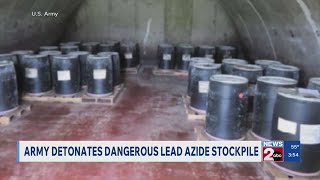
FOX 35 Orlando reports that the U.S. Army carried out a controlled detonation of five tons of degrading lead azide at the Iowa Army Ammunition Plant in Middletown. Fanara explains that breathing airborne dust is the immediate concern. The segment shows a map of where the dust could travel across Iowa, Illinois, and Missouri, not a map of confirmed contamination.
For the longer-term questions about crops, livestock, and drinking water, Fanara points to the value of knowing what was in the soil before the blast. The plant has been a Superfund site since 1990, she says, so finding lead afterward would not by itself show that it came from the detonation. The interview explains what sampling can help establish, but it does not report post-blast test results.
The segment drew about 21,000 views in under three hours, more than a dozen times what a comparable FOX 35 Orlando upload usually gets in a full first day. In the comments, one question picked up several replies: why detonate the material rather than neutralize it? Wymer puts the disposal question to Fanara near the end, and she argues that waiting made the stockpile harder to deal with.
Published on Trari.com
Go back to Trari.com home page
Where next?
Things we can learn from the video
Press to jump
- 0:39Fanara identifies inhaling airborne dust as an immediate concern after the blast.
- 1:14A forecast map shows where dust could spread across Iowa, Illinois, and Missouri.
- 1:40Fanara explains why earlier soil measurements matter when checking for new contamination at an existing Superfund site.
- 3:05Wymer asks what potential lead contamination could mean for drinking water, livestock, and crops.
- 4:24Asked how deteriorating explosives should be handled, Fanara argues that delays narrowed the options.
What do you think?
Want to know when somebody answers you?
 For the channel's owners and team
Share the story with your audience
A ready picture for an Instagram story or a WhatsApp status.
Ready text for a community post
- Channel
- FOX 35 Orlando
- Subscribers
- 477,000
- Channel views, last 7 days
- 1,680,064
- Channel views, pace per day
- 128,953 (on a normal day: 174,993)
- Video published
- November 25, 2026
The numbers
The view count covers only the first few hours after the interview went up. The comparison is with a full first day for similar FOX 35 Orlando uploads.

💡 Test your knowledge
Which Iowa town is home to the Iowa Army Ammunition Plant?
The plant featured in the FOX 35 Orlando report is in Middletown, in southeastern Iowa.