
 United States
 United Kingdom
 Canada
 Australia
 New Zealand
 Ireland
What Iowa's Army detonation could leave behind
University of Chicago chemist John Anderson tells FOX 32 Chicago why lead dust on the ground matters long after the plume has passed.
 UChicago chemist explains risks of Iowa lead azide explosion and potential environmental impact
Up nextTrari.com home page ›


 FOX 32 Chicago
Story of
Why this story? 17,441 views in 4 hours since it went up, already 9.2 times a normal first day on this channel.
34 more stories on Iowa Army plant lead azide detonation ›
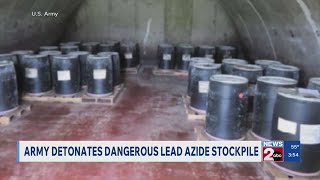
The dust can settle. The lead is still there. That's the distinction University of Chicago chemist John Anderson drew on FOX 32 Chicago before the Army detonated deteriorated lead azide at the Iowa Army Ammunition Plant in Middletown.
Anderson called the planned detonation, in his opinion, "the least bad option." He explained that the material had become so unstable that leaving it alone carried a risk, while handling it for chemical treatment carried risks of its own. FOX 32 Chicago later posted the Army's briefing after the blast.
Where the earlier coverage focused on which way the dust might travel, Anderson focused on what happens when it lands. He distinguished between lead in the soil overall and lead concentrated in dust at the surface, where it can be picked up and tracked indoors. Asked about farmland, he pointed to studies in which lead accumulated mainly in corn roots rather than the kernels.
Published on Trari.com
Go back to Trari.com home page
Where next?
Things we can learn from the video
Press to jump
- 1:30Anderson explains that lead azide can become much less stable as it deteriorates in storage.
- 3:29Anderson weighs a controlled detonation against the risks of leaving the material in place or handling it for treatment.
- 4:24An advisory map shows where airborne lead dust was projected to travel across parts of Iowa and Illinois.
- 4:41Anderson distinguishes lead concentrated in surface dust from the overall concentration in soil.
- 5:40Anderson cites studies in which lead accumulated mainly in corn roots rather than kernels.
What do you think?
Want to know when somebody answers you?
 For the channel's owners and team
Share the story with your audience
A ready picture for an Instagram story or a WhatsApp status.
Ready text for a community post
- Channel
- FOX 32 Chicago
- Subscribers
- 491,000 ▲ 1,000 this week
- Channel views, last 7 days
- 3,349,068
- Channel views, pace per day
- 573,361 (on a normal day: 420,588)
- Video published
- November 25, 2026
The numbers
The interview drew about 17,400 views in four and a half hours, roughly nine times what a comparable FOX 32 Chicago upload usually draws in a full first day.

💡 Test your knowledge
Which crop does John Anderson use to explain where lead can accumulate in a plant?
Anderson cites studies that found lead accumulated mainly in corn roots rather than in the kernels.