
 United States
 United Kingdom
 Canada
 Australia
 New Zealand
 Ireland
Pope puts people before economics as Milei defends his approach
The Buenos Aires speeches pair Leo XIV's appeal for education, dialogue and restraint in power with the Argentine president's economic account of the common good.
 Spain
Why this story? One of EL PAÍS's most watched videos since yesterday, with 39,690 views.
EL PAÍS: A Spanish daily newspaper published since 1976, owned by the PRISA group. 3.4M subscribers and 2.5B views.
 El PAPA reclama ante MILEI la necesidad de “ESCUCHAR” y “el cuidado de la palabra” | EL PAÍS
Next story: Pope Leo XIV greets pilgrims at Argentina's Luján shrine
2 more stories on Pope Leo XIV's Argentina visit ›
Things we can learn from the video
Press to jump
- 0:00Leo says the economy should serve people, rather than people serving the economy.
- 0:14He calls for stronger education, vocational training, universities and research to develop Argentina's human resources.
- 1:19The pope urges listening, careful public language, patient agreement and recognition of the limits of political power.
- 3:29Milei honors Pope Francis, calling him Argentina's most important historical figure and the first Latin American pope.
- 4:05Milei presents intertemporal general equilibrium as his economic understanding of governing for the common good.
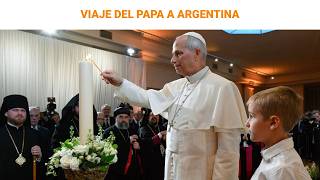
Pope Leo XIV called for an economy that serves people, stronger education and greater care in public debate during an appearance alongside Argentine President Javier Milei in Buenos Aires.
The footage, published by Spain's EL PAÍS, brings together extracts from both leaders' speeches at Palacio Libertad on Sunday. The pope's remarks move from economic priorities to the responsibilities of governing; Milei's response presents his economic approach as a way of pursuing the common good.
Leo begins by putting the person ahead of the economy. He then highlights Argentina's human resources and calls for particular support for education, vocational training, universities and research. The accompanying report also describes his appeal for attention to people facing illness, dependency and disability.
The broadcaster places those statements against Argentina's budget cuts to science and education. Its report interprets the speech as addressing criticisms of Milei's spending reductions and confrontational political language. That is the report's reading of the address, rather than an explicit accusation against the president in the excerpts shown.
Leo's next passage stresses a willingness to listen, careful language and the patient search for agreement. Those who exercise authority, he says, must act prudently and recognize the limits of their power.
Taking the lectern afterward, Milei begins with a tribute to the late Pope Francis, Jorge Bergoglio, describing him as Argentina's most important historical figure and the first Latin American pope. He then argues that governing for the common good requires what he calls intertemporal general equilibrium, presenting his economic framework as the means to that goal.
The appearance followed Leo's arrival from Uruguay and a private meeting with Milei at the presidential headquarters, according to the report. The video closes with the two men shaking hands onstage.
Leader of the Catholic Church and sovereign of Vatican City since 2025.
More on Wikipedia ›Argentine politician and economist who has been Argentina’s president since 2023.
More on Wikipedia ›Published on Trari
More on Pope Leo XIV's Argentina visit

Where next?


What do you think?
- Channel
- EL PAÍS
- Subscribers
- 3,390,000 ▲ 10,000 this week
- Channel views, last 7 days
- 14,774,399
- Channel views, pace per day
- 1,192,495 (on a normal day: 2,637,744)
- Video published
- November 9, 2026
- Video views so far
- 39,716 (less than a day online)
- Video views, pace per day
- 39,678
The numbers
The speech excerpts drew about 40,000 views since yesterday, the most among new videos from Spain's leading news channels.

💡 Test your knowledge
Which field supplies Milei's explanation of the common good in this speech?
Milei describes his approach to the common good through the economic concept of intertemporal general equilibrium.