
 United States
 United Kingdom
 Canada
 Australia
 New Zealand
 Ireland
A tiny fossil with eighteen legs on EDGE Science
The channel's only new upload traces an early relative of velvet worms through two fossils from Yunnan, China.
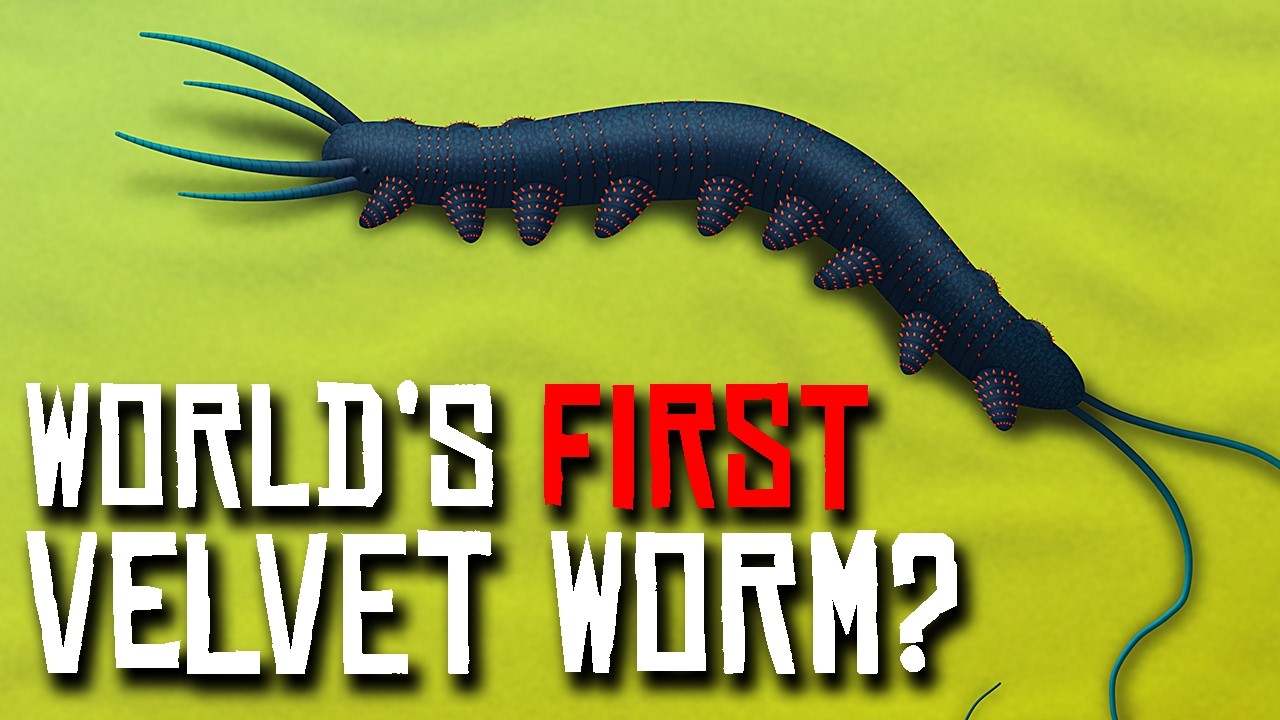 Why 9 Pairs of Legs Was Not Enough 520 Million Years Ago
Up nextTrari.com home page ›


 EDGE Science
Story of
Why this story? The channel's weekly summary: what went up this week, what is drawing views now, and where the channel stands among similar channels.
The eyes sit right at the base of the longer antennae. That's one of the details EDGE Science picks out in "Why 9 Pairs of Legs Was Not Enough 520 Million Years Ago," a close look at a fossil barely half an inch long. Its stubby legs had disc-shaped pads and rings of spines, but there's no telling what it ate: neither fossil preserved the mouthparts.
The narrator gets to the fossil by way of a childhood memory of Animal Planet and a quick introduction to living velvet worms, which squirt slime to catch prey. The fossil, Antennacanthopodia gracilis, is placed on an early branch of the velvet worm lineage. In the comments, one viewer hoped for more well-preserved fossils, while another thought the animals ought to inspire some Pokémon.
The documentary drew about 16,000 views in three days and is now the channel's most active upload. The next most active is another visit to the same Chinese fossil deposit, this time for Synophalos, a shrimp-like arthropod found linked tail to head in chains. An older video about a tiny La Brea Tar Pits toad is also among the uploads drawing the most daily views.
Subscribers are holding steady for now, while daily views across EDGE Science are running at about triple their usual level. Among similarly sized science channels, Your Dinosaurs Are Wrong is also having a busy stretch for views, while Popular Mechanics is quieter than usual.
Published on Trari.com
Go back to Trari.com home page
Where next?
Things we can learn from the video
Press to jump
- 0:44Living velvet worms catch prey by squirting slime.
- 2:04The species was described from two fossils found in Yunnan, China.
- 2:56Nine pairs of stubby legs carried foot pads and spines, and the head bore two pairs of antennae.
- 5:23The fossil is placed on an early branch of the velvet worm lineage.
- 6:42Neither fossil preserved mouthparts, so the animal's diet remains unknown.
- 7:07Other lobopodians and relatives of Anomalocaris shared the Cambrian seas with Antennacanthopodia.
A professional in this field? Want to write about Science & learning on Trari? Tell us ›
What viewers say
I am anomalocaris, i do my best
@Berntrot12See it on YouTubeI've always found velvet worns to be extremely adorable (I get cute aggression reactions). I can't remember how I learned about them.
I hope we find more well-preserved fossils and learn more about their evolution!@Noroiko呪子See it on YouTubeWe need Pokémon out of it please game freak 🙏
@Princeton_ZeraorasSee it on YouTube
3 more comments
Lots of very cool lobopods back then, and the ones now are plenty freaky. I think it’s interesting they were so diverse at a time that had a number of other stem arthropod groups. I suppose all of the branches off earlier from lobopod ancestors? Early stem vertebrates are fascinating too. Looking at the line now it’s hard to imagine a time when they didn’t seem to be much more than swimming clams with our most base ancestors being sessile filter feeders
@mikewilson858See it on YouTubeVelvet worms are my favorite animal! ❤❤❤
@gracewimbish4340See it on YouTubeWhat a fantastic subject for a video thank you for highlighting these studies and gorgeous animals
@PeopleAreFishSee it on YouTube
Public comments from the video's page on YouTube
Want to know when somebody answers you?
 For the channel's owners and team
Share the story with your audience
A ready picture for an Instagram story or a WhatsApp status.
Ready text for a community post
The videos drawing views on EDGE Science right now


- Channel
- EDGE Science
- Subscribers
- 163,000
- Videos published this week
- 1
- Video published
- November 21, 2026
- Video views so far
- 16,027
- Views on its first day
- 9,514
The numbers
Here's how the new fossil documentary and the rest of the channel are doing in views and subscribers.

💡 Test your knowledge
In which modern country were the Antennacanthopodia fossils found?
The two specimens came from Cambrian rocks in China's Yunnan province.