
 United States
 United Kingdom
 Canada
 Australia
 New Zealand
 Ireland
Raskin and Crenshaw dispute impeachment and Congress's next steps
CNN's post-election panel separates Democratic leaders' stated priorities from Republican skepticism, then turns to blocked legislation and war powers.
 CNN
Story of
Why this story? 2,493,087 views so far, and here is what is inside it.
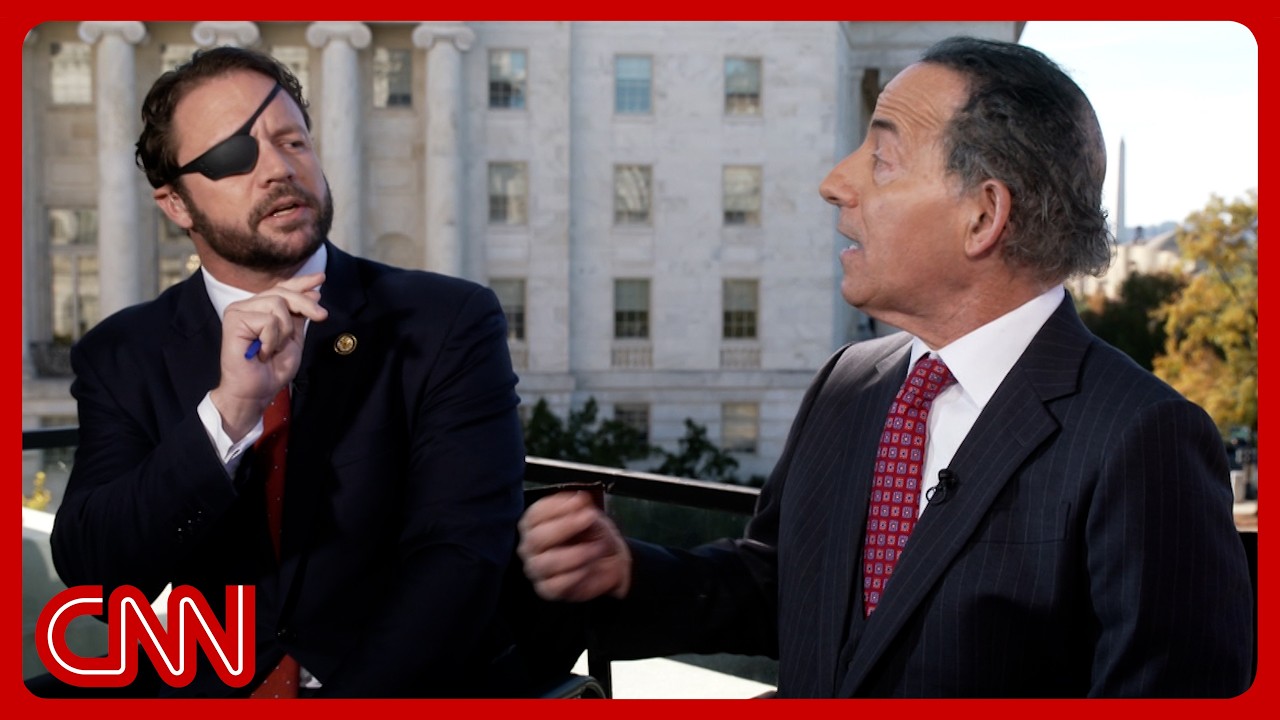 'Are you confused?' Dem & GOP reps erupt in shouting match over Congress
Things we can learn from the video
Press to jump
- 0:00Raskin says impeachment remains a constitutional option, but argues it is not Democrats' obsession.
- 2:14Asked about impeachment, Jeffries says no House Democratic Caucus member has raised it with him.
- 3:22Crenshaw accuses Senate Democrats of blocking bipartisan surveillance, ratepayer protection and insider-trading legislation.
- 4:22The title's heated exchange begins as the lawmakers dispute election results, war authorization and Trump.
- 5:22Crenshaw invokes the Senate's 60-vote requirement while challenging Raskin's account of legislative obstruction.
- 7:53Raskin argues that Trump's war violated Congress's constitutional authority to declare war.
CNN's post-election discussion starts with a distinction Jamie Raskin wants to make: keeping impeachment available is not the same as making it the Democratic agenda.
"So, we're not afraid to impeach him. It's a tool in the constitutional toolkit," the Maryland Democrat says. But a clip introduced by congressional correspondent Manu Raju supplies a different emphasis from House Democratic leader Hakeem Jeffries: "I haven't had a single member of the House Democratic Caucus talk to me about impeachment."
Texas Republican Dan Crenshaw is unconvinced that Democrats will leave the subject alone. From there, the panel moves beyond the title's promised shouting match to a substantive disagreement about responsibility for congressional inaction.
Crenshaw accuses Senate Democrats of blocking bipartisan measures, citing surveillance reform, ratepayer protections and restrictions on insider trading. He points to the Senate's 60-vote hurdle. Raskin argues that Republicans have missed the election's message and challenges their legislative program.
The exchange also reaches presidential war powers. Raskin argues that Trump took the country into an unconstitutional war, grounding his objection in Congress's authority to declare war.
The sharpest escalation begins around four minutes in, with interruptions and personal jabs increasingly crowding out the answers. By the commercial break, the anchor offers a more generous assessment of the encounter: "I have to say, it is actually nice to hear the debate of issues and ideas..."
A Democratic U.S. representative for Maryland’s 8th congressional district since 2017. He is also an attorney and law professor.
More on Wikipedia ›The House minority leader and leader of the House Democratic Caucus since 2023. He has represented New York’s 8th congressional district since 2013.
More on Wikipedia ›A Republican U.S. representative for Texas’s 2nd congressional district since 2019 and a former Navy SEAL officer.
More on Wikipedia ›Published on Trari
Where next?


 Is this your channel?For the channel's owners and team: a ready picture and text for your audience
Share the story with your audience. Everything is ready:
For an Instagram story or a WhatsApp status
For a community post or your channel's description
- Channel
- CNN
- Subscribers
- 20,100,000 ▲ 100,000 this week
- Channel views, last 7 days
- 293,770,604
- Channel views, pace per day
- 24,447,004 (on a normal day: 31,184,954)
- Video published
- November 4, 2026
- Video views so far
- 2,493,087 (5 days online)
- Video views, pace per day
- 46,129 (on a normal day: 793,289)
The numbers
The CNN discussion has drawn about 2.5 million views in five days. Its subject, rather than an unusual viewing surge, is the story.

💡 Test your knowledge
Which state does Dan Crenshaw represent in Congress?
Crenshaw appears in the CNN discussion as a Republican representative from Texas.