
 United States
 United Kingdom
 Canada
 Australia
 New Zealand
 Ireland
Canada's clock-change divide brings darker mornings into focus
CBC's Ian Hanomansing maps the split, while neuroscientist Michael Antle explains why keeping summer time is not the same as keeping bodies in sync.
 CBC News
Story of
Why this story? One of the most watched videos since yesterday, with 135,733 views.
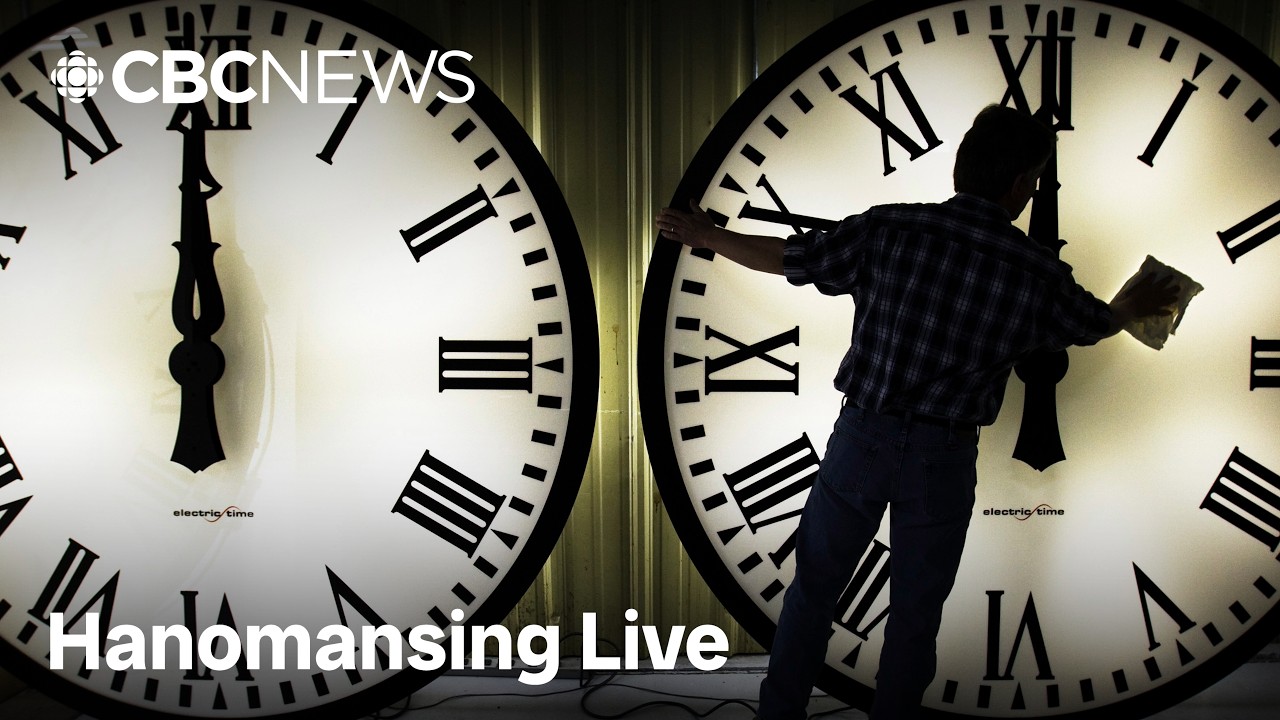 What to know about this weekend's complicated time change | Hanomansing Live
Things we can learn from the video
Press to jump
- 0:15Maps show which provinces CBC says will fall back and which will keep daylight saving time.
- 0:54Hanomansing explains broadcast schedule changes for Cross Country Checkup and Hanomansing Live.
- 2:06Antle explains why later sunrises make early waking harder for the body's daylight-sensitive clock.
- 4:19Antle argues that permanent standard time aligns better with human biology than permanent daylight saving time.
- 5:22Falling back is typically easier on the body than springing forward, Antle explains.
Turning the clocks back will no longer be a shared autumn ritual across much of Canada, CBC News reports. For people arranging calls across provinces, or simply finding their usual radio program, that makes this weekend more complicated than an extra hour in bed.
In a new Hanomansing Live segment, Ian Hanomansing uses maps to explain the divide. According to CBC, most of British Columbia, along with Alberta, Manitoba and the Northwest Territories, will stop making seasonal clock changes, joining Yukon and Saskatchewan. Most of Ontario, Quebec and the Atlantic provinces will still fall back on November 1. That changes the time differences between parts of the country, and Hanomansing walks through adjustments to his own show and Cross Country Checkup.
The segment drew roughly 136,000 views in its first 14 hours. Beyond the scheduling puzzle, its central question is what happens when the clock stays put but winter daylight does not.
Michael Antle, a University of Calgary professor of psychology and neuroscience, explains that the body's circadian clock follows daylight. Later sunrises make early starts harder, particularly for teenagers and young adults whose body clocks already tend toward later hours. Hanomansing brings up school boards advising reflective gear and flashlights for dark commutes.
Antle's distinction is between ending clock changes and choosing which time to keep. He argues that permanent standard time better suits human biology than permanent daylight saving time, recalling the United States' experiment with year-round daylight saving time in the 1970s.
For those still changing their clocks, he offers a less daunting point: falling back is generally easier on the body than springing forward. The adjustment is about bringing the body clock back into step with the daily schedule.
Published on Trari
Where next?



 Is this your channel?For the channel's owners and team: a ready picture and text for your audience
Share the story with your audience. Everything is ready:
For an Instagram story or a WhatsApp status
For a community post or your channel's description
- Channel
- CBC News
- Subscribers
- 4,780,000
- Channel views, last 7 days
- 13,203,235
- Channel views, pace per day
- 1,873,213 (on a normal day: 2,302,960)
- Video published
- October 30, 2026
- Video views so far
- 15,961 (less than a day online)
The numbers
The new segment reached a substantial audience before its first full day was over.

💡 Test your knowledge
At which university does Michael Antle teach?
CBC introduces Antle as a professor of psychology and neuroscience at the University of Calgary.