
 United States
 United Kingdom
 Canada
 Australia
 New Zealand
 Ireland
BBC examines Britain's air defences under 1,000-day war-readiness warning
The Security Brief asks how Britain can counter missile attacks and drone swarms without spending vastly more on interception than an attacker spends.
 BBC News
Story of
Why this story? One of BBC News's most watched videos since yesterday, with 162,075 views.
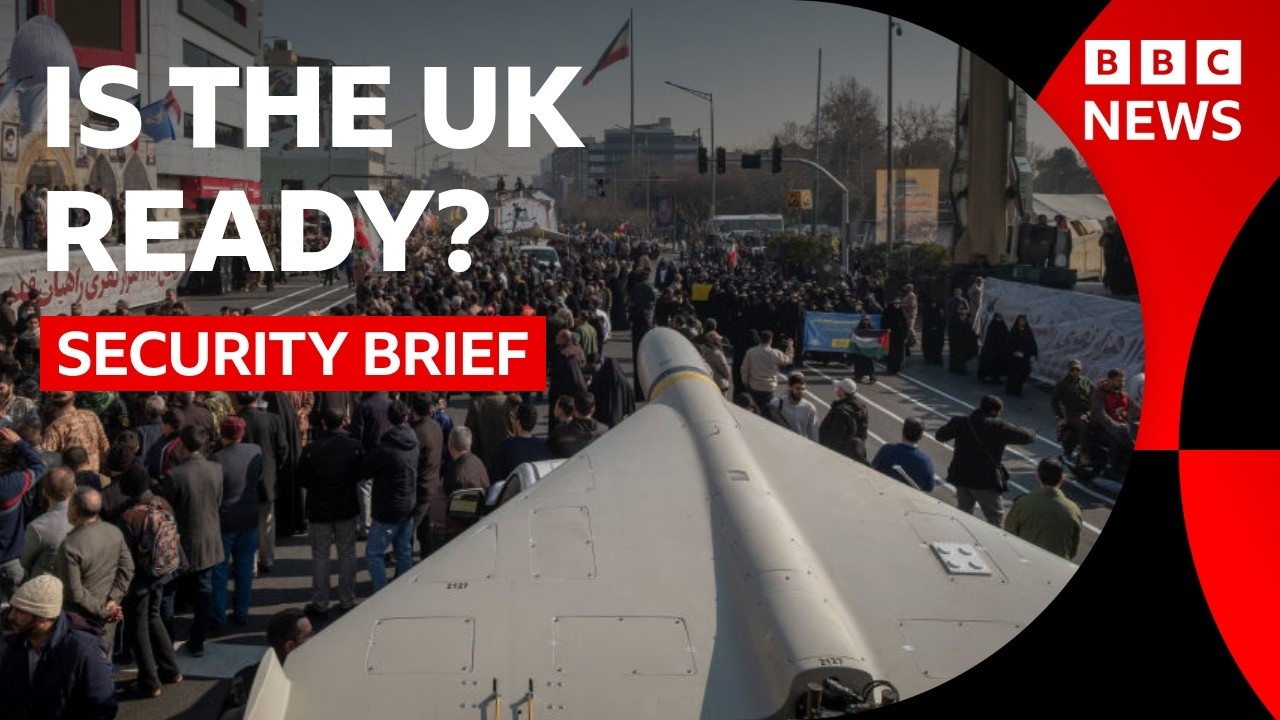 How does a country prepare for war in 1,000 days? | The Security Brief
Next story: Microsoft outage delays NHS referrals as emergency care continues
Things we can learn from the video
Press to jump
- 0:19Kay says Britain can detect ballistic missiles but cannot shoot them down.
- 4:48The hosts examine Type 45 destroyers' missile interception capabilities and planned upgrades.
- 7:05Expensive interceptors against cheap drones create a cost problem for sustained air defence.
- 11:11Cracknell describes integrating the Advanced Precision Kill Weapon System onto Typhoon jets.
- 14:36The interview examines expanding AI use in defence and the safety assurance those systems require.
- 16:46Kay argues that manufacturers need signed contracts, not promises, before building factories.
Detecting an incoming missile is not the same as being able to stop it. That distinction frames BBC News's examination of Britain's air defences, following the Defence Secretary's warning that the UK must be ready for war in less than three years.
Christian Fraser and Mikey Kay use The Security Brief to examine what that preparation would require: missile interception, affordable weapons against drones and factories capable of supplying them. The warning sets a readiness deadline, not a date when war is certain to begin.
"The UK has the capability to detect ballistic missiles, but we can't shoot them down," Kay says. The programme illustrates Russian missile ranges from Kaliningrad across Europe, then examines the Royal Navy's Type 45 destroyers, their existing capabilities and planned upgrades.
Cost is another constraint. As Kay explains, using expensive interceptors against cheap drones creates a problem that cannot be solved by technical performance alone. Defences must also be affordable to sustain against repeated attacks.
Julian Cracknell, BAE Systems' chief technology and information officer, joins the discussion to explain the industrial choices behind those capabilities. He points to the integration of the Advanced Precision Kill Weapon System onto Typhoon jets as an example of faster development: "That took 40 days to integrate that weapon with Typhoon."
The interview also covers uncrewed aircraft and artificial intelligence, with Cracknell stressing the need for assurance around automated systems. But the programme's closing argument returns to procurement rather than technology. Kay says manufacturers need firm orders before expanding production: "Companies won't build factories on a promise... They need contracts signed."
A British aerospace, arms and information security company based in London. It is Europe's largest defence contractor by 2024 revenues.
More on Wikipedia ›Published on Trari
Where next?


What do you think?
Want to know when somebody answers you?
 Is this your channel?For the channel's owners and team: a ready picture and text for your audience
Share the story with your audience. Everything is ready:
For an Instagram story or a WhatsApp status
For a community post or your channel's description
- Channel
- BBC News
- Subscribers
- 20,300,000 ▲ 100,000 this week
- Channel views, last 7 days
- 42,625,032
- Channel views, pace per day
- 12,920,344 (on a normal day: 5,209,316)
- Video published
- November 12, 2026
- Video views so far
- 324,281 (2 days online)
- Video views, pace per day
- 162,106 (on a normal day: 246,707)
The numbers
BBC News's defence analysis drew about 162,000 views since yesterday, the most among its videos published in the past two days.

💡 Test your knowledge
Which aircraft features in Cracknell's example of rapid weapon integration?
Cracknell says the Advanced Precision Kill Weapon System took 40 days to integrate with Typhoon.