
 United States
 United Kingdom
 Canada
 Australia
 New Zealand
 Ireland
Paris students tell the BBC they now march for the right to protest
BBC News pairs the 135 arrests announced by France's interior minister with student voices in Paris and a new protest offense in Italy.
 BBC News
Story of
Why this story? One of BBC News's most watched videos since yesterday, with 188,567 views.
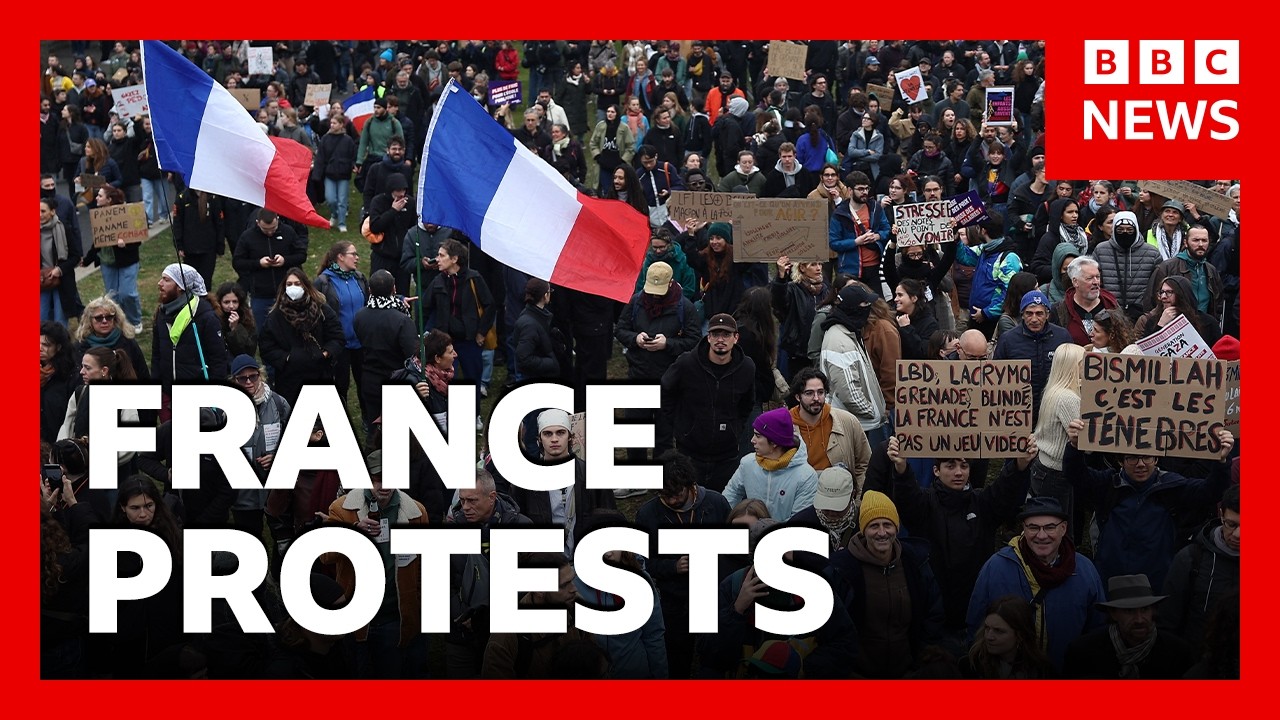 French police arrest 135 people, as tens of thousands protest across country | BBC News
Things we can learn from the video
Press to jump
- 0:00Breaking news: protests spread across France over living costs and school conditions, with tear gas used in Lyon.
- 1:17Nick Beake reports from a peaceful Paris rally, with heavy police deployment and chants against President Macron.
- 2:55Student Julian says ministers told students to go back to study, so the march is now about the right to assemble.
- 3:28Anaïs argues that budget deficits should be met by taxing the wealthy to fund public services.
- 5:51Sarah Rainsford reports from Milan on Italy's emergency decrees, including a new offense for violent protest.
- 9:05Recap of crowd limits, curfews and police operations in Paris, Marseille and Lyon.
France's interior minister said 135 people had been arrested as tens of thousands marched in protests across the country, BBC News reports. Its broadcast adds two things to a story that has filled the week: student protesters explaining why they kept marching, and a new legal response in Italy.
The day followed last weekend's riots and looting, which the BBC says affected thousands of businesses and led to more than 2,700 arrests. On screen, the BBC counts protests in more than 100 places. The presenter notes tear gas in Lyon. In Paris, police said they had seized weapons and gas masks before posting that "all is calm." Walking through a peaceful rally, correspondent Nick Beake frames the day's concern: "will there be a repeat of the extreme violence of last weekend?"
Mark Lowen speaks with students. Julian says ministers "just told us to get back to work" when students raised their demands. He says the march has become about assembly itself, because protest is not allowed in most of the city: "We're now protesting for our right to protest." Anaïs answers the question of France's budget deficits by calling for higher taxes on the wealthy to fund public services. She also says: "Violence is never the answer, but the first violence come from the government."
From Milan, Sarah Rainsford reports on Italy's emergency decrees, which she says include making violent protest a specific offense punishable by up to five years in prison. The broadcast also shows rallies in Rome under close watch.
The report has drawn close to 190,000 views since yesterday, more than any other new BBC News video.
Published on Trari
Where next?


 Is this your channel?For the channel's owners and team: a ready picture and text for your audience
Share the story with your audience. Everything is ready:
For an Instagram story or a WhatsApp status
For a community post or your channel's description
- Channel
- BBC News
- Subscribers
- 20,200,000
- Channel views, last 7 days
- 33,428,561
- Channel views, pace per day
- 1,851,955 (on a normal day: 4,931,874)
- Video published
- October 24, 2026
- Video views so far
- 188,567 (less than a day online)
- Video views, pace per day
- 265,841
The numbers
This is the BBC News upload that drew the most views since yesterday, and its comment section has been busier than usual for the channel.

💡 Test your knowledge
Milan, where Sarah Rainsford reports, is the capital of which Italian region?
Milan is Lombardy's capital and largest city.