
 United States
 United Kingdom
 Canada
 Australia
 New Zealand
 Ireland
Keupp urges Europe to tighten sanctions after Shenzhen summit
The military economist says the declaration signed by Trump, Xi and Putin does little to change Moscow's reasons for continuing the war in Ukraine.
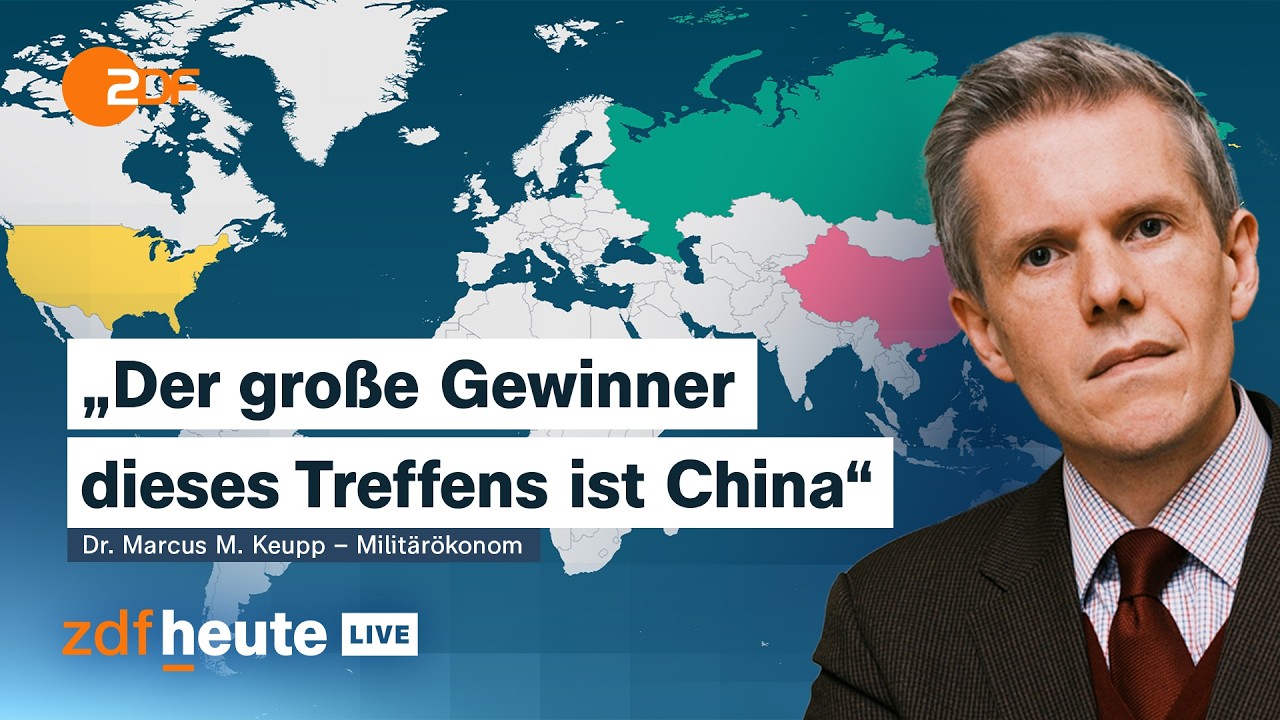 Ukraine: Militärökonom Keupp über den Gipfel in Shenzhen | ZDFheute live
Up next


 GermanyStory of
Why this story? One of ZDFheute Nachrichten's most watched videos since yesterday, with 303,199 views.
ZDFheute Nachrichten: The news division of ZDF, a German public broadcaster. 1.9M subscribers and 2.1B views.
51 more stories on Trump–Xi–Putin trilateral meeting ›
Marcus Keupp came away from the Shenzhen summit with two recommendations for Europe: enforce sanctions on Russia's shadow fleet more strictly and move faster away from fossil fuels. The ETH Zurich military economist told Philip Wortmann on Germany's ZDFheute Nachrichten that the declaration signed by Donald Trump, Xi Jinping and Vladimir Putin offered more symbolism than substance for Ukraine. The interview is titled "Ukraine: Militärökonom Keupp über den Gipfel in Shenzhen | ZDFheute live" (Live: Ukraine, military economist Keupp on the Shenzhen summit).
Keupp rejected the comparison with Yalta, where Allied leaders met in 1945 to discuss the shape of postwar Europe. This time, he said, the leader of the country that invaded Ukraine was at the table. He saw the summit as a display that benefited Beijing, not the start of a new world order. In his view, China can play Washington and Moscow off against each other, and Russia is the junior partner in its relationship with Beijing.
The interview cuts to the meeting of Ukraine's supporters in Berlin, where German Chancellor Friedrich Merz says negotiations must include both Ukraine and Europe. Ukrainian President Volodymyr Zelenskyy calls for strong Western support before winter, saying it could push Russia to engage more constructively in talks. Keupp argues that Putin will negotiate seriously only when military pressure convinces him Russia can no longer advance. He points to Ukrainian strikes on the Kerch Bridge and Russian oil refineries as examples of what Ukraine is already capable of.
Keupp also predicts that congressional investigations could leave Trump with less room to maneuver once the new U.S. Congress convenes in January. His warning to Europe goes further back: he invokes late Qing China as an example of the cost of putting off reforms under outside pressure.
Merz has been Germany’s chancellor since May 2025 and has led the Christian Democratic Union since 2022.
More on Wikipedia ›Published on Trari
Where next?
Things we can learn from the video
Press to jump
- 0:52Keupp rejects the Yalta analogy and says the Shenzhen summit's symbolism mainly benefits China.
- 4:24Keupp argues that Putin will only negotiate seriously if military pressure makes further advances look impossible.
- 7:54Merz says Ukraine and Europe must be part of negotiations for them to bring peace.
- 11:30Zelenskyy says strong Western support before winter could make Russia more constructive in talks.
- 13:48Keupp argues that China's support for Russia serves Beijing's economic interests, not a partnership of equals.
- 21:49Keupp calls on Europe to enforce sanctions on Russia's shadow fleet and speed up its energy transition.
What do you think?
Want to know when somebody answers you?
- Channel
- ZDFheute Nachrichten
- Subscribers
- 1,910,000 ▲ 10,000 this week
- Channel views, last 7 days
- 16,780,711
- Channel views, pace per day
- 1,661,795 (on a normal day: 2,831,785)
- Video published
- November 20, 2026
- Video views so far
- 303,199 (less than a day online)
- Video views, pace per day
- 342,111
The numbers
The interview drew about 303,000 views since yesterday, making it the second most watched new video among Germany's leading news channels over that period.

💡 Test your knowledge
Which Chinese dynasty does Keupp invoke in his warning against putting off reforms?
Keupp draws a parallel with China under the Qing dynasty in the late 19th century.