
 United States
 United Kingdom
 Canada
 Australia
 New Zealand
 Ireland
Terracotta Army fingerprints get a closer look on World of Antiquity
David Miano's annual myth roundup also revisits a Roman mosaic that doesn't tell Homer's version of the Trojan War.
 10 Ancient History Myths Busted in 2026
Up nextTrari.com home page ›


 World of Antiquity
Story of
Why this story? The channel's weekly summary: what went up this week, what is drawing views now, and where the channel stands among similar channels.
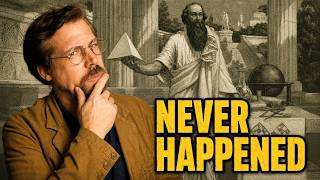
What can a fingerprint in clay tell you about who made the Terracotta Army? In "10 Ancient History Myths Busted in 2026", ancient historian David Miano explains how researchers used those impressions to challenge the assumption that the makers were all adult men. Their analysis points to women and younger workers, too.
The only new upload on World of Antiquity drew about 33,000 views in 13 hours. Not every entry is a flat-out debunking. Near Pompeii, fruit and fava beans found in servants' quarters complicate the idea that enslaved Romans always ate worse than poor free people. One viewer paused over an unfamiliar fruit on the list, the sorb. Another picked up on Miano's distinction between silk from wild moths and evidence of domesticated silk production far from China.
The new countdown is drawing the most daily views on the channel, with August's "10 Famous Ancient Events That Never Happened" the next most active. Daily views across World of Antiquity are running at more than twice their usual level, with the subscriber count steady at the latest daily pace. Among similarly sized education channels, Study of Antiquity and the Middle Ages had a quieter day than usual, while English with Steve Ford had a big week for both views and new subscribers.
Miano saves the Great Pyramid for last. A journal retracted a radar study that claimed to reveal hidden chambers and ramps, but he makes a careful distinction: the retraction doesn't settle what's inside the pyramid. It takes away the evidence that particular paper offered for its reconstruction.
Published on Trari.com
Go back to Trari.com home page
Where next?
Things we can learn from the video
Press to jump
- 3:17Fingerprint analysis points to women and younger workers among the makers of China's Terracotta Army.
- 5:16A Roman mosaic from Rutland fits Aeschylus's version of the Trojan War better than Homer's.
- 7:39Evidence from Uzbekistan places domesticated silk production outside China long before the Silk Road.
- 9:43Rome mattered, but Byzantium, Antioch, and Corinth were more central in the overland network analysis Miano discusses.
- 14:25Fruit and fava beans near Pompeii complicate assumptions about what enslaved Romans ate.
- 20:57A retracted radar study no longer provides reliable support for its reconstruction of hidden spaces in the Great Pyramid.
A professional in this field? Want to write about Science & learning on Trari? Tell us ›
What viewers say
15:03 apples, pears, sorbs...
Sorbs? ( _Cormus domestica_ ) The taste is highly astringent and gritty, but it works well in jams, juice and cider.@lakrids-pibeSee it on YouTubeI thought the Malta story was going to be about sandstone again.
Great video.@yorkshirepudding9860See it on YouTubeThanks for highlighting actual evidence.
@RED-cy7igSee it on YouTube
2 more comments
Your videos always make work better for me, thank you!!
@XEMJKXSee it on YouTubeI am always looking forward to your updates, thank you
@AnnePoitrineauSee it on YouTube
Public comments from the video's page on YouTube
Want to know when somebody answers you?
 For the channel's owners and team
Share the story with your audience
A ready picture for an Instagram story or a WhatsApp status.
Ready text for a community post
The videos drawing views on World of Antiquity right now

- Channel
- World of Antiquity
- Subscribers
- 361,000
- Videos published this week
- 1
- Video published
- November 23, 2026
- Video views so far
- 32,605
The numbers
Here's how the new countdown and the rest of World of Antiquity's catalog are doing.

💡 Test your knowledge
Which ancient poet is traditionally credited with the Iliad?
The Iliad and the Odyssey are both traditionally attributed to Homer.