
 United States
 United Kingdom
 Canada
 Australia
 New Zealand
 Ireland
Two hands, one Nobel: Kagan and Soai's mirror-image molecules on USA TODAY
The chemistry prize went to work a Nobel committee member called 'probably the coolest experiment in organic chemistry,' and viewers arrived with questions about the sound and about 'mirror life.'
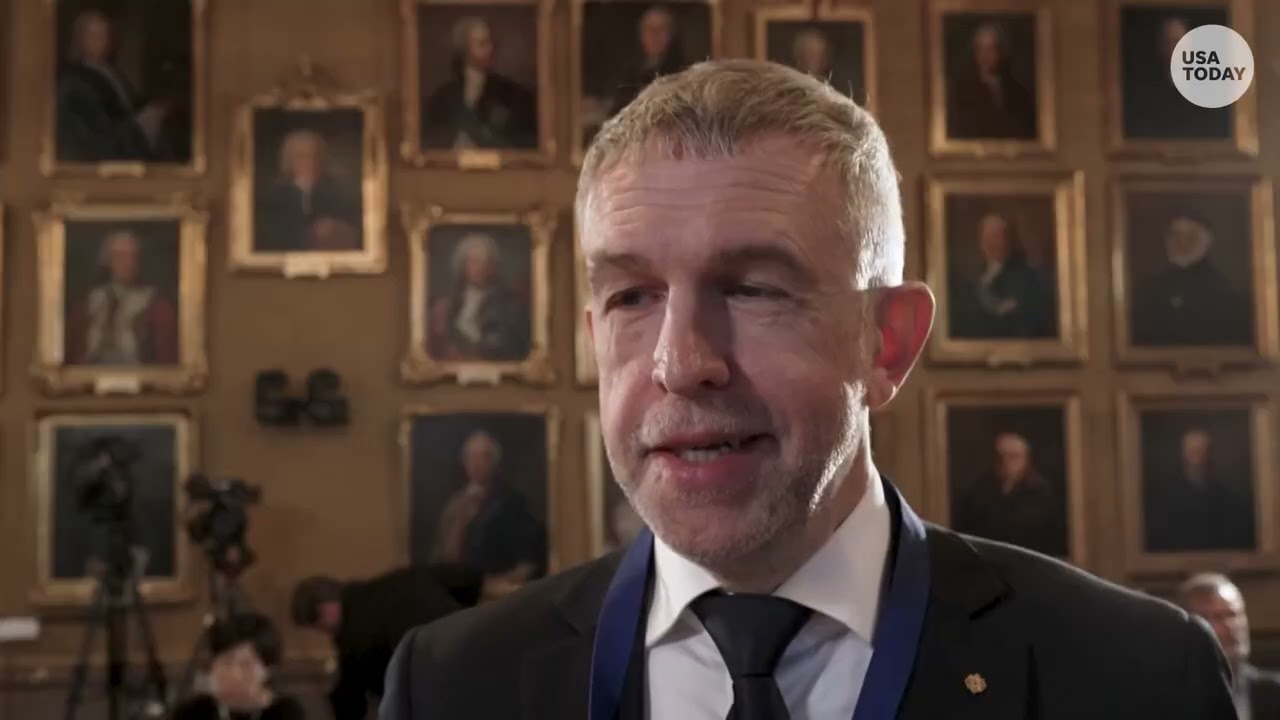 Nobel prize in chemistry winners' 'mirror image' molecules discovery dubbed 'coolest experiment'
Up next


 USA TODAY
Story of
Why this story? The video opened at a pace of 196,079 views a day, 12 times a normal first day on this channel (16,289).
One more story on Nobel Prize in Chemistry ›
Hold your hands palm to palm and they match. Lay one on top of the other and they never quite fit. Many molecules work the same way: a left-handed and a right-handed version, built from identical parts. That handedness, called chirality, is the subject of the 2026 Nobel Prize in Chemistry, awarded to Henri Kagan and Kenso Soai. USA TODAY's video on the announcement passed about 100,000 views in its first eight hours, a crowd far larger than the channel's longer uploads usually draw.
The prize honors work that matters well beyond the lab. The two hands of a molecule can behave very differently in the body, which is why the prize announcement singled out drug manufacturing. Kagan, a French chemist, spent decades on ways to make one hand rather than the other, and his DIOP ligand from the early 1970s was one of the first chiral catalysts for asymmetric hydrogenation. Soai's name is on the Soai reaction from the mid-1990s, in which a molecule helps make more of itself and a slight excess of one hand grows into a nearly pure sample. Committee member Peter Somfai called the work "probably the coolest experiment in organic chemistry."
The comment section splits between chemistry and complaints. The most-liked notes are about the audio, which several viewers say cuts out during the interesting parts. Others dig into the science: one asks where the first one-handed starting material comes from, and another brings up the debate over "mirror life," the hypothetical mirror-image bacteria some scientists have warned against ever building. A Big Bang Theory fan wonders whether Sheldon and Amy already won for asymmetry. Someone else spotted a person at the back of the room shutting a laptop with a bang at 4:16.
The video stands out on a slow stretch for the channel, and for most news channels near its size. USA TODAY has since moved on to Donald Trump's San Antonio rally and Pete Hegseth aboard the USS Abraham Lincoln, and none of those clips has come close so far.
Published on Trari
Where next?
What do you think?
Want to know when somebody answers you?
 For the channel's owners and team
Share the story with your audience
A ready picture for an Instagram story or a WhatsApp status.
Ready text for a community post
- Channel
- USA TODAY
- Subscribers
- 7,580,000
- Channel views, last 7 days
- 8,264,746
- Channel views, pace per day
- 399,774 (on a normal day: 2,007,621)
- Video published
- October 7, 2026
- Video views so far
- 99,826 (less than a day online)
- Video views, pace per day
- 196,079
The numbers
A science story pulled ahead of everything else on a news channel that is otherwise moving slowly.

💡 Test your knowledge
The word 'chirality,' the handedness of mirror-image molecules, comes from the Greek word for what?
Chirality comes from the Greek 'kheir,' meaning hand, because left and right hands are the classic example of mirror images that cannot be stacked on each other.