
 United States
 United Kingdom
 Canada
 Australia
 New Zealand
 Ireland
Andrew Neil asks when Burnham's Brexit reset would pay off
A Cabinet Office clip filmed in a supermarket takes the argument from economic forecasts to the price of the weekly shop.
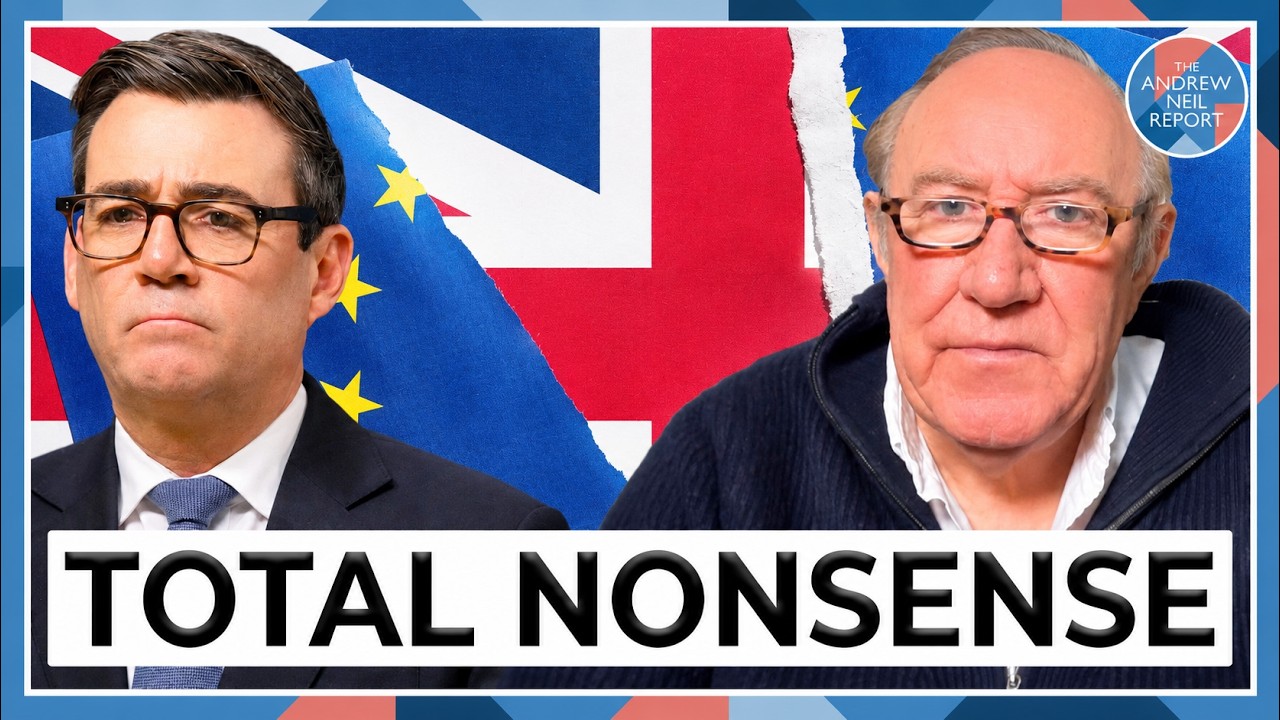 Andrew Neil takes down Andy Burnham's Brexit 'mistruths' one by one
Up nextTrari.com home page ›


 The Andrew Neil Report
Story of
Why this story? The video opened at a pace of 175,780 views a day, 11 times a normal first day on this channel (15,798).
Andy Burnham's proposed reset with the European Union comes with a forecast for how much it could add to the British economy. Andrew Neil's first question is when. In an excerpt from The Andrew Neil Report recorded before the UK-EU summit in Brussels, he says the prime minister hasn't given a timetable and asks to see the Treasury's workings.
The clip drew about 134,000 views before it had been up a full day, already more than eight times what the channel's regular videos usually draw in their first 24 hours. It followed a separate episode on the Brussels talks featuring David Frost, who negotiated the UK's post-Brexit trade deal with the EU.
Neil applies much the same test to estimates of what Brexit cost. He treats the Office for Budget Responsibility's widely cited figure as a long-run assumption, not a loss you can read off the GDP figures. When he turns to exports, he separates goods from services, arguing that a broad claim about declining exports misses the strength of Britain's services trade.
Then a Cabinet Office minister appears on screen holding a basket of groceries. Neil's objection is more specific than whether Britain should align its food and farming rules with the EU's: he says the government hasn't shown that doing so would bring down prices at the checkout.
He has served as UK prime minister and leader of the Labour Party since July 2026.
More on Wikipedia ›The UK Treasury funds this public body, which produces independent economic forecasts and analyses the public finances.
More on Wikipedia ›Published on Trari.com
Go back to Trari.com home page
Where next?
Things we can learn from the video
Press to jump
- 2:05Neil asks when the reset could add 0.4% to GDP and where the Treasury's calculations are.
- 3:32He describes the OBR's estimate of Brexit's economic cost as a long-run assumption drawn from earlier studies.
- 6:22Neil questions a separate estimate of a larger GDP hit, noting that economists have disputed it.
- 9:27He breaks down post-Brexit exports, arguing that the picture looks different for goods and services.
- 14:23Neil says aligning with EU food and farming standards has not been shown to lower grocery prices.
- 20:00He argues that transfers under the Dublin rules were too small to make a difference to net migration.
What do you think?
Want to know when somebody answers you?
 For the channel's owners and team
Share the story with your audience
A ready picture for an Instagram story or a WhatsApp status.
Ready text for a community post
- Channel
- The Andrew Neil Report
- Subscribers
- 75,900
- Channel views, pace per day
- 338,821 (on a normal day: 43,153)
- Video published
- November 22, 2026
- Video views so far
- 134,423 (less than a day online)
- Video views, pace per day
- 175,780
The numbers
The Brussels commentary was already well past the channel's usual full-day views for a regular video with hours still to go.

💡 Test your knowledge
In which year did the UK vote to leave the European Union?
The UK voted to leave the EU in the June 2016 referendum.