
 United States
 United Kingdom
 Canada
 Australia
 New Zealand
 Ireland
Matt Gibson finds his aliens in coral reefs
The biologist's fast-starting TEDx Talks video goes from a sea anemone's ring of nerves to a Kansas City lab where corals spawn in tanks.
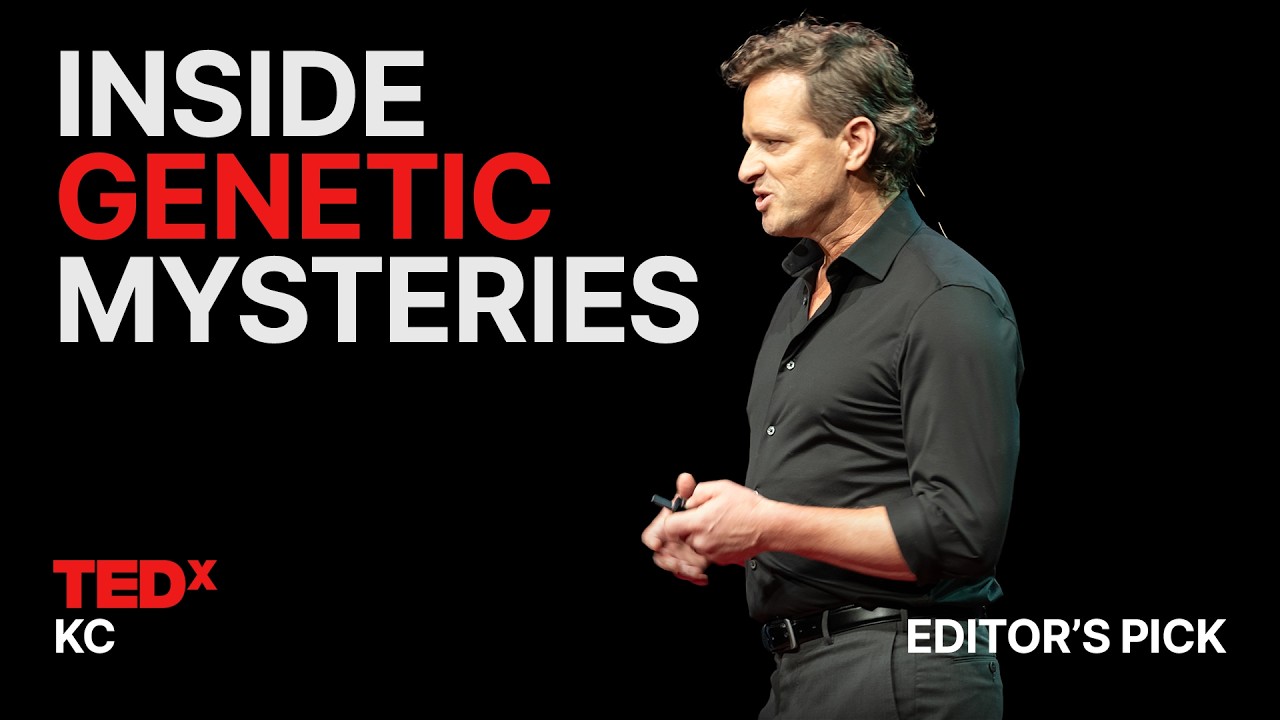 The alien biology of coral reefs | Matt Gibson | TEDxKC
Up nextTrari.com home page ›



 TEDx Talks
Story of
Why this story? 9,116 views in 3 hours since it went up, already 113 times a normal first day on this channel.
"How does a supposedly brainless animal like this execute complex, coordinated behaviors?" biologist Matt Gibson asks in his TEDx Talks video, "The alien biology of coral reefs | Matt Gibson | TEDxKC". Time-lapse footage makes the question feel less strange: corals and sea anemones are far more animated than they look at a glance. In the starlet sea anemone, Gibson's lab found something more organized than a simple web of nerves: a ring around the mouth.
The talk drew about 9,100 views in just over three hours, more than a hundred times what a typical TEDx Talks upload of the same length gets in a full first day.
For Gibson, the surprise is how much these seemingly alien animals have in common with us. He explains how Hox genes help lay out the body of an anemone larva, a version of the same ancient system that helps organize the human body as it develops.
That kinship sets up his case for studying reefs before more of them bleach. Corals get much of their food from tiny algae living inside them, a partnership that lets reefs flourish in nutrient-poor tropical water. When the ocean gets too warm, corals can lose those algae and turn pale. Gibson calls for an international research effort to understand what makes some corals more resilient, drawing on tools from biomedical research and AI. Then he shows what that work already looks like at the Stowers Institute for Medical Research in Kansas City: living corals spawning in lab aquariums.
Published on Trari.com
Go back to Trari.com home page
Where next?
Things we can learn from the video
Press to jump
- 1:54Time-lapse footage reveals how much corals and sea anemones move.
- 3:30The starlet sea anemone has an organized ring of nerves around its mouth.
- 4:56Hox genes help organize anemone larvae, revealing a body-patterning system shared with humans.
- 7:48Ocean warming disrupts the partnership between corals and the algae that feed them, causing bleaching.
- 11:13Gibson proposes an international effort to study coral resilience with biomedical tools and AI.
- 12:52Corals spawn in laboratory aquariums at the Stowers Institute in Kansas City.
A professional in this field? Want to write about Science & learning on Trari? Tell us ›
What do you think?
Want to know when somebody answers you?
 For the channel's owners and team
Share the story with your audience
A ready picture for an Instagram story or a WhatsApp status.
Ready text for a community post
- Channel
- TEDx Talks
- Subscribers
- 44,800,000
- Channel views, last 7 days
- 14,194,620
- Channel views, pace per day
- 2,899,774 (on a normal day: 1,625,417)
- Video published
- November 27, 2026
The numbers
Gibson's talk passed the usual full first day for a TEDx Talks upload of the same length in just a few hours.

💡 Test your knowledge
Off the coast of which country is the Great Barrier Reef?
The Great Barrier Reef stretches along the coast of Queensland in northeastern Australia.